
Plants
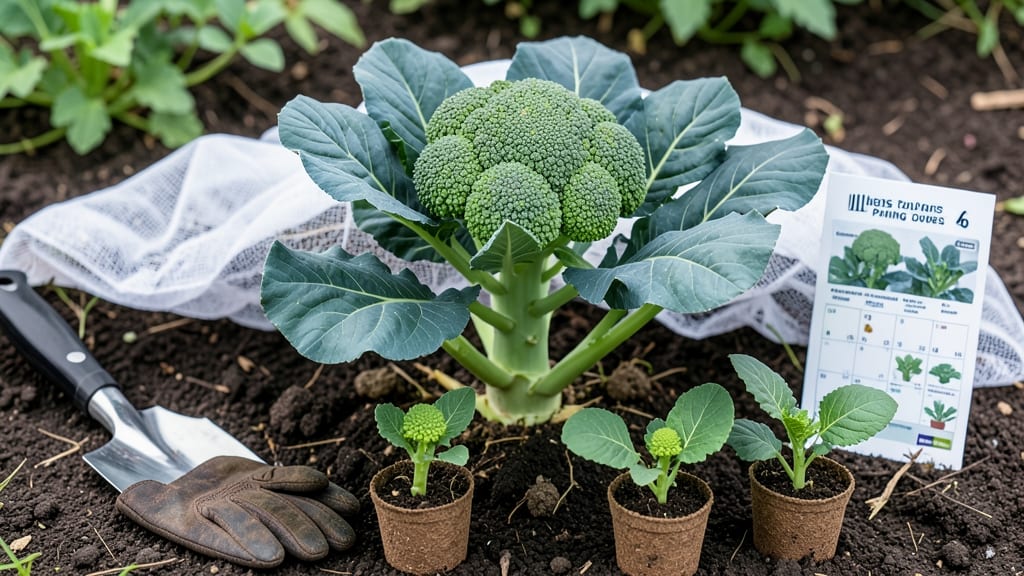
Timing your 🥦 broccoli planting in Illinois could mean the difference between a thriving garden and a wasted effort. Plant too early, and a late frost will turn your seedlings into sad, mushy souvenirs.
Too late, and summer’s heat will send your plants bolting before you even get a chance to harvest.
I’ve grown broccoli in Illinois for years, and the key to success lies in knowing exactly when to start seeds indoors or plant directly in the soil.
Whether you’re in Chicago’s Zone 5 or Springfield’s Zone 6, the right timing ensures your 🥦 broccoli matures before summer’s heat or winter’s chill ruins your crop.
In this guide, I’ll break down the exact weeks before your last frost date to plant for both spring and fall harvests. You’ll learn how to avoid common mistakes, like planting too close to summer or ignoring soil temperature, and discover practical tips to extend your harvest season.
Ready to grow bigger, healthier broccoli? Let’s dive into the perfect planting schedule tailored just for Illinois gardeners—no guesswork, just results.
Illinois broccoli planting schedule by Zone: weeks before last frost for success
Illinois spans USDA Zones 4-6, meaning your last frost dates can vary dramatically—from late April in Chicago to early April in southern regions like Springfield. To avoid frost damage or summer bolting, I’ve mapped out the ideal planting windows for both spring and fall harvests, tailored to Illinois’ microclimates.
The key is planting 4-6 weeks before your last frost for spring crops or 90-120 days before your first frost for fall harvests.
Northern Illinois (Zones 4-5, e.g., Chicago, Rockford) has a shorter growing season, so timing is critical. Southern Illinois (Zones 5-6, e.g., Springfield, Peoria) can push harvests later, but heat still poses risks.
Below, I’ve broken down the exact weeks before last frost you should plant, along with soil temperature thresholds to ensure strong germination.
For direct sowing outdoors, wait until soil temperatures reach 45°F (7°C)—cold soil slows germination and invites rot. If you’re starting seeds indoors, begin 6-8 weeks before your last frost to have sturdy seedlings ready for transplanting.
This head start is especially valuable in Zone 4, where spring can linger with late frosts.
In Zone 4 (northern Illinois), aim to transplant seedlings outdoors by early May to avoid late frosts. Use black plastic mulch to warm the soil faster and protect young plants.
For Zone 5-6 (central/southern Illinois), you can push seedlings into the ground as early as mid-April, but monitor forecasts for late frosts—even a 28°F (-2°C) dip can damage tender broccoli leaves.
Fall planting is trickier but rewarding. Start seeds indoors by late July for a September-October harvest before the first frost. In southern Illinois, you might squeeze in a second fall crop by planting outdoors in early August, but prioritize heat-tolerant varieties like 'Belstar' or 'Packman' to avoid bolting.
Always calculate your first frost date (typically mid-October) and count backward.
Soil preparation is non-negotiable. Broccoli thrives in well-draining, slightly acidic soil (pH 6.0-7.0). Before planting, amend your soil with compost or aged manure to improve fertility. In Illinois’ clay-heavy soils, mix in sand or peat moss to prevent waterlogging, which invites root rot.
Test your soil’s pH—if it’s too alkaline, add sulfur or pine needles to lower it gradually.
One mistake I see often is ignoring microclimates within Illinois. For example, Chicago’s lake-effect cooling can delay last frosts by a week compared to inland areas.
Check your local Cooperative Extension Service (e.g., University of Illinois Extension) for hyper-local frost data. Their frost-free date maps are gold for Illinois gardeners—bookmark them!
For container gardening in Illinois, choose dwarf varieties like 'Calabrese' and plant in 5-gallon pots with drainage holes. Containers warm up faster in spring, so you can plant 2 weeks earlier than in-ground beds. Just ensure pots are wheelbarrow-accessible—broccoli plants get heavy with water!
Remember: Broccoli is a cool-season crop, but it bolts (goes to seed) in heat. If you’re in southern Illinois and plant too late, your heads will turn bitter and flower prematurely.
To mitigate this, use shade cloth (30-50%) during summer months or opt for fast-maturing varieties like 'Green Goliath' (ready in 55 days).
How to extend your broccoli harvest in Illinois: succession planting and cold-tolerant varieties
To avoid bolting and maximize your broccoli harvest in Illinois, I’ve learned that succession planting is key. Instead of one big planting, try two planting windows: early spring and late summer.
This way, you’ll have fresh broccoli in late spring and fall, when temperatures are cooler and more forgiving.
For spring plantings, start seeds indoors 4-6 weeks before your last frost date (usually mid-March for most of Illinois). Transplant seedlings outdoors 2-3 weeks before the last frost.
For fall harvests, plant seeds outdoors 90-120 days before your first frost (mid-October), which typically means late July or early August.
🌱 Key Takeaways for Illinois Gardeners
- Spring Planting: Start indoors in March, transplant by late March/early April.
- Fall Planting: Direct sow in July-August for September-October harvest.
- Cold-Hardy Varieties: Choose 'Waltham 29' or 'De Cicco' for Zone 5-6 resilience.
- Row Covers: Use floating row covers to protect seedlings from late frosts (common in northern Illinois).
- Avoid Summer Heat: Never plant broccoli in June—it’ll bolt before forming heads!
Not all broccoli varieties handle Illinois’ unpredictable weather equally. I’ve had the most success with cold-tolerant varieties like 'Waltham 29' and 'De Cicco'. These varieties can withstand light frosts and still produce high-quality heads.
If you’re in Zone 5a (like Chicago’s suburbs), these are your best bets for early spring and fall harvests.
Protecting your seedlings from late spring frosts is another game-changer. I use floating row covers to shield young plants when temperatures dip below 40°F. These covers let sunlight and water through while blocking frost.
In northern Illinois, where frosts can linger into May, this extra layer of protection has saved my crops more times than I can count.
One mistake I used to make? Planting all my broccoli at once. Now, I stagger plantings every 2-3 weeks during both spring and fall seasons. This ensures a continuous harvest instead of one big rush.
For example, if your first planting is in mid-April, follow up with another in late April and early May for a 3-week harvest window.
For gardeners in southern Illinois (Zone 6), you’ve got a little more flexibility. You can even squeeze in a third planting in early September for a late fall harvest before the first frost.
Just be sure to use row covers again to protect those tender seedlings from unexpected cold snaps.