
Plants
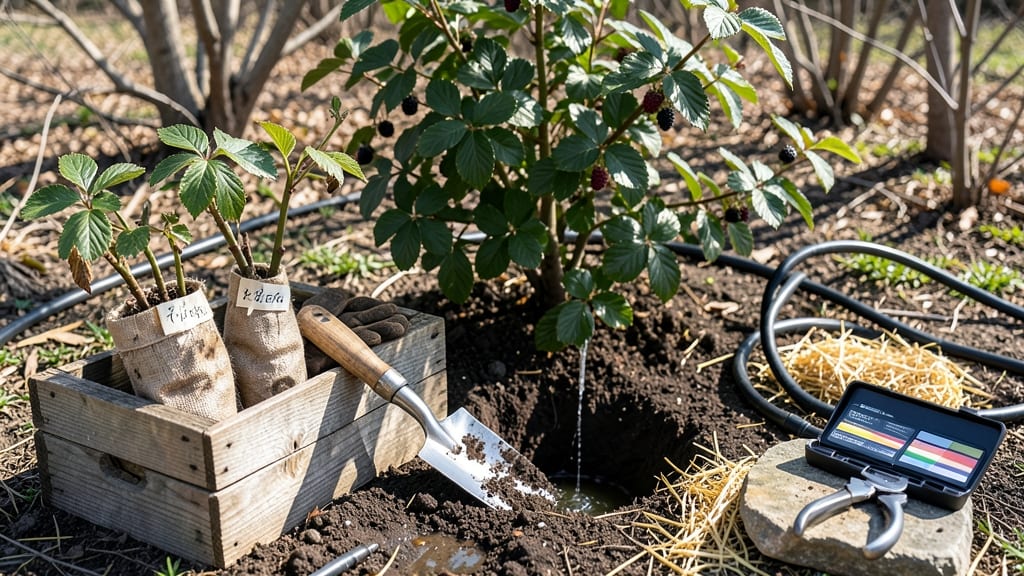
Planting blackberries in Georgia at the wrong time can turn your dream harvest into a frustrating gamble—especially with late frosts lurking around March 15.
The key isn’t just picking a month; it’s matching your variety to Georgia’s 7b-8b zones and avoiding those tricky frost windows that wipe out tender canes.
Fall planting in September-October gives blackberry bushes a head start on root growth before winter, while spring options in February-March work for hardier types. But here’s the catch: thornless varieties need extra care in Georgia’s humidity, and traditional types thrive with proper chilling hours.
Let’s break down exactly when to plant for peak yields—and how to prep your soil to outsmart Georgia’s climate quirks.
You’ll discover which varieties handle Georgia’s heat best, how to time your planting to avoid frost damage, and the simple soil tweaks that make all the difference. Whether you’re starting with bare-root canes or potted plants, these insights will help you skip the guesswork and grow blackberries like a pro.
The right timing isn’t just about months—it’s about working with Georgia’s 210 frost-free days and giving your blackberries the perfect start. Let’s get your patch thriving from the first cane to that first juicy 🫐 in May.
Best planting months for Georgia blackberries by variety type
Georgia’s USDA Zones 7b-8a offer two ideal windows for planting blackberries: late winter/early spring (February-March) and fall (September-October). Fall planting is often preferred because it allows roots to establish before summer heat arrives, while spring planting gives plants a full growing season to mature before winter dormancy.
Your climate zone and berry variety determine the best timing. Thornless varieties like 'Natchez' or 'Arapaho' thrive with fall planting, while traditional varieties such as 'Cheyenne' or 'Ouachita' can handle either season. The key is avoiding planting when soil temperatures exceed 80°F or when frost is imminent.
For fall planting, aim for September-October—this gives plants 6-8 weeks to establish roots before winter. If you miss this window, early spring (February-March) is your next best option, but avoid planting after March 15, as late frosts can damage tender new growth.
Georgia’s humid summers and mild winters mean blackberries need proper chilling hours (300-500 hours below 45°F) to break dormancy. Fall-planted canes receive natural chilling, while spring-planted varieties may require artificial chilling (e.g., refrigeration) if grown in warmer microclimates.
Bare-root plants are best planted in fall or early spring, while container-grown blackberries can be planted year-round but thrive most with fall or spring timing. Container plants need extra care to avoid root stress during extreme heat or cold.
Here’s a quick reference for Georgia’s frost-free window: The last frost typically occurs around March 15, and the first frost arrives by November 15. Planting in September ensures your blackberries have 3-4 months of root growth before winter dormancy begins.
If you’re planting in spring, choose bare-root canes and soak them in water for 2-4 hours before planting to reduce transplant shock. For fall planting, prioritize well-draining soil to prevent winter waterlogging, which can rot roots in Georgia’s saturated clay soils.
Pro tip: Mulch heavily (4-6 inches of straw or pine needles) after planting to retain moisture and protect roots from temperature swings. This is especially critical in Zone 7b, where winters can fluctuate between freezing and mild spells.
Always space canes 3-4 feet apart in rows 6-8 feet apart to allow airflow and reduce disease pressure. Georgia’s humidity makes blackberries prone to botrytis fruit rot and anthracnose, so proper spacing is non-negotiable for healthy yields.
For container planting, use pots at least 18 inches deep with drainage holes. Place containers in full sun and water daily during summer to compensate for limited root space. Containers also allow you to move plants to avoid frost pockets in winter.
Best planting months for Georgia blackberries by variety type
Georgia’s USDA Zones 7b-8a offer two prime windows for planting blackberries: early spring and fall. However, fall planting (September-October) is ideal because it allows roots to establish before winter while avoiding summer heat stress. Spring planting (February-March) works for bare-root plants but requires careful frost protection.
Your choice between thornless and traditional varieties also affects timing. Thornless types like 'Natchez' or 'Arapaho' thrive with fall planting, while traditional varieties such as 'Cheyenne' or 'Ouachita' may need spring planting to avoid winter dieback in colder microclimates.
🌱 Comparison Table: Georgia Blackberry Planting Windows
| Variety Type | Best Planting Month | Key Consideration | Notes |
|---|---|---|---|
| Thornless (e.g., 'Natchez') | September-October | Fall dormancy | Easier harvest, less pruning |
| Traditional (e.g., 'Cheyenne') | February-March | Spring growth | Thorns require gloves |
| Ever-bearing (e.g., 'Apache') | September-October | Year-round harvest | Needs winter mulch |
For fall planting, aim to get plants in the ground 4-6 weeks before the first frost (typically mid-November in Zone 7b). This gives roots time to establish before winter dormancy.
If you miss fall, bare-root plants can handle late winter planting, but potted plants should wait until soil warms to 60°F.
Georgia’s humid summers mean blackberries need well-draining soil and morning sun to avoid fungal diseases. If planting in spring, choose a north-facing slope to delay heat stress. For fall planting, select a south-facing location to maximize winter sunlight.
Pro tip: Mulch heavily after planting (fall or spring) with pine straw or wood chips to retain moisture and regulate soil temperature. This is especially critical in Zone 7b, where winter temps can fluctuate wildly. Mulch also suppresses weeds and voles, common pests in Georgia blackberry patches.
Timing isn’t just about the calendar—it’s about microclimates. If you’re in north Georgia (Zone 7b), err on the earlier side (late August for fall).
In south Georgia (Zone 8a), you can plant as late as early November without risking frost damage. Always check your local frost dates for precision.