
Plants
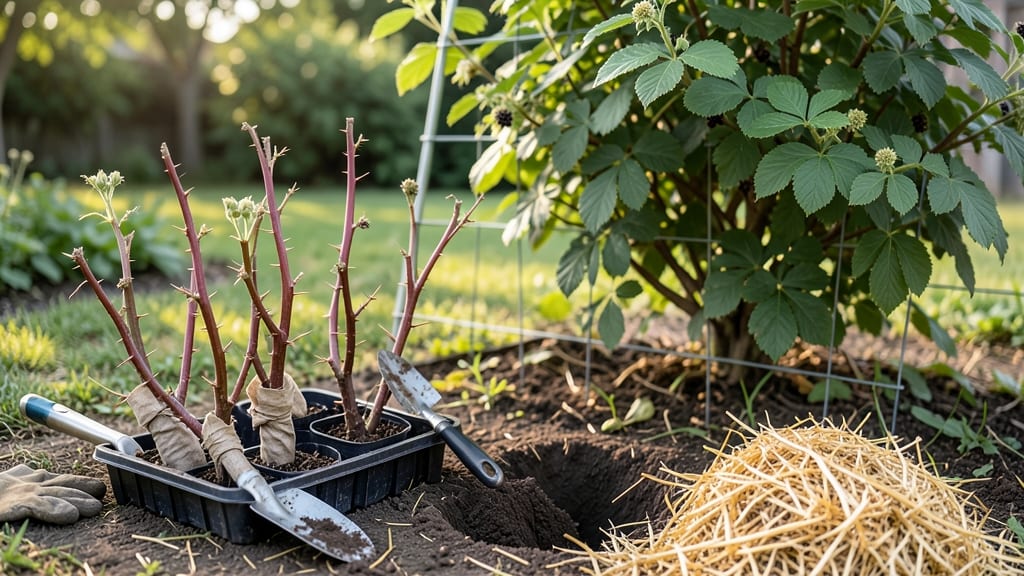
Timing your blackberry 🍇 planting in Indiana can make the difference between a thriving bramble and a struggling plant. The key is planting 4-6 weeks before your last frost—typically between early March and mid-April—to give roots time to establish before summer heat arrives.
Indiana’s USDA zones 5b-6b mean frost can linger until mid-April, but don’t wait too late—soil should be workable and at least 50°F for optimal root growth. Whether you’re planting bare-root canes or potted varieties, getting this window right ensures your blackberries take off strong and produce bountiful harvests by July.
I’ve seen gardeners rush planting too early, only to watch their blackberries suffer from frost damage. Or worse, delay until May, missing the prime opportunity for robust root development.
The sweet spot? Early spring when the soil thaws but before the first flush of new growth—your blackberries will thank you for the patience.
Ready to set your blackberries up for success? Let’s break down exactly how to time your planting, prepare your soil, and choose the right varieties for Indiana’s climate—so you can enjoy those juicy berries without the guesswork.
Best planting weeks for blackberries in Indiana: frost dates and soil prep
Indiana’s USDA hardiness zones 5b-6b mean blackberries thrive here—but only if planted at the right time. The ideal window is 4-6 weeks before your last frost date, which typically falls between March 15 and April 15 across most of the state.
This timing ensures roots establish before summer heat arrives.
For bare-root plants, aim for early spring (March-April) when soil temperatures rise above 45°F. If you prefer container-grown blackberries, you can plant 2-3 weeks later since their roots are already established. Both options work well, but timing matters most.
Fall planting is also possible in late September to October, giving roots time to settle before winter. However, avoid planting after October 15—new growth won’t harden off before frost, risking winter damage.
Indiana’s average last frost dates vary by region:
- Northern Indiana (Zone 5b): April 15
- Central Indiana (Zone 6a): April 1
- Southern Indiana (Zone 6b): March 15
Before planting, prepare your soil by amending it with compost or well-rotted manure to improve drainage. Blackberries hate soggy roots, so raise beds slightly if your soil is clay-heavy. A pH of 5.5-6.5 is ideal—test and adjust with lime if needed.
| Planting Window | Indiana Regions | Soil Prep Steps | Key Tip |
|---|---|---|---|
| Early Spring (March-April) | Statewide (adjust for microclimates) | Test pH, add compost, ensure drainage | Plant bare-root canes ASAP after purchase |
| Late Fall (Sept-Oct) | Before first frost (Oct 15) | Avoid fresh manure; use aged compost | Water thoroughly before winter |
| Container-Grown (April-May) | All regions (flexible timing) | Use well-draining pots; fertilize lightly | Move containers to ground in winter |
After planting, mulch heavily with straw or wood chips to retain moisture and suppress weeds. This is especially critical in Indiana’s humid summers, where evaporation rates are high. Keep mulch 3-4 inches deep but avoid piling it against stems to prevent rot.
For urban gardeners, container planting offers flexibility. Use 5-gallon pots minimum with drainage holes, and place them in full sun (6+ hours). Containers dry out faster, so water every 3-5 days during summer.
Remember: Root establishment is your top priority. If planted correctly, your blackberries will reward you with juicy berries in July-August—just in time for Indiana’s peak summer heat! 🍇
Best planting weeks for blackberries in Indiana: frost dates and soil prep
Indiana’s USDA zones 5b-6b mean blackberries thrive with the right timing—typically early spring (March-April) or late fall (October). The key is planting 4-6 weeks before the last frost, usually around March 15-April 15, when soil temperatures hit 50°F+.
In northern Indiana, aim for April 1-April 15; southern regions can start as early as March 15.
Fall planting works too, but October 1-October 15 is ideal—before the first hard frost. This gives roots time to establish before winter dormancy. Bare-root canes are best for both seasons, while potted plants can handle slightly later spring planting but risk transplant shock if delayed past May 1.
| Planting Window | Soil Temp | Key Task | Indiana Region |
|---|---|---|---|
| Early Spring (March 15-April 15) | 50°F+ | Soil prep + bare-root planting | South: March 15 North: April 1 |
| Late Fall (October 1-October 15) | 40°F-50°F | Dormant planting + mulch | All regions |
| Avoid | N/A | Summer planting | Heat stress risk |
Before planting, test soil pH (5.5-6.5) and amend with compost or aged manure. Blackberries need well-draining soil—amend heavy clay with sand or peat moss.
Work in a 2-inch layer of compost and a balanced fertilizer (10-10-10) to kickstart root growth. For urban gardens, raised beds work well to improve drainage.
Choose a sunny, sheltered spot with 6+ hours of sunlight daily. Blackberries spread aggressively, so allocate 3-4 feet of space per plant or use containers (15+ gallons) for small gardens. Install a trellis or wire system immediately—canes grow 6-12 feet tall and need support to prevent sprawl.
Water deeply after planting to settle soil, then maintain 1-2 inches of moisture weekly. Mulch with straw or wood chips to retain moisture and suppress weeds. In northern Indiana, protect young plants with row covers if late frosts linger past May 1.
Spring-planted blackberries produce fruit 1 year later, while fall-planted canes may bear in 2 years. Patience pays off—proper timing now means decades of harvests with minimal fuss. Just avoid planting after May 1; summer heat stresses young roots.