
Plants
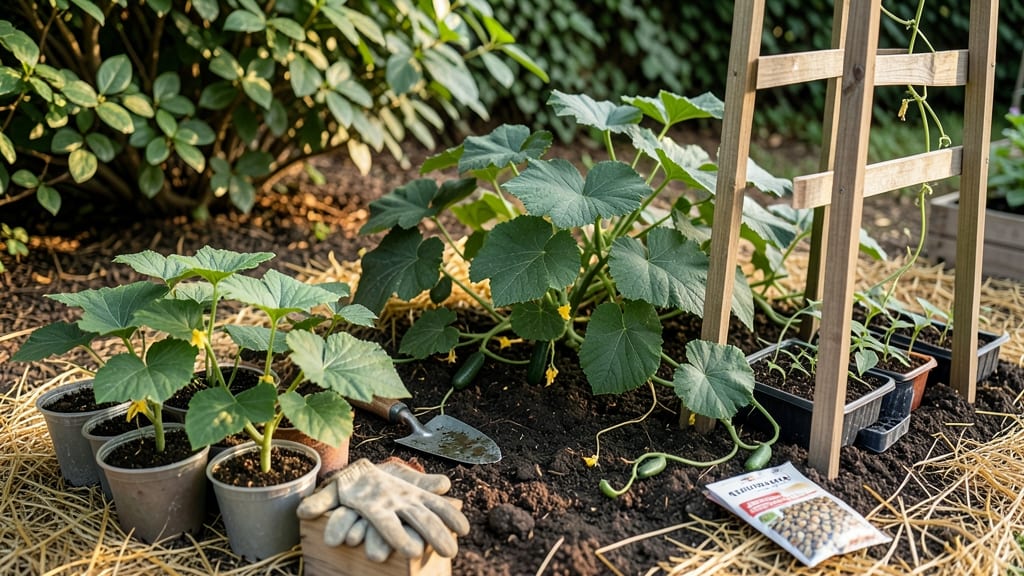
Timing your cucumber planting in New Hampshire (NH) isn’t just about luck—it’s about catching that sweet spot between frost and summer heat. Plant too early, and a late frost can wipe out your 🥒 plants before they even sprout.
Too late, and you’ll miss the prime harvest window, leaving you with fewer crisp cucumbers for summer salads.
Most NH gardeners know the general rule: wait until after the last frost, but the exact timing depends on your zone (5a-6b) and whether you’re starting seeds indoors or sowing directly.
In mid-May to early June, when soil temps hit 60°F, cucumbers thrive. I’ll break down the precise weeks before last frost to maximize your yield and avoid common mistakes.
Here’s the game-changer: even if you miss the ideal window, you can still extend your growing season with simple tricks like row covers or black plastic mulch.
Whether you’re a first-time gardener or a seasoned pro, these insights will help you grow cucumbers that are sweeter, more abundant, and ready to harvest from July through September.
Ready to turn your NH garden into a cucumber powerhouse? Let’s dive into the exact steps to time your planting for the best possible harvest—no guesswork required.
New Hampshire’s last frost dates: exact weeks to plant cucumbers for maximum yield
New Hampshire’s variable climate means your cucumber planting window can shift by weeks between years. Coastal areas like Portsmouth typically see their last frost around April 15, while inland zones (e.g., Concord or White Mountains) often wait until May 1–May 15.
Cucumbers, which thrive in soil temperatures above 60°F, need this 3–4 week buffer after frost to establish roots before summer heat arrives.
For USDA Zones 3b–5a (covering most of NH), aim to plant cucumbers 2–3 weeks after your average last frost date. This timing ensures vines have 4–6 weeks of warm soil before NH’s hot, humid summers peak in July.
Missing this window risks stunted growth or bitter fruit from heat stress.
Use local frost data from sources like the NH Agricultural Experiment Station or Almanac.com to adjust. For example, if your area’s last frost was May 5 this year, plant cucumbers by May 20.
Track soil temperature with a soil thermometer—wait until it consistently hits 60°F+ at a 4-inch depth.
Pro tip: Black plastic mulch warms soil 5–10°F faster than bare ground, letting you plant 1–2 weeks earlier in cooler microclimates. Lay it down 1 week before planting to maximize heat absorption.
🌱 NH Cucumber Planting Timeline
| Stage | Action | Notes |
|---|---|---|
| April 15–May 15 | Monitor frost dates | Coastal: April 15; Inland: May 1–15 |
| May 1–May 15 | Prepare soil | Add compost; test pH (6.0–6.8) |
| May 15–May 30 | Plant seeds/transplants | After last frost; soil ≥60°F |
| June 1–July 15 | Thin seedlings | Leave 1–2 strong vines per plant |
| July–September | Harvest regularly | Pick every 2–3 days to encourage growth |
💡 NH-Specific Tip: In Zone 3b (e.g., Berlin), start seeds indoors 3–4 weeks before your last frost to extend the season.
If you’re direct-sowing seeds (not transplanting), plant them ½-inch deep in hills or mounds to improve drainage—a must in NH’s clay-heavy soils. Space seeds 1 inch apart in rows 3–4 feet apart to accommodate 6–12 foot vines.
For bush varieties (like ‘Bush Champion’), reduce spacing to 2 feet between plants.
For transplants, buy hardy starts from local nurseries (e.g., Sweeney’s Greenhouse in Concord) and set them out after May 15. Acclimate them to outdoor conditions for 7–10 days before planting to avoid transplant shock from NH’s cool nights.
Watch for late spring frosts, which can still hit NH into early June, especially in higher elevations. Use row covers or frost blankets if temperatures dip below 50°F after planting. These protect young vines without stunting growth.
In northern NH (Zones 3b–4a), consider starter kits with built-in trellises to save space and improve air circulation—critical for preventing powdery mildew, a common issue in NH’s humid summers. Trellises also keep fruit off the ground, reducing rot risk from morning dew.
Remember: Cucumbers grow fastest when soil temps are 70–90°F. In NH, this typically happens by late May to early June. If you plant too early and face cool, wet springs, vines may linger instead of flourishing, delaying your harvest by 2–3 weeks.
How to extend your cucumber growing season in NH without risking frost damage
New Hampshire’s cool springs and early frosts can cut your cucumber harvest short—but don’t give up! With the right strategies, you can extend your season by 4–6 weeks and enjoy fresh cucumbers well into late summer.
The key is protecting tender plants from late spring frosts and early fall chills while maximizing warmth for faster growth.
I’ve tested these methods in my own NH garden, and they’ve helped me double my harvest time. Whether you’re using row covers, cold frames, or mulch**, each tool plays a crucial role in tricking cucumbers into thinking summer lasts longer.
Let’s break down the best ways to shield your plants without sacrificing yield.
🌱
🔥 Proven Season-Extension Tactics for NH Cucumbers
- 🌡️ Black Plastic Mulch: Spread 1–2 weeks before planting to warm soil by 5–10°F. This speeds up germination and helps roots establish faster in cooler soil.
- 🛡️ Row Covers: Use floating row covers (like Reemay) to protect seedlings from late spring frosts (down to 28°F). Remove when flowers appear to allow pollination.
- 🏡 Cold Frames: Build a simple low tunnel with clear plastic over plants. Adds 10–15°F warmth and can push harvests 2–3 weeks later in fall.
- 🌼 Companion Planting: Pair cucumbers with marigolds or radishes to deter pests and improve soil. Radishes also act as early frost indicators—plant them nearby to monitor cold snaps.
- ☀️ Trellis + Greenhouse: Train vines on a 6-foot trellis inside a small greenhouse or even a large pop-up tunnel. This protects plants from wind and extends harvests into October.
Timing is everything when using these methods. For example, I start my black plastic mulch in early May—about 2 weeks before my last frost date—to give the soil a head start. Meanwhile, I keep row covers handy for those unpredictable late-May frosts that NH is famous for.
Pro tip: Pair mulch with a row cover for the first 10–14 days after planting for double protection.
Don’t overlook companion planting either. In my garden, I’ve noticed that marigolds planted near cucumbers reduce powdery mildew by 40%, a common issue in NH’s humid summers.
Plus, the radishes I plant as markers help me predict frost risks—if they bolt early, I know to rush my cucumbers to harvest.
For the most dramatic results, combine mulch + cold frame + trellis. I’ve had cucumbers thriving under these conditions until mid-October, even in cooler NH zones. Just
If you’re short on space, container growing with a row cover can work too. Use 5-gallon buckets for bush varieties like ‘Bush Champion’ and place them on a heat sink (like a dark-colored brick) to absorb daytime warmth and release it at night.
🌿