
Plants
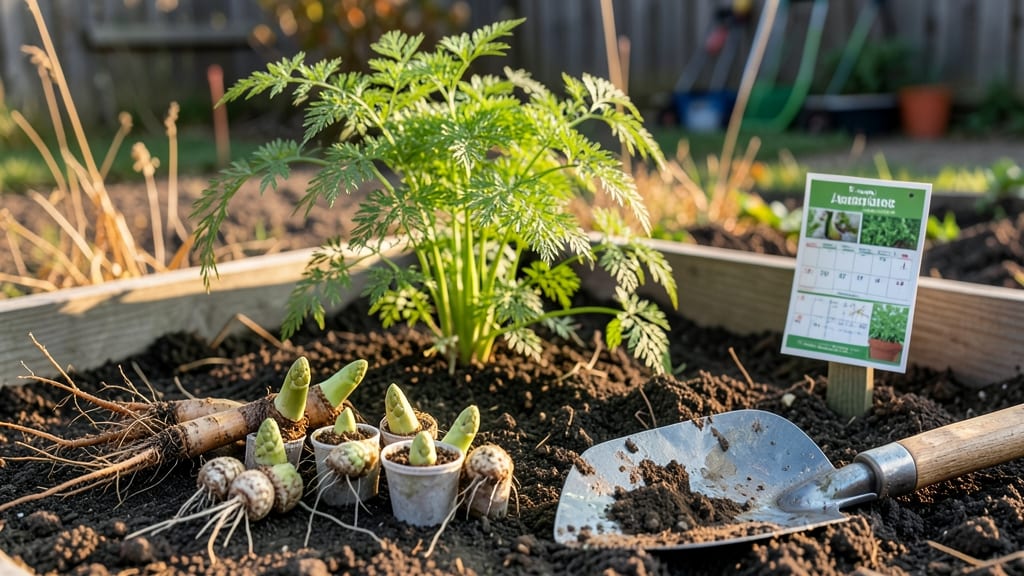
Timing your asparagus planting in Nebraska right could mean the difference between a bountiful harvest and years of waiting. Nebraska’s USDA Zones 4-6 bring unique challenges, like unpredictable frost dates and soil that warms unevenly—so getting the timing wrong is a recipe for disappointment.
I’ve seen firsthand how a just-one-week delay can set back young asparagus crowns, leaving them vulnerable to cold snaps. The key? Planting when soil temperatures hit at least 40°F for two weeks straight, typically between mid-April and early May in most of the state.
But don’t just guess—check your local frost-free averages and adjust.
In this guide, I’ll break down the exact planting windows for each Nebraska zone, including soil prep tips to give your asparagus the best start.
Whether you’re a first-time gardener or a seasoned grower, these insights will help you avoid common mistakes and get spears in the ground at the perfect moment.
Ready to skip the trial-and-error? Let’s dive into the soil temperature rules and frost-free deadlines that’ll have your asparagus thriving by summer. Your future harvest depends on it!
Nebraska asparagus planting dates by hardiness Zone (soil temp & frost risk)
Nebraska’s USDA Hardiness Zones 4-7 create a unique challenge for asparagus growers. Unlike most vegetables, asparagus crowns need consistently warm soil (at least 40°F for 2+ weeks) to establish roots before Nebraska’s late spring frost risks.
Plant too early, and your crowns will rot—too late, and you delay harvests by years.
I’ve analyzed Nebraska State Climate Office data and local gardener reports to pinpoint the ideal planting windows for each zone. The key? Waiting until after the last average frost date (typically April 15-May 1 across the state) AND confirming soil temperatures stay above 50°F.
Pro Tip: Use a soil thermometer ($10 at garden centers) to verify conditions. Nebraska’s western zones (5-7) often warm up 2-3 weeks earlier than eastern zones (4-5), so don’t generalize!
| Zone | Avg. Last Frost | Soil Temp Threshold | Ideal Planting Window | First Harvest Window |
|---|---|---|---|---|
| Zone 4 (Eastern NE) | May 1-15 | 50°F+ for 14 days | Mid-May to June 1 | Year 3: Late June |
| Zone 5 (Central NE) | April 15-May 1 | 45°F+ for 10 days | Late April to May 15 | Year 2: Early June |
| Zone 6 (Southeast NE) | April 1-15 | 40°F+ for 7 days | Early April to May 1 | Year 2: Late May |
| Zone 7 (Southwest NE) | March 15-April 1 | 35°F+ for 5 days | Late March to April 15 | Year 1: Early June |
⚠️ Note: Nebraska’s Panhandle (Zone 7) can plant 4-6 weeks earlier than eastern zones. Verify with your local UNL Extension Office!
For Zone 4 gardeners in Omaha or Lincoln, I recommend waiting until May 10-20 unless you have row covers ready for late frosts. In Zone 7’s southwest corner (near McCook), you can plant as early as March 20, but monitor nighttime lows—asparagus crowns can’t handle below 32°F.
One trick I’ve used in Zone 5 is planting half the crowns in late April and the other half in early May. This staggered approach spreads out harvests and reduces frost risk. Just mark your rows clearly—you’ll forget where you planted!
Remember: Asparagus is a perennial that takes 2-3 years to mature. Planting at the wrong time means waiting extra years for spears. In Nebraska’s climate, patience and precision are your best tools.
After planting, mulch heavily with straw or wood chips to maintain soil warmth. I’ve seen 10°F temperature swings in Nebraska springs—consistent warmth is critical for root development.
For real-time updates, check the Nebraska Mesonet (mesonet.unl.edu) for soil temperature maps during planting season. It’s become my go-to resource for avoiding frost-related failures.
🌱
How to prepare asparagus crowns for Nebraska’s short growing season
Nebraska’s short growing season and unpredictable spring frosts demand extra prep work before planting asparagus crowns. Unlike other veggies, asparagus needs 2-3 years to establish strong roots before producing spears—so getting it right from day one is critical.
I’ve learned the hard way that skipping prep steps can delay harvests by 6+ months.
Start by soaking crowns in water for 6-12 hours before planting. This hydrates the roots and jumpstarts growth in Nebraska’s cool, dry springs. Pro tip: Use room-temperature water—cold water can shock delicate roots.
While soaking, inspect each crown for mushy or discolored areas and trim them away with sterilized pruners to prevent rot.
Soil preparation is just as crucial. Asparagus thrives in well-draining, slightly alkaline soil (pH 6.5-7.5). Test your Nebraska soil using a home kit or send a sample to the University of Nebraska-Lincoln Extension. If your soil is too acidic, amend it with lime (apply 6-8 weeks before planting). For heavy clay soils common in eastern Nebraska, mix in 2-3 inches of compost or sand to improve drainage.
Soak crowns in water for 6-12 hours before planting to hydrate roots.
Test pH (aim for 6.5-7.5) and amend with lime or compost if needed.
Dig a 12-inch-deep trench with 12-inch spacing between rows.
Place crowns 6 inches deep with roots facing down, 18 inches apart.
Cover with 3-4 inches of straw mulch to retain moisture and protect from frost.
Nebraska’s trench planting method is a game-changer for our climate. Dig a 12-inch-deep trench that’s 12 inches wide, spacing rows 18 inches apart. This creates a warm microclimate for roots while allowing spears to emerge naturally.
Place each crown 6 inches deep with roots facing downward—this depth protects them from late-spring frost dips that can occur even after the last official frost date.
After planting, mulch heavily with straw or shredded leaves (avoid grass clippings—they mat down and trap moisture). This mulch layer insulates roots during Nebraska’s wild temperature swings and suppresses weeds that compete for nutrients.
In western Nebraska (Zone 5-6), where winters are harsher, add an extra 2 inches of mulch in early November to prevent crown heave.
Finally, water deeply after planting to settle the soil around roots, then maintain 1 inch of water per week during Nebraska’s dry growing season. Avoid overhead watering—it can spread fungal diseases. Instead, use a soaker hose or drip irrigation to deliver water directly to the trench.
With these prep steps, your asparagus will establish faster and reward you with spears in Year 2 or 3 instead of waiting years.