
Companion Plants
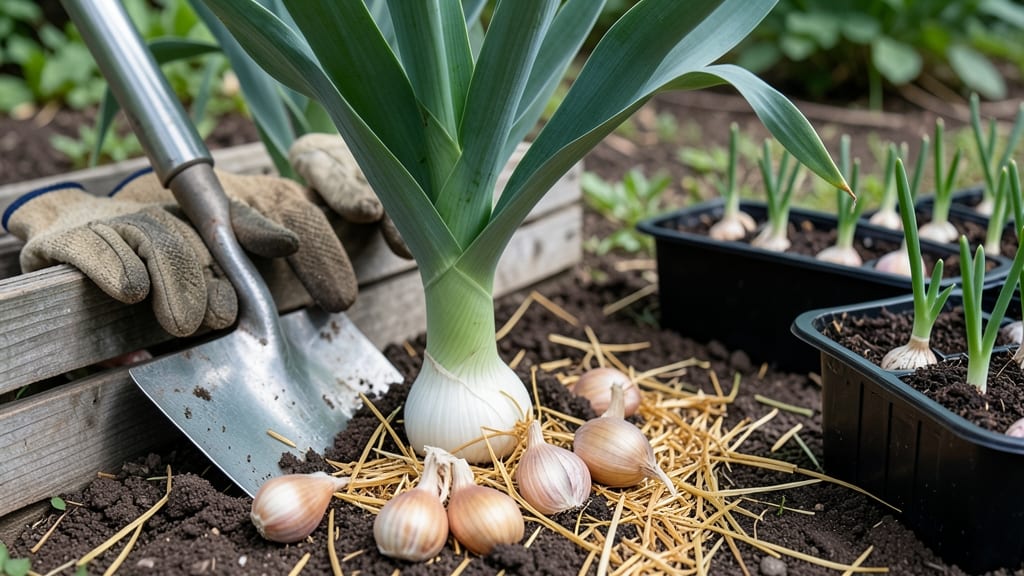
Timing your 🧄 garlic planting in Michigan can make or break your harvest—get it wrong, and you’ll end up with puny bulbs instead of the bold, flavorful harvest you’re dreaming of.
The key lies in understanding whether you’re growing hardneck or softneck varieties, since their ideal planting windows differ by 4-6 weeks.
For Michigan gardeners in zones 5b-6b, fall planting is the golden rule for hardneck garlic, but softneck varieties have a slightly wider window.
I’ll break down the exact months to plant each type, plus how to adjust for late falls or early springs when frost sneaks up earlier than expected.
You’ll also discover how to prep your soil for maximum bulb development, when to expect your first harvest next summer, and the 3 critical signs your garlic is ready to pull from the ground. Let’s get those cloves in the soil at the perfect time for a bumper crop!
Whether you’re a first-time garlic grower or a seasoned gardener looking to refine your technique, these insights will help you avoid common mistakes and grow garlic that rivals the best from the farmers’ market. Ready to dig in?
Best planting months for garlic in Michigan by variety
Michigan’s cool climate and variable frost dates make timing critical for garlic success. Unlike many crops, garlic needs a cold dormancy period to form bulbs, so planting in fall is ideal for most varieties.
But hardneck and softneck garlic have different windows—here’s how to choose the right time for your garden.
For hardneck garlic (the most popular choice in Michigan), aim to plant between mid-October and early November. This gives cloves time to root before the ground freezes, typically around mid-November in most of the state.
Softneck varieties, like Silverskin, are more flexible and can be planted as late as early December, though earlier is always better.
Your USDA Zone (5b-6b) plays a key role. In northern Michigan (Zone 5b), plant garlic by October 15th to avoid winter stress. In southern Michigan (Zone 6b), you have until mid-November—but don’t wait too long, as cloves need 4-6 weeks to establish roots before frost.
Here’s the golden rule: Plant garlic when soil temperatures drop below 40°F (4°C). Use a soil thermometer to check—this usually aligns with late September to early November in Michigan. If you miss fall, you can plant softneck garlic in early spring (March-April), but hardneck varieties won’t perform well.
Pro tip: If you’re unsure about frost dates, check your local Michigan State University Extension frost calendar. For most of the state, the average first hard frost is around October 15th, but this can vary by 1-2 weeks depending on your specific location.
| Variety Type | Ideal Planting Window | Soil Temp Requirement | Frost Tolerance | Notes for Michigan |
|---|---|---|---|---|
| Hardneck Garlic | Mid-October to early November | Below 40°F (4°C) | High (needs winter dormancy) | Best for cold climates; produces scapes |
| Softneck Garlic | Late September to early December | Below 50°F (10°C) | Moderate (can handle milder winters) | Stores longer; good for late plantings |
| Spring-Planted (Softneck Only) | March to early April | Above 40°F (4°C) | Low (smaller bulbs) | Last-resort option; bulbs won’t be as large |
If you’re planting in northern Michigan (e.g., Traverse City, Marquette), prioritize hardneck varieties like ‘German White’ or ‘Music’. These thrive in colder winters and produce larger bulbs with flavorful scape shoots.
In southern Michigan (e.g., Detroit, Ann Arbor), you can experiment with both hardneck and softneck, but hardneck still outperforms for bulb size.
One common mistake? Planting garlic too early. If you plant in August or September, cloves may sprout before winter, leading to frozen or rotted bulbs. Wait until soil temps drop—this usually happens by mid-September in most of Michigan.
For extra protection, mulch with 4-6 inches of straw after planting to insulate cloves during winter.
For container gardening, plant garlic in October and use pots with drainage holes. Place containers in a protected spot (like a cold frame) if winters are harsh. Just remember: potted garlic may need extra watering in dry spells, as containers dry out faster than in-ground beds.
Finally, don’t forget to break apart garlic bulbs into individual cloves before planting. Use the largest cloves for the biggest harvests next year. Save a few bulbs for seed garlic—this ensures you’ll have fresh stock for future plantings.
How Michigan’s frost dates affect garlic planting success
Michigan’s unpredictable frost dates can make or break your garlic harvest. Planting too early means cloves may sprout before winter, while planting too late risks stunted growth or no bulbs at all.
The key is timing your fall planting so cloves establish roots but enter dormancy before the ground freezes—typically 4-6 weeks before your region’s first hard frost.
In most of Michigan’s USDA Zones 5b-6b, this window falls between mid-October and early November. For example, in Detroit (Zone 6a), aim for planting by October 20th, while in Traverse City (Zone 5b), you’ve got until November 5th.
Use your local frost date calculator (like the Old Farmer’s Almanac) to pinpoint your exact deadline.
Here’s the critical rule: Cloves must root but not sprout before winter. If they shoot too early, they’ll bolt or rot when temperatures drop. A soil thermometer ($10 at garden centers) helps—plant when soil temps hover around 40-50°F. This ensures slow, steady root growth without premature sprouting.
Planting garlic after mid-November in Michigan’s colder zones (like Upper Peninsula) can leave cloves vulnerable to freeze-thaw cycles, which heave bulbs out of the soil and expose them to rodents and rot. If you miss the fall window, spring planting is possible but yields will be 30-50% smaller.
🔹 Pro Tip: Mulch with 6 inches of straw after planting to insulate cloves and prevent heaving.
Adjust for early springs or late frosts by using row covers in late winter to protect emerging shoots. In southern Michigan (Zone 6b), you might squeeze in a second planting in late December, but northern regions should avoid this risk.
Always prioritize root establishment over early growth—patience in fall planting pays off with larger bulbs next summer.
For softneck varieties (like ‘Silverskin’), you’ve got a slightly wider window—plant by early October to allow for slower bulb development. But hardnecks (e.g., ‘Music’ or ‘German Red’) need that tighter fall deadline to produce scape stems and larger cloves.
Check your seed packet for variety-specific notes, as some hardnecks (like ‘Chesnok Red’) are more frost-tolerant than others.
Remember: Michigan’s microclimates matter. A garden in Grand Rapids might frost over by October 25th, while Ann Arbor’s urban heat island could delay frost until November 10th.
Observe your own yard’s patterns for 3 years running to refine your planting schedule. The goal? Harvest plump, paper-skinned bulbs by July-August—not shriveled, underdeveloped misses.