
Planting
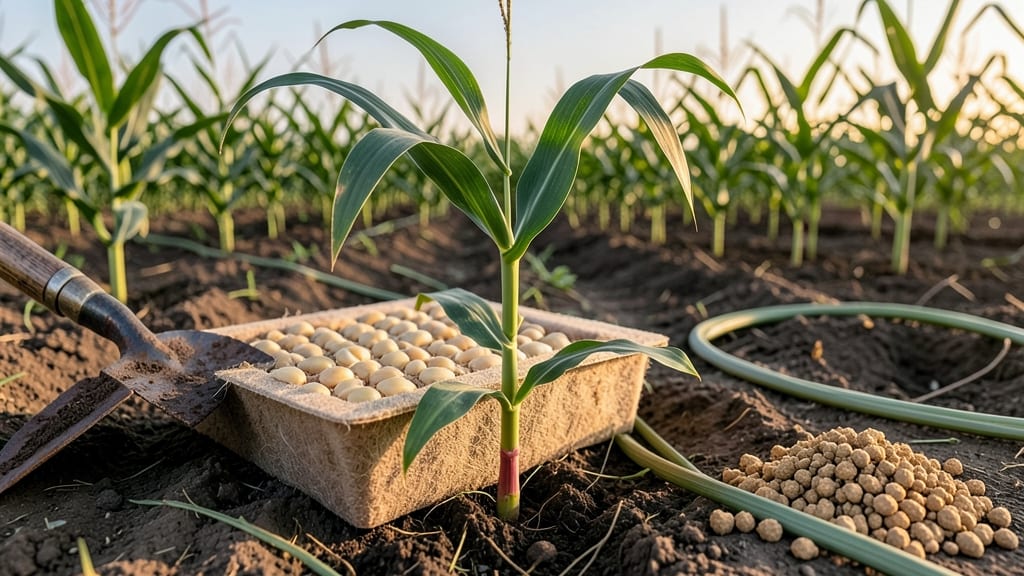
If you've ever wondered why Ohio farmers start planting their 🌽 corn in early April instead of late March, the answer lies in more than just a calendar date—it's about survival in Ohio's unpredictable climate.
Getting the timing right means avoiding frost damage while ensuring soil temperatures hit that sweet spot of 50-55°F for optimal germination. For farmers in USDA Zone 6a, this window is critical—plant too early, and you risk losing your entire crop to late frosts that can linger well into April.
But here's what most gardeners don't realize: even within Ohio, planting dates can vary by 2-3 weeks between the northwest and southeast regions. The key isn't just watching the calendar—it's tracking soil warmth and local weather patterns that can shift your planting window unexpectedly.
I'll break down exactly when to plant for maximum success, how to adjust for your specific corner of Ohio, and the simple tricks farmers use to give their corn the best possible start—whether you're managing a small garden plot or hundreds of acres.
Optimal soil temperature and frost-free timeline for corn planting in Ohio
Ohio's diverse climate means corn planting windows vary dramatically from the Northwest to the Southeast. Most farmers target April through early May when soil temperatures consistently reach 50-55°F—the minimum for germination.
In colder northern counties like Ashtabula or Lorain, planting often waits until mid-May to avoid frost damage, while southern regions like Clark or Champaign can start as early as late March.
Corn seeds won't sprout below 50°F, and growth stalls under 60°F. Using a soil thermometer at 4-inch depth is critical—waiting for 60°F+ ensures strong root development.
Ohio's USDA Zone 6a average last frost date is April 15, but microclimates near lakes or valleys can delay frost by 1-2 weeks.
For home gardeners, checking the Ohio State University Extension's frost maps provides localized planting windows. Their data shows Southeast Ohio typically has 165 frost-free days, while Northeast Ohio averages just 145 days.
This affects which corn varieties you choose—short-season hybrids like 'Pioneer 33B38' (85-day maturity) work in cooler zones, while 'Golden Bantam' (60-day) suits southern Ohio's longer growing season.
🌱
🌽 Ohio Corn Planting Timeline by Region
| Region | Ideal Planting Window | Soil Temp Requirement | Frost-Free Days | Recommended Varieties |
|---|---|---|---|---|
| Southeast Ohio (e.g., Athens, Athens County) | Late March - Early April | 55-60°F | 165+ days | 'Golden Bantam', 'Silver Queen' |
| Central Ohio (e.g., Columbus, Franklin County) | Mid-April - Early May | 50-55°F | 150-160 days | 'Pioneer 33B38', 'DeKalb DKC61-55' |
| Northwest Ohio (e.g., Toledo, Lucas County) | Early May - Mid-May | 55-60°F | 145-155 days | 'Early Sunglow', 'Ambrosia' |
| Northeast Ohio (e.g., Cleveland, Cuyahoga County) | Mid-May - Late May | 60°F+ | 140-145 days | 'Bodacious', 'Peaches and Cream' |
Pro Tip: Use black plastic mulch to warm soil 5-10°F faster in cooler regions.
Many Ohio farmers use NOAA's Climate Prediction Center to track 7-day soil temperature forecasts. If a cold snap threatens after planting, cover seeds with row fabric until temperatures rise. In 2020, late April frost in Northwest Ohio damaged 30% of early plantings, proving how critical timing is.
For home gardens, consider staggered planting every 2 weeks to extend harvest season. This works especially well for sweet corn varieties, ensuring fresh ears throughout summer. Just remember: Corn needs 60-120 days to mature—plant too late, and you'll miss the harvest window entirely.
🌾
If you're unsure about your local frost dates, the Ohio Department of Agriculture offers free frost probability maps updated weekly. These tools help adjust planting dates based on historical averages and current weather trends.
For example, Lima in Northwest Ohio has a 15% chance of frost after May 10, while Chillicothe in Southeast Ohio drops to just 5% after April 20.
One common mistake is relying on air temperature instead of soil temperature. A 70°F day can still have 45°F soil—use a soil thermometer for accuracy. Pro farmers also monitor moisture levels; corn seeds need consistent dampness to germinate, but waterlogged soil causes rot.
💧
Optimal soil temperature and frost-free timeline for corn planting in Ohio
Ohio’s corn planting season hinges on two critical factors: soil temperature and frost-free dates. Corn seeds need 50-55°F soil temps to germinate, but ideal conditions kick in at 60°F or warmer. In Ohio, this typically aligns with mid-April to early May, though exact timing varies by region.
Northern Ohio (e.g., Toledo, Cleveland) often waits until late April due to cooler soils, while southern Ohio (e.g., Cincinnati, Columbus) can plant as early as early April.
Microclimates—like river valleys or urban heat islands—can shift these windows by 1-2 weeks. Always check USDA Plant Hardiness Zone maps (Zone 5b-6b in Ohio) for localized guidance.
| Region | Last Frost Date | Ideal Planting Window | Soil Temp Threshold |
|---|---|---|---|
| Northwest Ohio | April 20–May 5 | Late April–Early May | 60°F+ |
| Central Ohio | April 10–April 25 | Mid-April–Late April | 55°F+ |
| Southeast Ohio | April 5–April 15 | Early April–Mid-April | 50°F+ |
*Adjust for early spring if using black plastic mulch to warm soil faster.
For home gardeners, seedling transplants offer flexibility—you can start seeds indoors in March and move them out after the last frost.
However, direct-sown corn (the preferred method for farmers) demands precise timing. Planting too early risks frost damage, while delaying past May 15 may reduce yield potential due to shorter daylight hours.
Pro tip: Use a soil thermometer to confirm temps before planting. Ohio State University Extension recommends waiting until 3 consecutive days above 55°F for consistent germination. Pair this with a 7-day weather forecast to avoid planting before a cold snap.
Regional variations also matter. Northern Ohio’s shorter growing season favors early-maturing hybrids (e.g., 70-90 day varieties), while southern Ohio can handle longer-season 100-120 day hybrids. Always match your corn variety to your frost-free window—typically 165 days in Ohio.
Finally, black plastic mulch or straw mulch can extend your planting window by 1-2 weeks by trapping heat. For commercial growers, this means earlier harvests and higher yields. For home gardeners, it’s a game-changer for late-spring planting.