
Watering
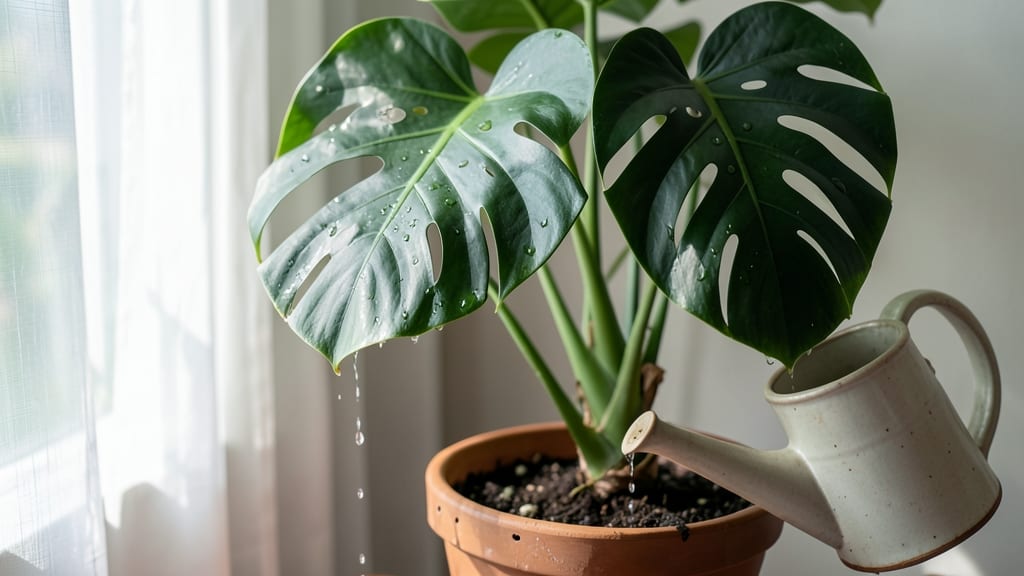
If your Monstera plant how much water it needs keeps struggling despite your best efforts, the issue might not be what you're giving it—but how much you're giving it.
Watering a Monstera is more about balance than frequency, and getting it wrong can mean the difference between lush, thriving leaves or sad, yellowing ones.
I’ve learned the hard way that Monsteras hate soggy roots, but they also don’t like drying out completely. The key is understanding their unique needs—whether you’re dealing with a young plant or a mature vine.
Let’s break down exactly how often to water your Monstera and what signs to watch for so you can keep it happy without overdoing it.
Most people assume Monsteras need constant moisture, but in reality, they prefer their soil to dry out slightly between waterings. That’s why checking the soil before watering is the most important step.
I’ll show you how to tell when it’s time to hydrate and how to adjust your routine based on your plant’s age, season, and even the size of its pot.
Ready to master the art of watering? By the end of this guide, you’ll know exactly how to keep your Monstera thriving—no guesswork required. Let’s dive in.

Monstera watering schedule: how often to water based on plant age and season
Your Monstera’s watering needs change as it grows and with the seasons. As a tropical plant, it thrives on consistency but despises soggy soil—the number one killer of Monsteras. Let’s break down the science-backed schedule to keep your plant happy without overwatering or underwatering it.
First, understand that juvenile Monsteras (under 2 years old) need more frequent watering than mature plants. Their smaller root systems can’t hold moisture as well. Meanwhile, seasonal shifts—like lower humidity in winter—directly impact how often you should water. We’ll cover both in detail below.
🌱 Pro Tip: Always check the top 2-3 inches of soil with your finger before watering. If it feels dry, it’s time. If it’s still damp, wait another day or two.
For juvenile Monsteras, the key is frequent but shallow watering to encourage root development. In spring and summer, these plants drink more due to faster growth rates. Use your finger to check moisture—if the soil feels dry just below the surface, it’s time to water.
Mature Monsteras have deeper root systems, so they can handle longer intervals between waterings. In fall and winter, reduce watering by 30-50% since growth slows down. Overwatering during dormancy leads to root rot, which is nearly impossible to reverse.
💧 Seasonal Adjustments: If your home has low humidity (common in winter due to heating), increase watering slightly. Conversely, if you notice condensation on windows or high humidity, wait an extra day before watering.
Pot size matters too! A 6-inch pot dries out faster than a 12-inch pot. For container Monsteras, use well-draining soil mixes with perlite or orchid bark to prevent waterlogging. Always water until it drains from the bottom holes—never let your Monstera sit in standing water.
Finally, new leaves are a great indicator of proper watering. If your Monstera is producing large, glossy leaves, you’re on the right track. If leaves turn yellow or brown, adjust your schedule immediately.
🌿 Remember: Monsteras store water in their thick stems, so they can tolerate short dry spells better than soggy conditions. When in doubt, underwater slightly—your plant will thank you with lush, vibrant growth!
5 Signs your Monstera needs water (and 5 signs you're overwatering)
Your Monstera plant communicates its water needs through subtle but clear signs—if you know what to look for. As someone who's nursed many Monsteras back to health, I’ve learned that leaf texture and soil behavior are the best indicators.
The key is checking both the leaves and the soil before deciding whether to water or hold off.
First, let’s talk about underwatering. When your Monstera is thirsty, its leaves will start curling inward at the edges, almost like a parchment effect. You might also notice dry, crispy brown spots on the leaf tips—a classic sign of dehydration.
The soil will feel bone-dry just 1-2 inches below the surface, and the pot may feel unusually light.
🌿
📌 5 Signs Your Monstera Needs Water
- 🌱 Curling leaves – Edges roll inward like a scroll
- 💧 Dry, crispy leaf tips – Brown and brittle to touch
- 🏺 Lightweight pot – Feels hollow when lifted
- 🕳️ Soil pulls away from pot edges when dry
- 🌡️ Wrinkled stem – Slightly shriveled appearance
On the flip side, overwatering is the silent killer of Monsteras. If your plant’s leaves are yellowing (especially starting from the bottom) and feel mushy to the touch, that’s a red flag.
The soil may smell sour or rotten, and you might see black, mushy roots if you gently remove the plant from its pot. Another clue? Stunted growth despite regular watering—this often means the roots are suffocating.
🌱
🚨 5 Signs You're Overwatering
- 🟡 Yellowing leaves – Bottom leaves first
- 🧀 Mushy leaf texture – Soft and squishy
- 👃 Sour soil smell – Like wet newspaper
- 🪴 Slow growth – Despite regular watering
- 💀 Root rot – Black, slimy roots when checked
Here’s my pro tip: Always check the soil before watering. Stick your finger 1-2 inches deep—if it feels dry, it’s time to water. If it’s still damp, wait another 2-3 days.
And remember, Monsteras store water in their thick stems, so they can handle short dry spells better than soggy conditions. Adjust your watering based on your home’s humidity levels—drier air means more frequent watering, while humid spaces may need less.
💧