
Plants
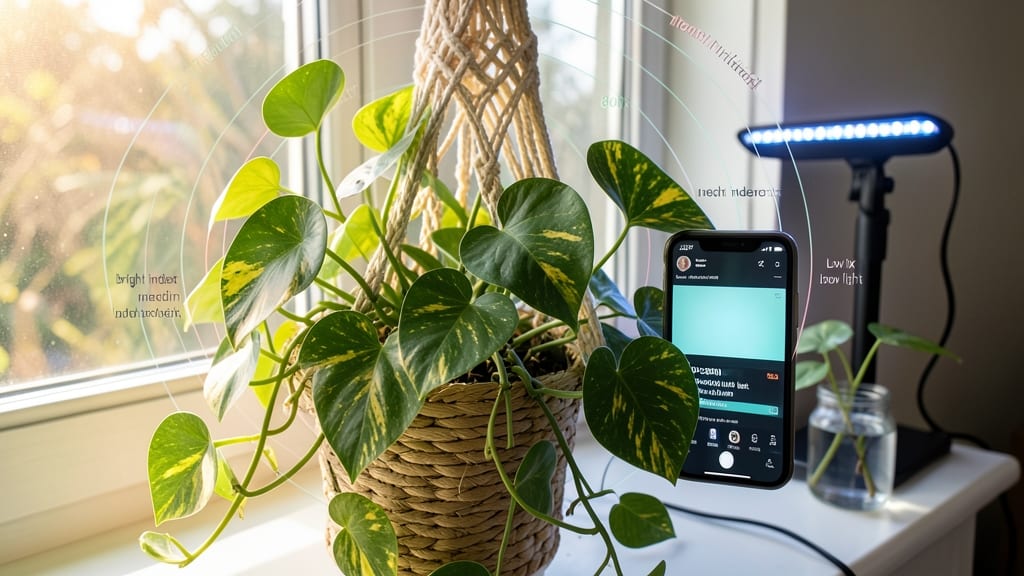
If your Pothos 🌿 plant is struggling with yellow leaves or stretched-out vines, you’re probably dealing with how much light does a pothos plant need in the wrong conditions.
The good news? This hardy plant is forgiving, but it does need the right balance—too little stunts growth, while too much burns its delicate foliage.
Most people assume Pothos thrives in any light, but the truth is, it prefers bright indirect light for 6-8 hours daily, especially in USDA Zone 6a climates.
A north-facing window or a spot 3-5 feet from a light source is ideal, but even low light works if you adjust care habits.
Don’t worry if your space lacks natural light—artificial solutions like LED grow bulbs can mimic sunlight perfectly. I’ll show you exactly how to spot light issues (like brown tips or faded variegation) and fix them fast, whether you’re keeping your Pothos indoors year-round or experimenting with seasonal outdoor spots.
By the end, you’ll know the exact light formula to keep your Pothos lush, vibrant, and free from common problems. Let’s get your plant thriving in no time!

Pothos light requirements: ideal hours and intensity for optimal growth
Your pothos plant thrives in bright indirect light, but it’s more adaptable than most houseplants. The key is finding that sweet spot—too little light causes leggy growth, while too much leads to leaf burn.
Most pothos varieties do best with 2 to 4 hours of filtered sunlight daily, but they can tolerate low-light conditions for months if needed.
For variegated pothos (like Golden Pothos), aim for 3 to 4 hours of light to maintain vibrant leaf patterns. Solid green varieties like Epipremnum aureum are more forgiving and can handle 2 hours of light in dimmer spaces.
The goal is to mimic the dappled shade of their native tropical forests.
🌿
If your pothos lives indoors, prioritize east-facing windows for gentle morning light or west-facing windows for afternoon sun. Avoid south-facing windows without a sheer curtain—direct midday rays can scorch leaves within days. In low-light offices, rotate your plant quarter-turns weekly to ensure even growth.
Outdoor pothos can handle partial shade (like under a porch awning) for 4-6 hours daily, but bring it inside if temperatures exceed 80°F.
Variegated types may lose their yellow/gold patterns in deep shade, reverting to solid green. This isn’t permanent—just move them back to brighter conditions to restore color.
Pro tip: Test your spot with the "shadow test". Hold a white sheet of paper where your pothos will sit. If the shadow is sharp and dark, the light is too direct. If it’s fuzzy or nonexistent, you’ve got perfect indirect light.
For new growth, focus on placing your pothos near a light source during its active growing months (spring and summer). In winter, reduce light exposure slightly—1-2 hours daily is enough—as growth naturally slows.
Just don’t let it sit in complete darkness for more than 2 weeks, or you’ll see leaf drop.
🪴
Remember: pothos is resilient. Even if you’ve over- or under-lit it before, it can recover with adjustments. The key is observation—watch your plant’s leaves for clues.
Yellowing? More light. Brown patches? Less direct sun. With these light guidelines, your pothos will reward you with lush, trailing vines year-round.
☀️
Pothos light requirements: ideal hours and intensity for optimal growth
Your pothos thrives in bright, indirect light—the golden rule for keeping those heart-shaped leaves vibrant. Aim for 2-4 hours of filtered sunlight daily, especially during morning to early afternoon. This mimics its natural understory habitat in tropical forests, where dappled light prevents scorching while fueling growth.
For indoor setups, place your pothos 2-3 feet from a north-facing window—the safest bet for consistent, gentle light. East-facing windows work too, but avoid south or west exposures unless you use sheer curtains to diffuse harsh rays.
Remember, direct sun is the enemy—it causes crispy brown edges faster than you can say "leaf burn."
In low-light conditions (think dim offices or bathrooms), your pothos will survive but grow slowly with sparse leaves. It’s the plant equivalent of a "survivor," but why settle for basic when you can have lush? Rotate the pot quarter-turns weekly to ensure even light exposure and prevent lopsided growth.
| Light Condition | Ideal Hours | Best Window | Growth Result |
|---|---|---|---|
| Bright Indirect | 4-6 hours | North/East | Lush, vibrant leaves |
| Medium Indirect | 2-4 hours | North-facing | Healthy, slower growth |
| Low Light | <2 hours | Bathroom, office | Leggy, sparse leaves |
| Direct Sun | >4 hours | South/West | Brown spots, crispy edges |
Outdoor pothos lovers, rejoice! These vines can handle partial shade (think dappled sunlight under trees) but avoid full shade—growth will stall. If you’re growing pothos outside in USDA Zone 6a, bring it indoors before temperatures drop below 50°F to prevent cold damage.
Pro tip: Use a sheer curtain to filter harsh afternoon sun during summer months.
For variegated pothos (the stunning white/yellow varieties), prioritize bright indirect light—this enhances their color contrast. Without enough light, those gorgeous patterns fade to plain green. Test your spot by holding a piece of paper near the plant; if you can’t read it easily, the light’s too dim.
If you see shadows crisp and clear, move it back!
Seasonal adjustments are key. In winter, when daylight dwindles, supplement with a 12-hour grow light (more on this in the next section) to maintain energy levels. In summer, watch for sunburn signs—if leaves develop white or yellow patches, relocate immediately.
Your pothos will thank you with shiny, new growth in just weeks.
🌿