
Plants
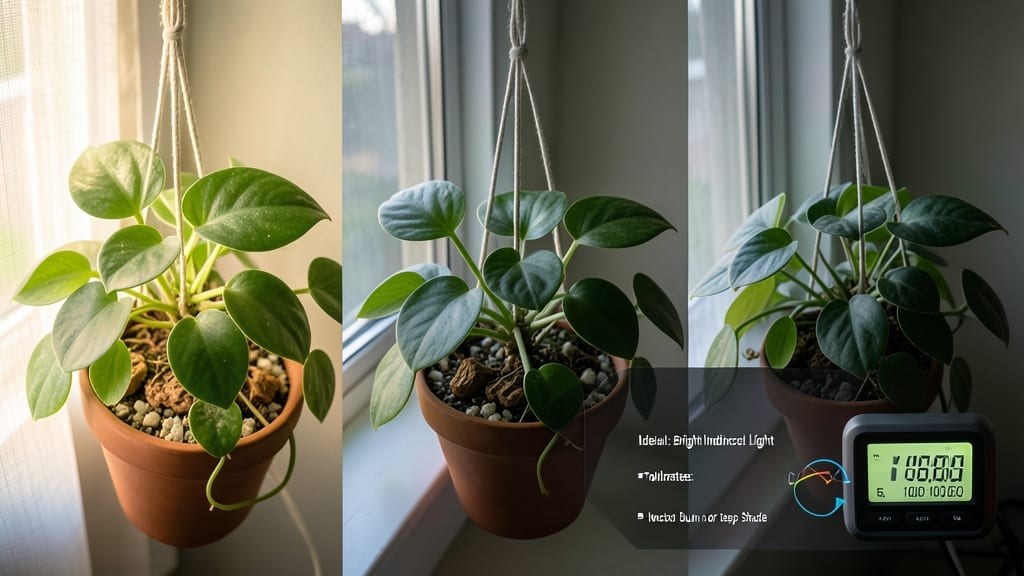
If you're asking "how much light does a hoya plant need", you're already on the right track to keeping your 🌿 Hoya thriving. Unlike sun-worshipping succulents, these tropical vines crave bright, indirect sunlight that mimics their natural understory habitat—but too much direct sun can scorch their delicate leaves.
Most Hoyas do best with 4-6 hours of bright, filtered light daily, whether from an east-facing window or a shaded outdoor spot. The key is avoiding harsh midday rays, which can turn leaves yellow or crispy.
Even in USDA Zone 6a, where spring light shifts dramatically, finding the right balance ensures your Hoya grows lush and vibrant.
What happens when you get it wrong? Leggy growth or pale leaves signal insufficient light, while brown patches or curled edges mean too much intensity. The good news? Adjusting placement or using sheer curtains can make all the difference.
Let’s break down exactly how to create the perfect light environment for your Hoya’s stunning foliage and fragrant blooms.
Whether you're a beginner or a seasoned plant parent, mastering light conditions is the game-changer for healthy Hoya growth. I’ll show you how to spot the ideal spot in your home—and what to do when natural light falls short.

Ideal light requirements for Hoya plants: bright indirect sunlight explained
Hoya plants crave bright indirect sunlight—think of it as the Goldilocks of light conditions: not too harsh, not too dim. In their natural tropical habitats, they grow under the dappled shade of trees, where sunlight filters through leaves.
Recreating this environment at home is the secret to vibrant foliage and those iconic fragrant Hoya blooms.
Direct sunlight can scorch their delicate leaves, while low light causes leggy growth and weak stems. The key is finding that sweet spot where your Hoya gets 4-6 hours of bright, filtered light daily.
This could mean placing them near an east-facing window or a few feet back from a south-facing one, where the sun's intensity is softened.
For precise guidance, here’s how to break down your Hoya’s light needs into actionable categories:
| Light Condition | Description | Ideal For |
|---|---|---|
| Low Light | Fewer than 2 hours of indirect light daily; often found in north-facing windows or deep indoors. | Avoid—causes etiolation (long, weak stems) and sparse leaves. |
| Medium Light | 2-4 hours of bright indirect light; typical of east or north-facing windows. | Good for low-light tolerant Hoyas like Hoya carnosa or Hoya linearis. |
| Bright Indirect Light | 4-6 hours of filtered light; achieved by placing plants 2-3 feet from a south or west window. | Optimal for most Hoyas—promotes lush growth and blooming. |
| Direct Sunlight | More than 6 hours of unfiltered sun; common in south or west windows without shade. | Risk of leaf scorch—use sheer curtains to diffuse light. |
Seasonal adjustments are crucial. During summer months, when sunlight is most intense, move your Hoya a few feet away from windows or use a sheer curtain to filter the light.
In winter, when natural light is scarce, supplement with a grow light for 6-8 hours daily to maintain growth.
Pro tip: Rotate your Hoya’s pot every 2-4 weeks to ensure even light exposure. This prevents one side from becoming leggy while the other stays compact. Think of it as giving your plant a gentle "sunbath" on all sides!
If you’re unsure whether your space meets the bright indirect light requirement, try this quick test: Hold a piece of white paper near your Hoya’s usual spot. If the paper is brightly lit but you can still read text comfortably, it’s likely the perfect location.
If it’s too dark to read, your Hoya needs a sunnier spot.
For outdoor gardeners, Hoyas thrive in partial shade gardens or under the canopy of larger trees. Avoid placing them in full sun, especially during peak afternoon hours when UV rays are strongest. A morning sun exposure of 2-3 hours is ideal for outdoor Hoyas.
Remember, every Hoya variety has slight variations in light tolerance. For example, Hoya obovata and Hoya kerrii are more adaptable to lower light, while Hoya imperialis and Hoya oblonga demand brighter conditions. Always check your specific variety’s care guide for tailored advice.
With the right light, your Hoya will reward you with glossy leaves, vigorous vines, and those intoxicating waxy flower clusters that make collectors swoon. 🌿
Ideal light requirements for Hoya plants: bright indirect sunlight explained
Hoya plants thrive in bright indirect sunlight, mimicking their natural habitat under forest canopies. This means they need 4-6 hours of filtered light daily, but direct afternoon sun can scorch their delicate leaves.
Think of it like a gentle morning glow—similar to what you’d find near an east-facing window or under sheer curtains.
The key is avoiding harsh midday rays, which can cause leaf burn or bleaching. Instead, position your Hoya where it gets dappled sunlight, like near a north- or east-facing window.
South-facing windows work too, but move the plant 3-5 feet back to diffuse the intensity. For outdoor growers, partial shade under trees is perfect during summer months.
| Light Condition | Ideal Hoya Response | Best Window Placement |
|---|---|---|
| Low Light (<30%) | Leggy growth, pale leaves, sparse blooms | North-facing window or 10+ ft from south window |
| Medium Light (30-50%) | Healthy growth, glossy leaves, occasional blooms | East or west window, 2-3 ft away |
| High Indirect (50-70%) | Vibrant leaves, frequent blooms, compact vines | South window with sheer curtain, 3-5 ft back |
| Direct Sun (>70%) | Brown leaf tips, crispy edges, stunted growth | Avoid west/south windows without diffusion |
Seasonal adjustments are crucial. In summer, when sunlight is intense, Hoyas may need afternoon shade or a move to a less sunny spot. Conversely, winter’s weaker light might require supplementing with a grow light (12-14 hours/day) to prevent etiolation—those sad, stretched stems reaching for non-existent light.
Pro tip: Rotate your Hoya quarter-turn weekly to ensure even light exposure. This prevents lopsided growth and encourages balanced vine development.
If you notice new leaves growing smaller, it’s a sign the plant isn’t getting enough light—time to find a brighter spot or add a LED grow bulb nearby.
For outdoor Hoyas, morning sun + afternoon shade is ideal. Varieties like Hoya carnosa or Hoya obovata handle this well, while Hoya linearis (with its striking leaves) thrives in bright, filtered conditions year-round. Always acclimate plants slowly to new light levels to avoid shock.
Remember, Hoyas are adaptable—they’ll survive in lower light but won’t flourish. Push for bright indirect to see those glossy leaves and fragrant blooms you’ve been dreaming of! 🌿