
Plants
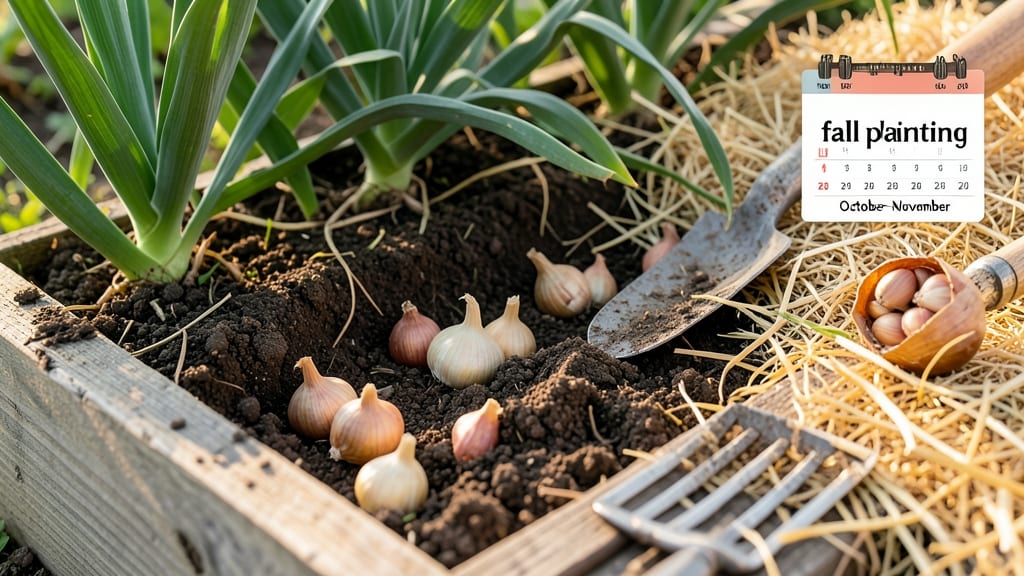
Timing your garlic planting in North Carolina isn't just about throwing cloves in the dirt—it's the secret weapon behind those plump, flavorful bulbs you dream of harvesting next summer. Get it wrong, and you might end up with weak, underdeveloped harvests that barely resemble the garlic you know and love.
Here in North Carolina's USDA zones 6a-8a, the fall window of October to November is your golden opportunity to plant garlic, but not all varieties thrive equally. The key lies in matching your garlic type to the chill hours your region delivers—too few, and your bulbs won't form properly.
I'll show you exactly how to navigate this balance so you can grow garlic that rivals anything you've ever bought at the store.
Whether you're in the Coastal Plain, Piedmont, or Mountains, each region has its own microclimate quirks that affect planting timing. We'll break down the ideal schedules, soil prep tricks, and even how to adjust for those pesky late frosts that can throw off your best-laid plans.
Think of this as your no-fluff guide to growing garlic that actually performs in our state's unique conditions.
Ready to ditch the guesswork and grow garlic that's stronger, more flavorful, and more reliable? Let's get into the specifics—because in North Carolina, timing isn't just important, it's everything. Your future harvests will thank you.
North Carolina garlic planting zones: matching varieties to chill-hours for maximum yield
North Carolina’s diverse climate—from the mild Coastal Plain to the cool Mountain regions—means one-size-fits-all garlic advice won’t work. The key to success lies in chill-hour requirements, which determine how well garlic bulbs form.
Most varieties need 300–1,000+ hours below 40°F to develop properly, and NC’s zones (6a–8a) create distinct microclimates. Planting the wrong variety in the wrong zone can lead to small bulbs, weak flavor, or even bolting (premature flowering).
For example, hardneck varieties like 'Music' or 'German White' thrive in the Mountains (Zone 6a), where winters are cold and long. Meanwhile, softneck varieties like 'Silverskin' or 'Artichoke' do better in the Piedmont (Zone 7a) and Coastal Plain (Zone 8a), where winters are shorter and milder.
Even within a region, elevation and microclimates can shift chill-hour totals by hundreds of hours, so local data matters.
Here’s how to match your North Carolina location to the right garlic variety for maximum bulb size and flavor. The table below breaks down chill-hour needs by region, along with top-performing varieties and key planting notes.
| Region | USDA Zone | Chill-Hours Needed | Best Varieties | Planting Window |
|---|---|---|---|---|
| Mountains (Asheville, Boone) | 6a-6b | 800–1,000+ hours | 'Music', 'German White', 'Chesnok Red' | October 1–15 |
| Piedmont (Raleigh, Greensboro) | 7a-7b | 500–800 hours | 'Silverskin', 'Artichoke', 'Creole' | October 15–November 1 |
| Coastal Plain (Wilmington, Fayetteville) | 8a-8b | 300–500 hours | 'California Early', 'Inchelium Red', 'German Red' | November 1–15 |
If you’re unsure about your chill-hour total, check local weather data from the NC State Climate Office or use a garlic chill-hour calculator. For example, Asheville (Zone 6a) typically gets 1,000+ chill-hours, while Wilmington (Zone 8a) averages just 400–500 hours.
Planting a hardneck variety in Wilmington might result in bolting (flowering instead of bulb formation), while a softneck in Asheville could produce small, weak bulbs due to excess cold.
Another critical factor is soil temperature. Garlic cloves need soil temps between 40–50°F at planting time. In the Coastal Plain, where winters are milder, soil may stay too warm in late November, delaying planting.
Conversely, in the Mountains, frost can arrive as early as mid-October, so aim to plant by October 1 to avoid winter kill. Use a soil thermometer to confirm readiness—this small tool can save you from planting too early or too late.
For gardeners in transition zones (e.g., Zone 7b), consider intermediate varieties like 'Chesnok Red' or 'Korean Red', which tolerate 500–700 chill-hours. These adapt better to unpredictable NC winters where chill-hours can vary year to year.
If you’re experimenting, plant a test row of 3–4 varieties to compare performance—this hands-on approach helps you refine your strategy for future seasons.
One common mistake is assuming all garlic is created equal. Hardnecks (like 'Music') produce fewer but larger cloves and are prized for bold flavor, while softnecks (like 'Artichoke') yield more cloves per bulb but with milder taste.
In NC’s Piedmont, where winters are moderate, softnecks often outperform hardnecks because they don’t require as many chill-hours. However, hardnecks can still work if planted early enough to meet their chill-hour needs.
Pro tip: Save seeds from your best-performing bulbs to create a region-specific garlic strain over time. NC’s climate is ideal for this—after 2–3 years of selective saving, you’ll develop garlic that’s perfectly adapted to your microclimate.
Just ensure you plant only disease-free bulbs to avoid spreading issues like white rot or basal rot, which thrive in NC’s humid summers.
Finally, don’t overlook organic matter in your soil. Garlic thrives in loamy, well-draining soil with a pH of 6.0–7.0.
Amend heavy clay (common in the Piedmont) with compost or sand, while sandy soils (like those in the Coastal Plain) benefit from peat moss or aged manure.
A soil test before planting reveals hidden issues—like high nitrogen, which can lead to leafy growth at the expense of bulb development. Aim for a balanced fertilizer (like 5-10-10) applied lightly in June to support bulb formation.
By matching your garlic variety to your NC zone and preparing your soil properly,
Optimal planting windows by region: Coastal vs. Piedmont vs. Mountain timelines
North Carolina’s diverse climate means your garlic planting window can vary dramatically from the Coastal Plain to the Mountains. In Zone 7b-8a (Coastal), mild winters allow planting as late as December 1st, while Zone 6a (Mountains) demands earlier action by October 15th to avoid bolting.
Let’s break down the exact timelines for each region to maximize your harvest.
For Coastal North Carolina (e.g., Wilmington, Fayetteville), aim to plant between November 1st and December 15th. The warmer winters mean your garlic will need 400–600 chill-hours, so varieties like Silverskin or Creole thrive here. Skip planting after January 1st, or you risk weak bulbs.
In the Piedmont region (e.g., Raleigh, Greensboro), where Zone 7a dominates, your ideal window is October 15th to November 15th. This gives your garlic enough time to establish roots before winter, with 500–700 chill-hours needed. Artichoke or Rocambole varieties perform best here.
| Region | Zone | Best Planting Window | Chill-Hours Needed |
|---|---|---|---|
| Coastal | 7b–8a | Nov 1 – Dec 15 | 400–600 |
| Piedmont | 7a | Oct 15 – Nov 15 | 500–700 |
| Mountains | 6a | Oct 1 – Oct 31 | 800–1,000+ |
In the Mountains (e.g., Asheville, Boone), plant by October 31st to ensure your garlic gets the 800–1,000+ chill-hours it needs. Hardneck varieties like German White or Music excel here. If you miss this window, consider a cold-frame to extend the season.
Pro tip: Use the moon planting calendar for best results. Plant during the waxing moon (root crops grow stronger) and avoid the full moon, when garlic may bolt prematurely. For example, a waxing moon in late October is ideal for Piedmont plantings.
Adjust for early/late frosts—if your area experiences unusually warm winters, plant earlier (by October 1st) to prevent bolting. Conversely, if cold snaps are expected, delay until November 1st to avoid frost damage to young cloves.
Once planted, mulch heavily (4–6 inches of straw) to insulate bulbs through winter. This keeps soil temps stable and prevents heaving—critical for large, well-formed bulbs by harvest time. 🌱