
Trees
Timing your fruit tree planting in Illinois can make or break your harvest—especially when chill hours matter as much as frost dates. Whether you're dreaming of crisp 🍎 Honeycrisp apples or juicy peaches, getting the window right means stronger roots and bigger yields down the road.
Most Illinois gardeners know spring and fall are the prime seasons, but did you know Zone 5-6 trees need different prep depending on whether you plant bare-root saplings or container-grown varieties?
I’ll break down exactly when to dig in for each type, so you avoid common mistakes like planting too early and risking frost damage.
From March-April for early spring plantings to October-November for fall, we’ll match your fruit tree’s chill-hour needs to Illinois’ microclimates. Whether you’re in northern Zone 5 or southern Zone 6, this guide ensures your tree starts strong—no guesswork, just thriving orchards.
Ready to set your fruit trees up for success? Let’s dive into the step-by-step schedule that’ll have you harvesting in just a few years—no more waiting for that perfect September-October apple harvest.
Illinois fruit tree planting timeline by chill-hour zones
Illinois spans USDA Hardiness Zones 5-6, but chill hours (not just frost dates) determine which fruit trees thrive. Northern Illinois (Zone 5) gets 500-900 chill hours, while southern Illinois (Zone 6) sees 300-600 hours.
Matching your tree’s chill needs to your location ensures proper dormancy and fruit set.
For example, Honeycrisp apples need 700-900 chill hours—ideal for northern Illinois—while Fuji apples thrive with 400-600 hours, perfect for southern regions. Planting at the wrong time disrupts this balance, leading to poor yields or no fruit at all.
🌱
| Zone | Chill Hours | Best Planting Window | Ideal Varieties | Soil Prep Tip |
|---|---|---|---|---|
| Northern IL (Zone 5) | 700-900 | Early spring (March-April) or fall (Oct 15-Nov 15) | Honeycrisp, Jonathan apples; Montmorency cherries | Amend clay soil with compost |
| Central IL (Zone 5b-6a) | 500-700 | Late March-April or Oct 1-Nov 10 | Fuji, Gala apples; Reliance peaches | Test pH (aim for 6.0-7.0) |
| Southern IL (Zone 6) | 300-500 | Late April-May or Sept 15-Oct 15 | Elberta peaches; Black Diamond plums | Drainage check (avoid waterlogging) |
Spring planting (March-April) gives roots time to establish before summer heat, while fall planting (October-November) allows trees to settle before winter dormancy. In northern Illinois, aim for 2-3 weeks before the last frost (typically April 15), while southern regions can wait until late April to avoid late frosts.
For bare-root trees, plant as soon as soil thaws—don’t delay! Container-grown trees can wait until late spring (May) if needed. Always water deeply after planting to reduce transplant shock, especially in sandy soils common in northern Illinois.
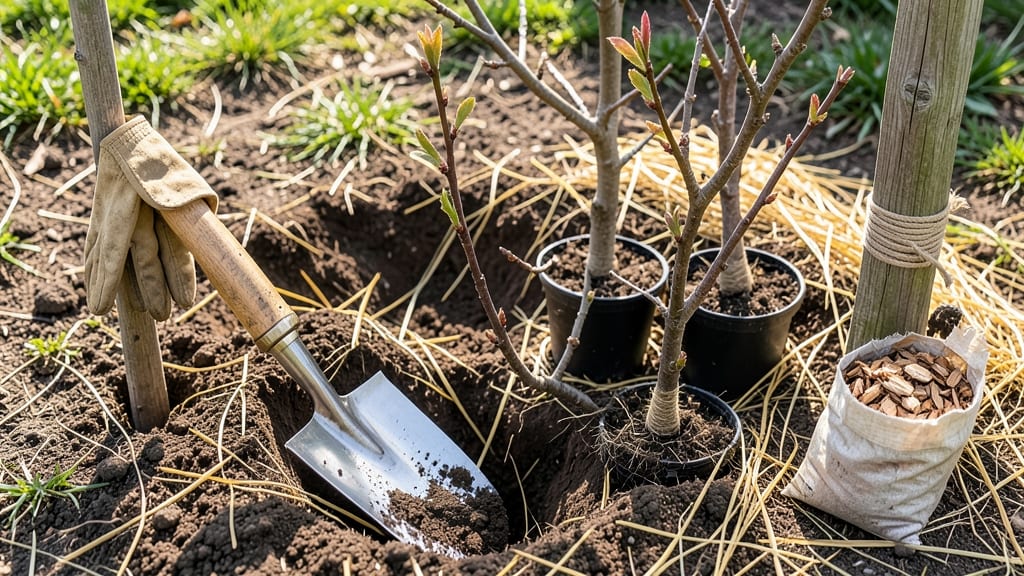
Mulch with 3-4 inches of organic mulch (straw or wood chips) to retain moisture and regulate soil temperature. In urban areas, monitor microclimates—trees near buildings or pavement may need 1-2 weeks earlier planting due to heat retention.
🌳
Use this chill-hour map from the University of Illinois Extension to confirm your zone: extension.illinois.edu. For peach and cherry trees, prioritize fall planting—they establish roots faster in cooler weather, reducing late-winter dieback risks from fluctuating temperatures.
Pro tip: If planting in containers, use 5-gallon pots minimum and move them to a sheltered spot in winter. Dwarf varieties like Columnar apples adapt well to containers but still need full sun exposure.
✂️
Best fruit tree varieties for Illinois climates and their planting windows
Illinois’ diverse climate—from northern Zone 5 to southern Zone 6—means not all fruit trees thrive equally. Choosing the right variety for your chill-hour zone (300-900+ hours) is critical.
For example, Honeycrisp apples need 600-800 chill hours and excel in northern Illinois, while Fuji apples (400-500 chill hours) suit southern regions. Let’s match your location to the best-performing trees.
Peaches and plums are other top picks, but they demand high chill-hour varieties like Reliance peaches (500+ hours) or Stanley plums (400+ hours). Southern Illinois gardeners can also try low-chill varieties like Elberta peaches (300-400 hours), but these may struggle in colder northern areas.
Always verify your last frost date (April 15 in most regions) before planting.
| Variety | Chill Hours | Best Illinois Zone | Planting Window | Notes |
|---|---|---|---|---|
| Honeycrisp Apple | 600-800 | 5 (Northern IL) | March-April or October | Sweet, crisp; needs cross-pollination |
| Fuji Apple | 400-500 | 6 (Southern IL) | March-April or October | Crunchy, low acid; self-pollinating |
| Reliance Peach | td>500+5-6 | March-April | Freestone; resistant to brown rot | |
| Stanley Plum | 400+ | 5-6 | March-April or October | Sweet, purple; great for preserves |
| Elberta Peach | 300-400 | 6 (Southern IL) | March-April | Classic variety; needs warm microclimate |
Timing matters just as much as variety selection. Bare-root trees should be planted in late winter/early spring (February-March) before buds swell, while container-grown trees can go in until October as long as the ground isn’t frozen.
Fall planting (October-November) is ideal for dormant trees—they establish roots before winter and burst into growth in spring.
For cherry trees, focus on Montmorency sour cherries (500+ chill hours) in northern zones or Stella cherries (300-400 hours) in southern areas. These varieties handle Illinois’ late spring frosts better than delicate sweet cherries.
Always plant cherries in well-draining soil to avoid root rot, a common issue in heavy clay soils like those in central Illinois.
Don’t overlook pears like Bartlett or Anjou, which thrive in Zone 5-6 and can be planted in early spring or fall. Their moderate chill requirements (400-600 hours) make them versatile for most of the state. Pair them with pollination partners for consistent fruit set—most pears are self-unfruitful.
Pro tip: Use Illinois Extension’s frost-free date map to refine your planting schedule. Northern regions (e.g., Chicago area) may need to wait until mid-April, while southern areas (e.g., St. Louis) can start as early as late February.
Always mulch newly planted trees with 3-4 inches of wood chips to retain moisture and regulate soil temperature.