Planting
When to plant a fall garden in Zone 7 can mean the difference between a thriving harvest and a sad, wilted disappointment—but don’t worry, I’ve got you covered. With just a few weeks to plan, you can still enjoy fresh greens, crisp carrots, and hardy herbs long after summer’s heat fades.
Most Zone 7 gardeners assume they’ve missed their chance after July, but the truth is, late summer to early fall (August–October) is actually the perfect window for cool-season crops. The key is understanding how many weeks before your first frost to plant each variety—whether you’re sowing seeds or transplanting seedlings.
I’ll walk you through the exact planting schedule for your favorite fall veggies, from leafy greens that bolt in heat to root crops that need time to mature. Plus, I’ll share pro tips to extend your harvest right through winter with simple row covers and succession planting.
Ready to transform your garden into a fall feast? Let’s dive into the step-by-step timeline that’ll keep your 🌱 thriving until the first frost.

Exact weeks before first frost to plant fall vegetables in Zone 7
In Zone 7, where the first frost typically arrives between October 15–November 15, timing your fall garden is all about counting backward from that date. The key is planting cool-season crops 4–8 weeks before frost, depending on their days-to-harvest needs.
For example, fast-growing leafy greens like spinach or arugula can handle a 30–45-day window, while slower root vegetables like carrots or beets need 60–80 days to mature.
Start by calculating your local frost date—most Zone 7 gardeners use October 15 as a baseline. Subtract the days-to-harvest for each crop to determine the ideal planting window.
For instance, if your kale needs 60 days to harvest, plant it by August 15 to ensure a fall harvest before frost.
Here’s a quick rule of thumb: Fast growers (30–45 days) like radishes or lettuce can be sown as late as September 1–15. Medium growers (45–60 days) such as broccoli or Swiss chard should go in by August 1–15. Slow growers (60–80+ days), like carrots or cabbage, need to be planted by July 15–August 1 to avoid frost damage.
| Crop | Days to Harvest | Planting Window (Zone 7) | Notes |
|---|---|---|---|
| Leafy Greens (Lettuce, Spinach, Kale) | 30–60 | Late July–Early September | Sow every 2 weeks for continuous harvest. |
| Root Vegetables (Carrots, Beets, Radishes) | 45–80 | Mid-July–Late August | Thin seedlings to avoid overcrowding. |
| Brassicas (Broccoli, Cabbage, Brussels Sprouts) | 60–100 | Early July–Mid-August | Transplant seedlings for faster growth. |
| Alliums (Onions, Garlic, Leeks) | 90–120 | Late June–Early July | Plant sets or seeds early for overwintering. |
| Herbs (Cilantro, Parsley, Dill) | 30–70 | Late July–Early September | Sow directly in soil for best results. |
Don’t forget to adjust for soil temperature. Cool-season crops thrive in 50–70°F soil, so avoid planting when soil is still warm from summer. Test your soil with a soil thermometer—if it’s above 75°F, wait a week or two before sowing seeds.
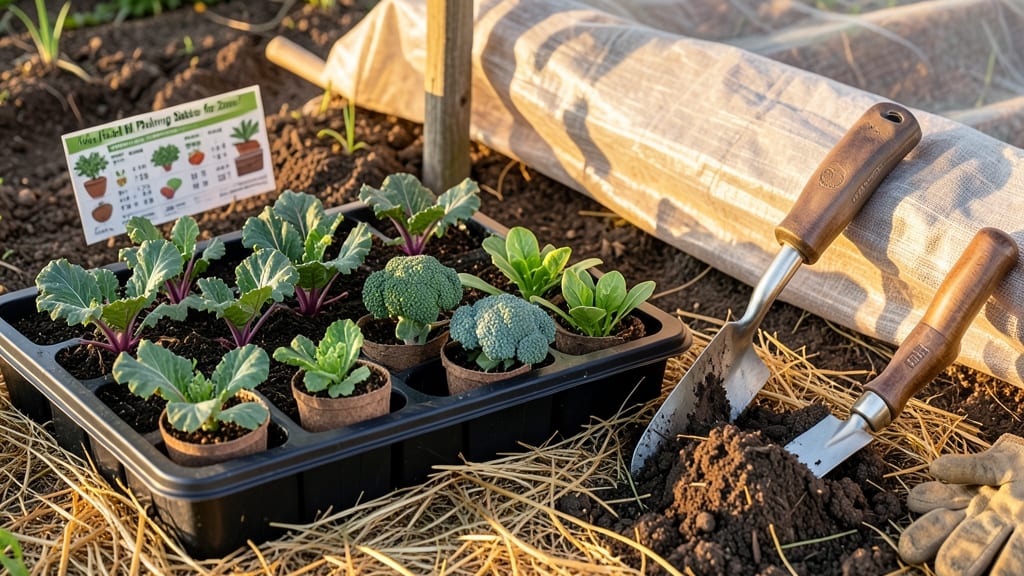
For transplants, like broccoli or cabbage seedlings, harden them off for 7–10 days before setting them out. This helps them adjust to Zone 7’s cooler fall temperatures without shock. Water deeply after transplanting to reduce stress and encourage root growth.
If you’re unsure about your first frost date, check the USDA Plant Hardiness Zone Map or use a frost date calculator like the one from the Old Farmer’s Almanac. Local weather patterns can shift your frost date by 1–2 weeks, so stay flexible with your planting schedule.
Pro tip: Use row covers or cold frames to extend your harvest window by 2–4 weeks. These protective layers shield plants from light frosts (below 28°F) and can make a huge difference for sensitive crops like lettuce or peas.
Finally, keep a planting journal to track what works best in your Zone 7 garden. Note which varieties thrive, when you planted them, and how long they took to harvest. Over time, you’ll refine your fall planting schedule for maximum success.
Exact weeks before first frost to plant fall vegetables in Zone 7
Zone 7 gardeners have a 6–8 week window before the first frost to plant cool-season crops. Most varieties need 30–60 days to mature, so timing is critical.
For example, if your average first frost is October 15, aim to plant leafy greens by late August and root vegetables by early September.
Use your local frost date as your starting point. In Zone 7, this typically falls between October 15–November 15. Count backward based on each plant’s days to harvest.
For instance, lettuce (30–45 days) should go in by September 15–20, while broccoli (60–80 days) needs an August 1–15 start.
| Crop | Days to Harvest | Planting Window | Notes |
|---|---|---|---|
| Lettuce | 30–45 | Sep 15–Oct 1 | Succession plant every 2 weeks |
| Spinach | 40–50 | Sep 1–Sep 20 | Tolerates light frost |
| Carrots | 60–80 | Aug 1–Sep 1 | Loose, well-drained soil |
| Broccoli | 60–80 | Aug 1–Aug 15 | Start indoors for head start |
| Kale | 50–60 | Aug 15–Sep 10 | Sweeter after frost |
For fast-maturing crops like radishes (25–30 days), you can plant as late as September 15. Meanwhile, slow growers like cabbage (80–100 days) need an early August start. Always check seed packets for exact days to maturity—this is your best guide.
Don’t forget to test your soil temperature before planting. Most cool-season crops thrive in 60–70°F soil. If your soil is still warm (above 75°F), delay planting or use shade cloth to protect seedlings from heat stress.
Extend your harvest by using row covers or cold frames to shield plants from early frosts. This can add 2–4 weeks to your growing season, giving you fresh greens well into November.
Pro tip: Keep a planting journal to track what works in your Zone 7 garden. Note which crops thrive, which bolt early, and when you should adjust your schedule next year.