
Plants
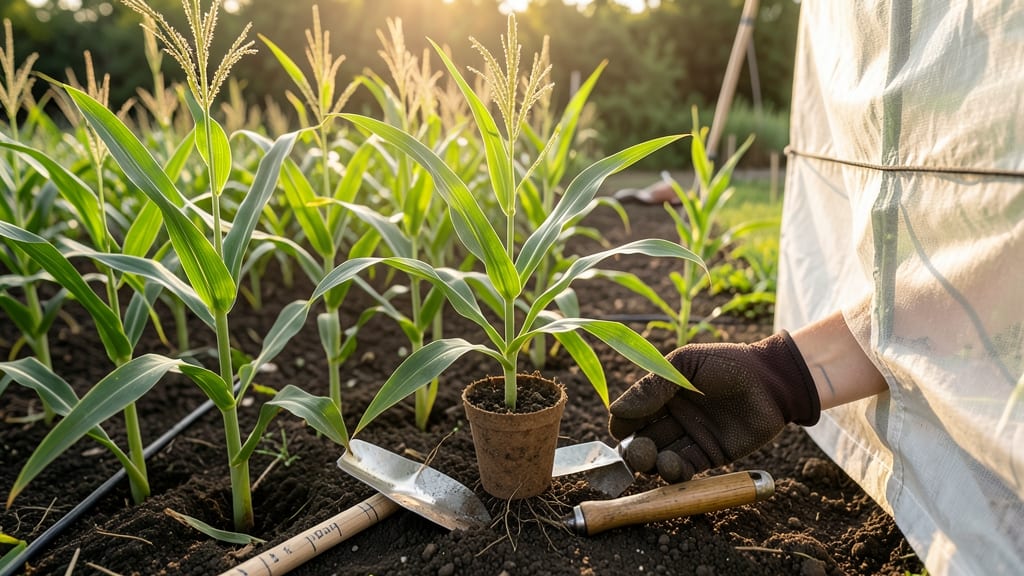
Timing your 🌽 corn planting in Iowa can mean the difference between a bumper crop and a wasted effort. With the state's 5a-6b climate and unpredictable spring weather, getting those seeds in the ground too early or too late can leave your plants vulnerable to frost or drought.
The ideal window—mid-April to early June—might seem straightforward, but soil temperature and regional microclimates add layers of complexity.
Most Iowa gardeners wait until after the last frost date, but that's just the starting point. The real secret lies in soil temperature: seeds need 50°F+ to germinate properly, and planting too soon can leave young plants struggling.
I've seen firsthand how a week's delay can mean the difference between a thriving crop and one that never fully matures.
In this guide, you'll discover the exact planting windows for your specific Iowa region, plus proven strategies to adjust for late springs or early frosts. Whether you're a backyard gardener or a small-scale farmer, these insights will help you maximize your July to September harvest potential.
Let's break down the science behind Iowa's planting calendar and show you how to outsmart Mother Nature's curveballs—so you can enjoy those sweet, golden ears of corn without the guesswork.
Iowa corn planting dates by region: frost risk vs. optimal soil temps
Iowa’s diverse geography means corn planting dates vary dramatically from Northeast to Southwest. The key factors? Soil temperature (must hit 50°F+ for germination) and last frost dates, which can differ by 2-3 weeks across regions.
Let’s break it down by Iowa’s 9 growing regions, using data from Iowa State University’s Mesonet and USDA hardiness zones.
For Northeast Iowa (Zones 5a-5b), like Dubuque and Waterloo, the average last frost hits April 20-25.
But don’t rush—soil often lingers below 50°F until May 1-5. Southwest Iowa (Zones 6a-6b), including Sioux City and Council Bluffs, enjoys earlier soil warming, with planting-ready conditions by April 10-15. These regional differences can mean a 3-week window between early and late planters.
Here’s the critical rule: Plant when soil temps consistently hit 50°F and at least 2 weeks after the 50% frost probability date. Use a soil thermometer—Iowa’s black soil can fool you, staying cold longer than sandy loam.
Pro tip: Early-maturing hybrids (like P1198AM) give you a 2-week buffer if spring stalls.
🌽
| Region | Avg. Last Frost | Soil 50°F+ | Optimal Planting | Risk Notes |
|---|---|---|---|---|
| Northeast (Dubuque) | April 20-25 | May 1-5 | May 10-15 | Late frosts common; use row covers |
| Northwest (Sioux City) | April 15-20 | April 25-May 1 | April 30-May 5 | Drier soils; monitor moisture |
| Central (Des Moines) | April 10-15 | April 20-April 25 | April 25-May 1 | Moderate risk; ideal for hybrids |
| Southwest (Council Bluffs) | April 5-10 | April 10-15 | April 15-20 | Early planting; watch for drought |
| Southeast (Burlington) | April 10-15 | April 20-April 25 | April 25-May 1 | Humidity increases fungal risk |
Microclimates matter too. River valleys (like the Mississippi River in Davenport) can warm 3-5 days earlier than inland areas, while hilly regions (e.g., Ottumwa) may face delayed soil warming. Always check Iowa State’s Mesonet for real-time soil temp maps—it’s a game-changer for high-yield planting.
I’ve planted corn in both Northeast and Southwest Iowa, and the difference in ear development speed is noticeable. In Sioux City, corn often tassels by June 15, while in Dubuque, it can lag until July 1.
This delay means earlier hybrids (like P0161AM) are non-negotiable in cooler zones. For maximum yield, aim to have 50% of your crop planted by May 10 statewide.
One common mistake? Planting based on air temperature alone. A 70°F day with 40°F soil will
How to adjust corn planting dates for Iowa’s unpredictable spring weather
Iowa’s spring weather can be as unpredictable as a whirlwind, leaving even experienced farmers second-guessing their corn planting dates. A late frost in May or an unseasonably warm April can throw off your entire growing season if you’re not prepared.
The key is flexibility—adjusting your timeline based on soil temperature, frost forecasts, and even hybrid maturity to maximize your yield.
The golden rule for corn is to plant when the soil temperature consistently reaches 50°F at a depth of 4 inches. In Iowa, this typically aligns with late April to early May, but cold snaps can push it into early June.
Using a soil thermometer is non-negotiable—guessing leads to slow germination or worse, seed rot. If your soil is still chilly, consider soil warming techniques like black plastic mulch or row covers to create a microclimate that encourages faster germination.
Another critical factor is the 50% probability frost date, which varies by Iowa region. For example, Northeast Iowa’s last frost often arrives by April 25, while Southwest Iowa might see frost-free conditions by April 10.
Planting too early risks frost damage to young seedlings, but delaying too long can shorten the growing season, reducing ear size and yield.
To stay ahead, bookmark the Iowa Environmental Mesonet or sign up for NOAA frost alerts—these tools provide real-time updates on frost risk so you can adjust your planting schedule dynamically.
Choosing the right corn hybrid also impacts your planting window. Early-maturing varieties like P1198AM (90-day maturity) can handle later plantings, while late-maturing types like P0161AM (120-day maturity) need to be in the ground by mid-May to avoid frost.
If you’re unsure, opt for a mid-season hybrid (100-day maturity) as a safe middle ground. Remember, every day after the ideal planting window can cost you 1-2% in yield potential, so timing is everything.
Pros and Cons of Adjusting Corn Planting Dates
If you’re planting in early April (a risky but sometimes rewarding strategy), use row covers or cold frames to protect seedlings until the soil warms. For late plantings in June, focus on drought-tolerant hybrids and prioritize irrigation to keep the soil moist during critical growth stages.
Pro tip: Plant a test row a week before your main planting date—if the seeds sprout within 7-10 days, you’re good to go. If not, wait another week.
Finally, don’t underestimate the power of planting buffers. If the 10-day forecast calls for a 20% chance of frost, delay planting by 5-7 days to play it safe. Iowa’s weather can shift faster than a prairie storm, so staying flexible is your best defense against lost yields.
With the right adjustments, you can turn Iowa’s unpredictable spring into a season of bountiful corn harvests—not heartbreak.
🌱