Plants
Knowing when to plant broccoli in Zone 6 can mean the difference between a thriving garden and a sad, wilted 🥦. This cool-weather crop hates heat, so timing your planting just right is the key to a bountiful harvest.
If you're in Zone 6 (General), your best bets are early spring or late summer. Planting too early risks frost damage, while waiting too long means bolting before you get those perfect heads. Let’s break down the exact windows and tips to get your broccoli off to the best start.
Spring planting should happen 4-6 weeks before your last frost—usually around early March in 6a-6b. For fall, aim for late July to early August to enjoy harvests before the first frost hits in mid-October. With the right timing, you’ll avoid common pitfalls and enjoy fresh, homegrown broccoli all season.
Ready to grow? I’ll walk you through soil prep, spacing, and even companion plants to keep pests away. Let’s get your Zone 6 garden set up for success!

Optimal broccoli planting windows in Zone 6 for maximum harvests
Zone 6 gardeners have a 6-week window for spring planting and a 3-month window for fall planting to ensure cool-season success. Broccoli hates heat—temperatures above 80°F trigger bolting (flowering), so timing is critical.
Let’s break down the exact schedule for your Zone 6 microclimate, whether you’re in 6a (colder) or 6b (warmer).
For spring planting, aim to sow seeds 4-6 weeks before your last frost date. In Zone 6, this typically falls between late February and early March, depending on your specific location.
Soil temperature should reach at least 40°F for germination. If you’re in 6a (colder), err on the later side (early March); for 6b (warmer), you can start as early as late February.
Transplant seedlings outdoors 2-3 weeks before the last frost, usually around mid-to-late March. This gives young plants time to establish roots before warmer weather arrives. Use row covers if nighttime temperatures dip below 35°F to protect tender seedlings.
Mid–Late Mar (transplants)
Early Aug (transplants)
Shift 1–2 weeks later (colder microclimates)
Fall planting is your second chance for broccoli in Zone 6. Start seeds indoors or direct-sow outdoors mid-to-late July for a harvest before the first frost (typically mid-October). Transplant seedlings by early August to allow 70–90 days to maturity. Choose fast-maturing varieties like ‘Waltham 29’ or ‘Calabrese’ for fall success.
Zone 6’s microclimates can shift planting windows by 1–2 weeks. If you live near a lake or river, cooler temperatures may extend your spring window. Conversely, urban heat islands or south-facing slopes can push back your fall planting by a week.
Always check your local frost dates—they vary even within Zone 6!
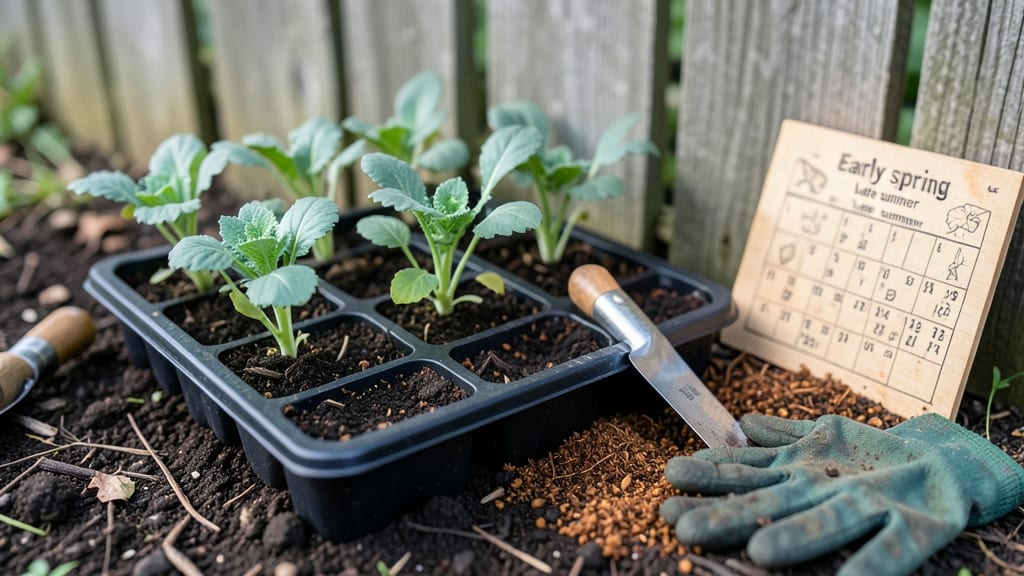
Pro tip: Use seedling trays to start broccoli indoors 4–6 weeks before transplanting. This gives you flexibility to adjust outdoor planting based on soil warmth and weather forecasts. Harden off seedlings for 7–10 days before moving them outside to prevent transplant shock.
For container gardening, plant broccoli in 5-gallon pots and place them in full sun. Containers warm up faster than garden soil, so start 2 weeks later than your garden’s schedule to avoid heat stress. Use lightweight potting mix with compost for best results.
Remember: Broccoli bolts when stressed. Avoid planting too early if soil temperatures exceed 70°F or too late if days shorten rapidly. With the right timing, you’ll enjoy crisp, flavorful heads all season long!
Optimal broccoli planting windows in Zone 6 for maximum harvests
Zone 6 gardeners have two prime windows to grow broccoli: early spring and late summer. The key is planting when soil temperatures hover between 40°F and 80°F—too cold delays germination, while heat causes bolting.
For spring, aim for 4-6 weeks before your last frost date (typically mid-March to early April in Zone 6). Fall plantings should go in 3 months before your first frost (around late July to early August).
Your exact timing depends on local microclimates. Urban areas may frost earlier than rural spots, so check USDA Zone 6a/6b frost maps for precision. For example, if your last frost is April 15, plant broccoli by March 1-15.
Use row covers if early nights dip below 32°F to protect seedlings.
Broccoli thrives in cool-season conditions, so avoid planting when daytime temps exceed 75°F. Heat stress triggers premature flowering, ruining your harvest. In Zone 6, this means no summer plantings—only spring and fall work.
Plan ahead: spring broccoli yields in late May-June, while fall broccoli matures by early October.
| Planting Window | Ideal Planting Time | Soil Temp | Harvest Window |
|---|---|---|---|
| Spring | 4-6 weeks before last frost (March 1-April 15) | 40°F-60°F | Late May-Early July |
| Fall | 3 months before first frost (July 15-August 15) | 50°F-70°F | Early September-October |
Start seeds indoors 4-6 weeks before transplanting to give them a head start. Use biodegradable pots to avoid root disturbance when moving seedlings outdoors. Harden them off for 7-10 days before transplanting to prevent shock.
Space plants 18-24 inches apart in rows 24-30 inches apart—this prevents crowding, which invites disease and reduces head size.
For Zone 6a (colder microclimates), err on the earlier side of these windows. Zone 6b gardeners can push planting slightly later. Always monitor your garden’s microclimate: South-facing beds warm faster than north-facing ones. Use a soil thermometer to confirm temps before planting—broccoli roots struggle below 40°F.
Pro tip: Direct-sow seeds for fall broccoli in Zone 6 after July 20 to avoid heat stress. If starting earlier, use shade cloth to keep soil cool. Mulch with straw to retain moisture and regulate temperature.
With the right timing, you’ll enjoy two harvests per year—one in spring, one in fall—without bolting or frost damage.