
Plants
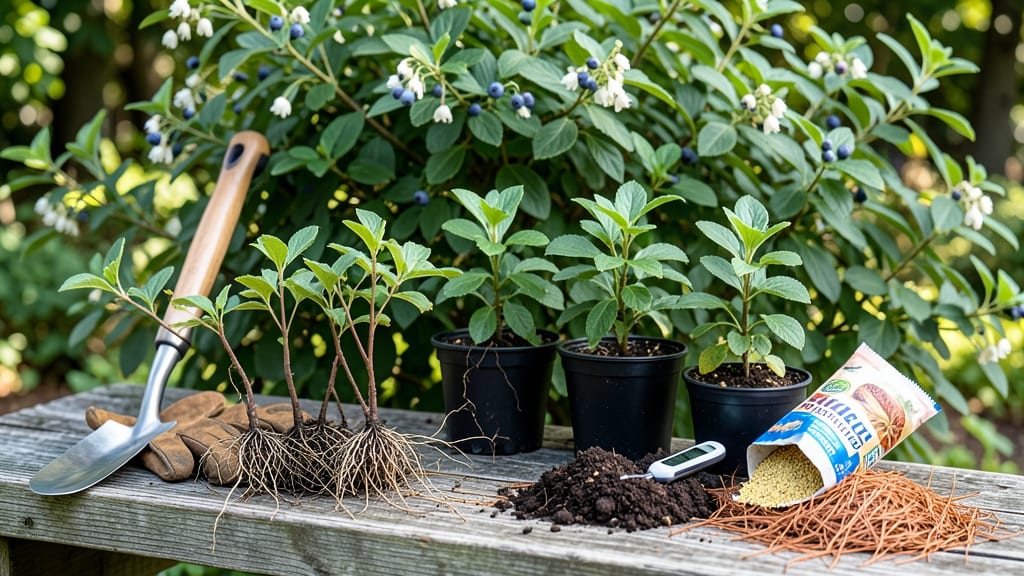
Timing your blueberry bushes 🫐 planting in North Carolina can mean the difference between a thriving harvest and struggling plants—especially when chill-hour needs and frost dates collide. Whether you're in the mountains or coastal plains, getting the window right ensures your bushes establish strong roots before summer heat arrives.
The best time to plant in NC depends on your region's last frost date and the type of bush you choose. Bare-root varieties thrive when planted in late winter to early spring (February–April), while container-grown bushes can go in during fall (September–October) for a head start.
Missing this window risks stunted growth or even plant loss.
But here's the catch: NC's zones 6a–8b create microclimates where frost-free deadlines vary by weeks. Piedmont areas might be ready by mid-February, while coastal zones could wait until March. I'll break down exactly when to plant—and how to prep your soil—for each zone.
From acidic soil prep to spacing hacks, this guide covers everything urban gardeners and homesteaders need to know. Let's get those blueberry bushes off to the right start!
NC blueberry planting zones: chill-hour requirements by variety
North Carolina’s diverse climate—from the cool mountains to the humid coastal plains—means not all blueberry varieties thrive equally. The key factor? Chill hours, the number of hours below 45°F (7°C) your bushes need to produce fruit.
Get this wrong, and you’ll end up with no berries despite perfect growing conditions.
Southern Highbush varieties dominate NC gardens because they require just 200–400 chill hours, ideal for zones 7b–9a. But in the mountains (zones 6a–7a), Rabbiteye varieties with 500–1,000+ chill hours perform best. Half-High hybrids (300–500 chill hours) bridge the gap for transitional zones like the Piedmont.
Here’s how to match your blueberry variety to NC’s zones—and avoid costly mistakes:
| Variety | Chill Hours | Best NC Zones | Planting Window | Notes |
|---|---|---|---|---|
| Southern Highbush | 200–400 | 7b–9a (Coastal Plain, Piedmont) | Fall (Sept–Oct) or early spring (Feb–March) | Low-chill; needs acidic soil (pH 4.5–5.5) |
| Rabbiteye | 500–1,000+ | 6a–7a (Mountains, foothills) | Late winter (Feb–March) | Cold-hardy; tolerates drought better |
| Half-High Hybrid | 300–500 | 6b–8a (Piedmont, transition zones) | Fall (Sept–Oct) or spring (March) | Compact size; good for urban gardens |
🌱 Pro Tip: Use a chill-hour calculator (like the USDA’s) to verify your local needs—NC’s microclimates can vary by 100+ hours just miles apart!
If you’re in zone 7a or lower, prioritize Rabbiteye varieties like ‘Climax’ or ‘Powderblue’. For zones 8a and above, Southern Highbush types like ‘Peach Sorbet’ (dwarf) or ‘O’Neal’ (standard) are foolproof choices. Half-High hybrids like ‘Chester’ are perfect for small spaces in zones 6b–8a.
But here’s the catch: Chill hours ≠ frost dates. Even if your variety meets the chill requirement, planting too early or late can stress roots.
For example, in zone 7b (Piedmont), Southern Highbush bushes need 300 chill hours, but planting in November risks frost damage before roots establish. Aim for 4–6 weeks before your last frost date—more on that in the next section!
For urban gardeners or those with limited space, container-grown bushes (like ‘Top Hat’) offer flexibility. They can be planted year-round in pots, but still need the right chill hours.
If you’re in zone 8a or warmer, consider everbearing varieties like ‘Premier’, which produce two crops per year with proper care.
One last tip: Soil temperature matters too. Roots won’t grow well in cold, wet soil. Wait until the ground warms to 50°F (10°C) before planting—even if chill hours are satisfied. Use a soil thermometer to check, especially in spring.
🌿 Now that you’ve matched your variety to your zone, let’s dive into frost-free deadlines—because timing your planting window is just as critical as choosing the right bush!
Frost-free deadlines for NC regions: when to plant for maximum success
North Carolina’s diverse climate means your blueberry planting window depends heavily on your region. The Piedmont, Coastal Plain, and Mountains each have distinct frost-free deadlines that dictate when to plant for root establishment before summer heat.
For bare-root bushes, aim to plant 4–6 weeks before your last frost date—this gives roots time to establish before the growing season kicks in.
In the Piedmont region (e.g., Raleigh, Greensboro), last frosts typically occur around mid-February to early March. This means your ideal planting window is late January through February for bare-root bushes.
Container-grown bushes, however, can wait until March or even early April since their roots are already established. For fall planting, September is your best bet before temperatures drop.
The Coastal Plain (e.g., Wilmington, Fayetteville) enjoys slightly later frost dates, usually mid-March to early April. Here, you can plant bare-root bushes as late as March and container-grown bushes until early April.
Fall planting in October is also viable, but avoid planting too close to the first frost, which often hits in mid-November.
The Mountains region (e.g., Asheville, Boone) has the latest frost dates, often late April to early May. This gives you a later planting window: April for bare-root bushes and May for containers.
Fall planting here should wrap up by late September to avoid early winter frosts, which can hit as early as mid-November.
For container-grown bushes, flexibility is key. Since they’re already potted, you can plant them up to 2–3 weeks later than bare-root varieties. This is especially useful if you’re in a warmer microclimate or experience unpredictable frost patterns.
Just ensure the container has good drainage and use acidic potting mix to mimic blueberry soil needs.
Pro tip: Check your local Cooperative Extension Service for precise frost dates in your area. They often provide weekly updates that can help you fine-tune your planting schedule. And remember, soil temperature matters too—wait until the ground warms to at least 40°F for planting to avoid shocking the roots.