Plants
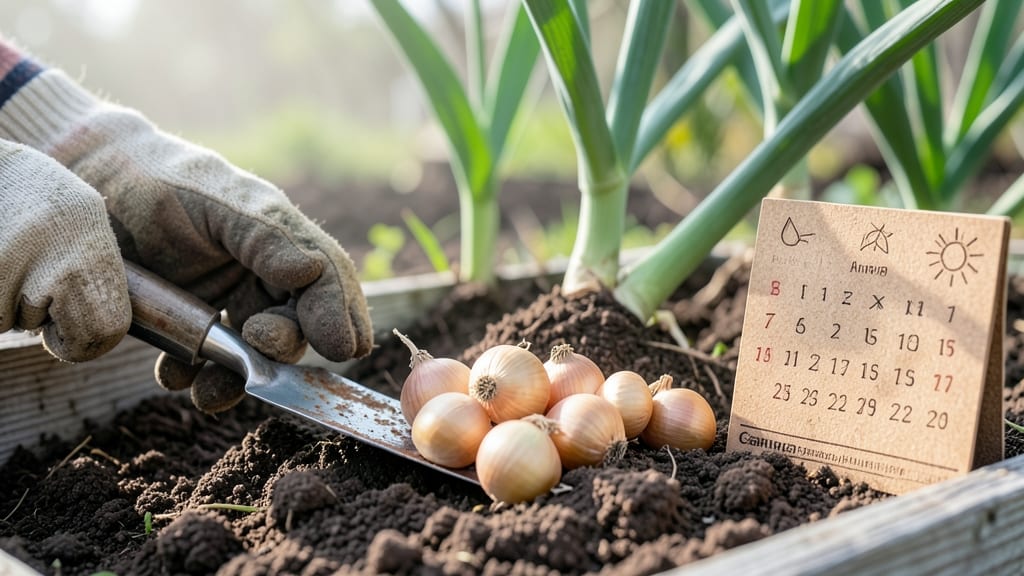
Timing your 🧅 onion planting in North Carolina can mean the difference between a bumper crop and a disappointing harvest. With USDA Zone 7b's unpredictable weather shifts, getting those sets in the ground at the right moment is the key to sweet, plump bulbs that rival store-bought quality.
Most gardeners in North Carolina focus on two prime planting windows: early spring (February-March) and late summer (July-August). But here's the catch - coastal areas like Wilmington have milder winters, while the Piedmont region faces harder freezes.
I'll show you exactly how to adjust your schedule based on your specific microclimate.
What you'll discover is that planting onions too early can lead to bolted greens, while waiting too late risks stunted bulbs. The secret lies in understanding your last frost date and soil temperatures - and I've got the exact calendar you need for North Carolina's diverse growing conditions.
Whether you're growing from sets, transplants, or seeds, this guide will help you time your onion planting perfectly for maximum yield. Let's get those onions in the ground at the optimal moment for your part of the state.
North Carolina onion planting calendar by month: best times for sets, transplants, and seed
North Carolina’s USDA Zone 7b climate gives you two prime windows to plant onions: early spring and late summer. Each timing targets different varieties—spring-planted onions mature for summer harvests, while fall-planted onions store well through winter.
Let’s break down the exact months to plant for maximum success, whether you’re using sets, transplants, or seeds.
For spring harvests, aim to plant onion sets or transplants between February and March. This gives bulbs enough time to mature before North Carolina’s summer heat peaks.
If you prefer green onions or shallots, you can even start as early as January in warmer microclimates like the Coastal Plain. For fall harvests, plant 8-10 weeks before the first frost (typically July or August).
Onion seeds take longer to mature, so they’re best started indoors 8-10 weeks before the last frost (around January) and transplanted outdoors in March.
This method works well for long-day onion varieties, which need 14+ hours of daylight to form bulbs—a perfect match for North Carolina’s summer solstice.
| Planting Method | Best Months | Harvest Window | Notes |
|---|---|---|---|
| Onion Sets | February-March (spring) or July-August (fall) | June-August (spring) or October-November (fall) | Fastest method; ideal for short-season varieties. |
| Transplants | March-April (spring) or July (fall) | June-September (spring) or October (fall) | Better for long-day varieties; transplant after hardening off. |
| Seeds (Indoor Start) | January (transplant March) | July-August | Slowest but most variety options; needs 14+ daylight hours. |
| Green Onions | January-April or July-September | Continuous harvest (60-90 days) | Plant every 2-3 weeks for year-round greens. |
North Carolina’s Coastal Plain (Zones 8a-8b) has a longer growing season, so you can push spring planting into early April or even fall planting into early September.
In the Piedmont and Mountain regions (Zones 6b-7a), stick to the earlier windows—March for spring and July for fall—to avoid late-season frosts that can damage bulbs.
Always check your local frost dates (NC State Extension is a great resource) and adjust by 2-3 weeks if your microclimate runs cooler or warmer.
For example, Asheville’s higher elevation may need onions planted 3 weeks earlier than Raleigh, while Wilmington’s coastal warmth could extend fall planting into early October.
Soil temperature matters too! Onions thrive when soil is at least 40°F. Use a soil thermometer to confirm—if it’s colder, wait or use row covers to warm the soil faster.
In North Carolina’s humid summers, planting too late can lead to bolting (premature flowering), so aim to finish spring planting by mid-April.
Pro tip: Yellow or red onion varieties (like ‘Texas Early White’) handle North Carolina’s heat better than sweet onions (like ‘Walla Walla’), which are better suited for spring harvests in cooler climates.
For storage onions, plant ‘Sweet Spanish’ in July—it stores well through winter if cured properly.
Remember, onions are perennial in North Carolina’s climate, meaning they’ll regrow from the same spot year after year if left in the ground. This makes them a low-maintenance staple once established—just keep the soil well-drained and weed-free.
Start with small test plots if you’re new to onion growing. Try 3-4 varieties across your planting windows to see what thrives best in your specific North Carolina microclimate.
With the right timing, you’ll enjoy homegrown onions from June through November—and maybe even a few sneaky winter harvests if you’re lucky! 🧅
How to adjust your onion planting schedule for North Carolina’s microclimates
North Carolina’s diverse geography—from the Coastal Plain to the Mountain regions—means onion planting times can vary by hundreds of miles. Even within USDA Zone 7b, elevation changes of just 1,000 feet can shift your ideal planting window by 2-4 weeks.
For example, Asheville’s cooler climate may need onions planted 4 weeks earlier than Raleigh’s warmer lowlands.
Coastal areas like Wilmington experience milder winters and longer growing seasons, allowing for extended fall planting until early October. Meanwhile, the Piedmont region (including Charlotte) typically follows the standard February-March spring planting window but can push fall planting to mid-September without risking frost damage.
Mountainous zones like Boone or Waynesville often see earlier frosts, so adjust your schedule by planting onion sets 6-8 weeks earlier than coastal areas. Use local frost date maps from the NC State Extension to fine-tune your timing—these resources account for microclimates down to the county level.
- Coastal Plain (e.g., Wilmington, Fayetteville): Plant sets in January-February or late August-September for fall harvest.
- Piedmont (e.g., Raleigh, Greensboro): Follow February-March spring window or July-August for fall.
- Mountains (e.g., Asheville, Boone): Plant 4 weeks earlier—January-February spring or June-July fall.
- Sandhills (e.g., Pinehurst): Similar to Piedmont but may need 1 extra week earlier due to faster soil warming.
Unexpected weather shifts—like unseasonably warm winters or early spring freezes—can throw off your schedule. Use row covers or cold frames to protect young plants if frost threatens after planting.
For example, if you plant onion sets in late January and a 28°F night hits, cover them to prevent damage until roots establish.
Soil temperature also plays a critical role. Onions prefer soil temps above 40°F for germination. In cooler mountain regions, wait until mid-March when soil consistently stays above 45°F. Use a soil thermometer to check—planting too early in cold soil can lead to rot or slow growth.
For green onions (scallions), which mature faster, you can push the envelope by planting every 2 weeks from February to September, even in coastal areas. Their shorter growing season makes them more adaptable to microclimate variations than bulb onions.
Pro tip: If you’re unsure about your local microclimate, observe your neighbors’ gardens. Onion tops turning yellow prematurely often signals a late frost or soil temperature issue—adjust next year’s planting date accordingly. 🌱