
Plants
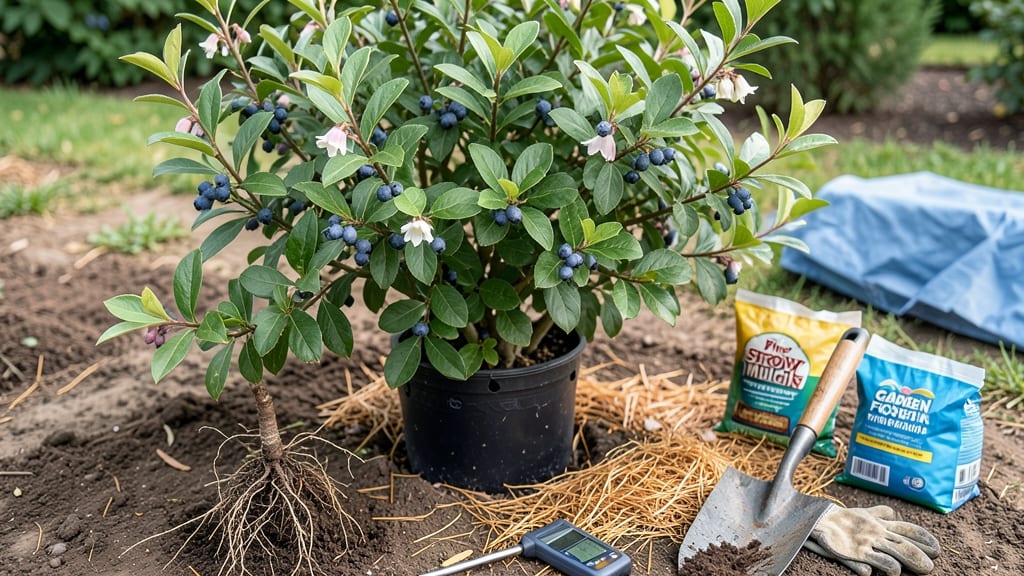
If you’ve ever wondered when to plant blueberries in Kansas, timing isn’t just about the calendar—it’s about matching your variety to the state’s 5b-7a climate and chill hours.
Kansas’s unpredictable springs and late frosts can make or break your harvest, but with the right approach, you’ll be picking sweet 🫐 berries by mid-summer.
Early spring (March-April) and fall (September-October) are your best bets, but not all blueberry types thrive equally. Northern varieties need more chill hours, while southern types adapt better to Kansas’s warmer winters.
The key? Planting bare-root bushes when the soil is workable but before buds break—usually by early April to avoid frost damage.
Soil prep is just as critical as timing. Kansas’s alkaline soil needs acid-loving amendments like peat moss or sulfur to hit the 4.5-5.5 pH range. Whether you’re planting in-ground or containers, getting this right ensures your bushes grow strong and productive.
Let’s break down the exact steps to set yours up for success.
From choosing the right variety to avoiding common pitfalls, this guide covers everything you need to know. Whether you’re a first-time gardener or a seasoned pro, these tips will help you maximize your yield—no guesswork required.
Best blueberry planting months in Kansas by variety type
Kansas gardeners know timing is everything—especially when planting blueberries. The state’s USDA Zones 5b-7a and variable frost dates demand precision. I’ve planted northern, southern, and half-high varieties here for years, and the difference between a bountiful harvest and a failed crop often comes down to the month you choose.
For northern highbush varieties like Bluecrop or Duke, the sweet spot is early spring—March to early April.
These varieties need 600-1,000 chill hours, and planting them before buds swell gives roots time to establish before Kansas’s unpredictable spring frosts hit. Southern highbush varieties, such as Climax or Premier, are more flexible—they thrive when planted in September or early October since they require fewer chill hours (300-500 hours).
Here’s the kicker: Half-high varieties like Top Hat or Chester bridge the gap. They handle both spring (March-April) and fall (September-October) planting, making them ideal for Kansas’s Zone 6-7 regions. The key is avoiding late spring plantings after April 15, when frost risk spikes again.
Before you dig, test your soil’s pH (4.5-5.5)—blueberries are acid-loving and won’t thrive in alkaline Kansas soil. Amend with peat moss or sulfur 4-6 weeks before planting. For container growers, use acidic potting mix and plant in large pots (15+ gallons) to stabilize soil moisture.
Now, let’s break down the best planting windows by variety, including soil prep timing and frost risk factors. This comparison table will help you pick the perfect time for your Kansas garden:
| Variety Type | Best Planting Months | Chill Hours Needed | Soil Prep Window | Frost Risk |
|---|---|---|---|---|
| Northern Highbush (e.g., Bluecrop, Duke) | March–Early April | 600–1,000 hours | February–March | High (late frosts) |
| Southern Highbush (e.g., Climax, Premier) | September–Early October | 300–500 hours | August–September | Low (first frost) |
| Half-High (e.g., Top Hat, Chester) | March–April OR September–October | 400–800 hours | February–March OR August–September | Moderate (varies by month) |
If you’re in southern Kansas (Zone 7a), you can push southern varieties into late October, but avoid planting after October 15—roots need time to establish before winter dormancy.
For northern Kansas (Zone 5b), stick to early spring to avoid late frosts that can damage tender new growth.
Pro tip: Mulch with pine straw or wood chips after planting to retain moisture and regulate soil temperature. In Kansas’s dry summers, mulch is a game-changer for root health and fruit production. Just keep it 3-4 inches deep and 2 inches away from the stem to prevent rot.
Container growers, take note: Potted blueberries in Kansas need extra care. Move containers to a protected spot if frost is forecasted after planting. Use self-watering pots to prevent soil from drying out too quickly—Kansas’s hot, windy summers can dry containers in hours.
Finally, don’t overlook pollination. Plant at least two varieties for cross-pollination, unless you’re growing self-pollinating types like Bluecrop. Bees love Kansas’s early spring blooms, but a second variety ensures better fruit set.
Timing your blueberry planting right in Kansas isn’t just about the calendar—it’s about matching varieties to your microclimate and preparing soil in advance. With these tips, you’ll be well on your way to a berry-packed summer harvest.
Chill-hour requirements for Kansas blueberry success
Kansas’s chill-hour range—typically 400-1,000+ hours—determines which blueberry varieties thrive in your backyard. Northern highbush varieties like Duke and Bluecrop need 800-1,000+ chill hours, while southern highbush (e.g., Jerseys) adapt to 300-500 hours. Matching your variety to your zone ensures optimal fruit set and avoids wasted effort.
For Kansas City (Zone 6a), aim for varieties like Bluecrop or Patriot, which handle 700-900 chill hours.
In western Kansas (Zone 5b), Duke or Jersey varieties (with 500-700 chill hours) are safer bets. Half-high varieties like Top Hat (500-700 chill hours) work well in containers or small gardens.
Adjust your planting window based on chill hours: Early spring (March-April) planting gives roots time to establish before summer heat, while fall planting (September-October) leverages cooler temps for root growth. Southern highbush varieties planted in late winter (February) can fruit earlier in the season.
🌱 Pro Tip: Use a chill-hour map or local extension service data to fine-tune your choice. For example, Hays (Zone 6b) might support Bluecrop, while Garden City (Zone 6a) could try Duke or Chester.
🌱 Kansas Blueberry Variety Chill-Hour Guide
| Variety | Chill Hours | Best Kansas Zones | Planting Window |
|---|---|---|---|
| Bluecrop | 800-1,000 | 5b-7a | March-April or Sept-Oct |
| Duke | 500-700 | 5b-6b | Feb-March or Sept |
| Jersey | 300-500 | 6a-7a | Feb-March or Oct |
| Top Hat | 500-700 | 5b-7a (containers) | March-April |
If you’re in a warmer microclimate (e.g., southeastern Kansas), southern highbush varieties like O’Neal or Climax (300-500 chill hours) may fruit earlier and more reliably. Late frosts in April can damage early blooms, so plant late-blooming varieties like Patriot (800+ chill hours) for frost resilience.
💧 Key Action: Test your local chill hours using a weather station or USDA climate data. Adjust planting dates 2-4 weeks earlier if your area has fewer chill hours than average. For example, western Kansas may need earlier spring planting to avoid summer drought stress.
Once you’ve matched your variety to your chill hours, focus on soil prep (pH 4.5-5.5) and mulching to protect roots during Kansas’s temperature swings. With the right variety and timing, you’ll enjoy juicy blueberries from July through August—no gamble needed!