
Plants
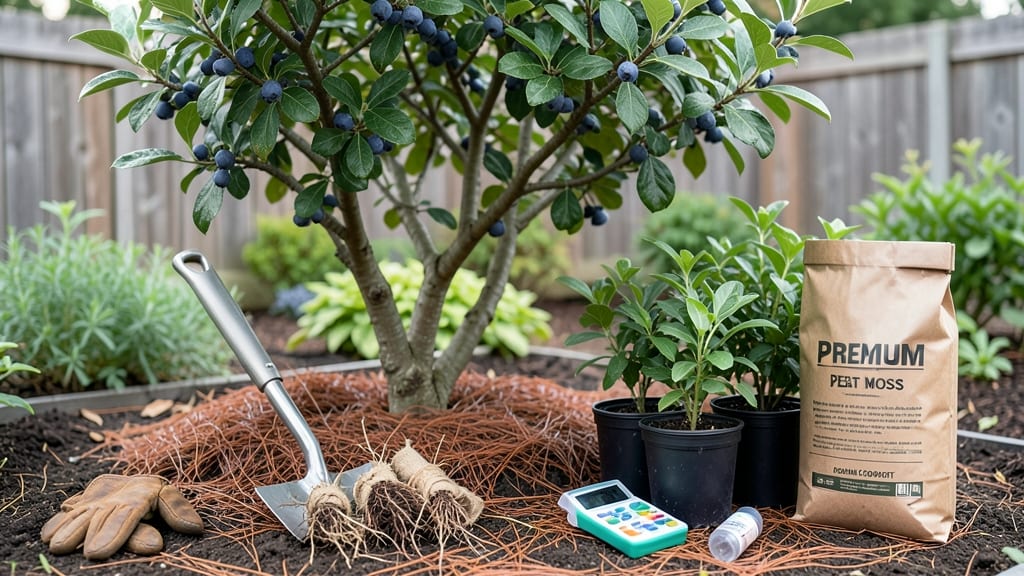
Timing your blueberry planting in Iowa could mean the difference between a thriving 🫐 bush and a frost-killed disappointment—especially when those late spring freezes sneak up.
With Iowa’s Zone 5a-6b climate, you’ve got just a narrow window to get those roots down before the ground freezes again or summer heat sets in.
Most gardeners swear by early spring (March-April) when the soil warms enough to work, but fall planting (September-October) gives young bushes time to establish before winter. The key? Avoid planting when temps dip below 40°F—that’s when blueberries hit their frost sensitivity sweet spot for damage.
I’ll walk you through the exact planting deadlines for your region, plus the cold-hardy varieties that actually survive Iowa’s wild swings. Whether you’re in Des Moines or Dubuque, you’ll learn how to prep your soil, protect young plants, and time your harvest for peak flavor.
No more guessing games—just proven strategies to get your blueberries off to a strong start. Let’s make this your most successful planting season yet!
Iowa’s exact blueberry planting window by region & frost dates
Iowa’s Zone 4-5 climate demands precise timing for blueberry planting—miss the window, and your cold-hardy bushes may suffer. The ideal planting window spans early spring (March-April) or early fall (September-October), but exact dates vary by region.
Northern Iowa (Zone 4) has a shorter frost-free season, while southern areas (Zone 5) enjoy a 2-3 week buffer.
For spring planting, aim for 2-4 weeks before Iowa’s last frost date (typically April 15 in most areas). This gives roots time to establish before summer heat. Fall planting should occur 6-8 weeks before first frost (around September 15), allowing roots to anchor before winter dormancy.
Here’s how microclimates affect your timing: Urban areas like Des Moines (Zone 5b) can plant 1-2 weeks later than rural northern Iowa (Zone 4a). Check your local frost dates via the Old Farmer’s Almanac or Iowa State University Extension for precision.
Soil temperature is critical—wait until ground temps reach 40°F for spring planting. Use a soil thermometer to avoid planting in cold, soggy soil, which can stunt root growth. Fall planting works best when soil temps drop to 50-60°F.
🌱 Pro Tip: If you’re bare-root planting, soak roots overnight before transplanting to reduce transplant shock. This is especially important for Iowa’s dry springs.
| Region | USDA Zone | Last Frost Date | Ideal Planting Window | Soil Temp Threshold | Notes |
|---|---|---|---|---|---|
| Northern Iowa (e.g., Sioux City, Waterloo) | 4a-4b | April 10-15 | March 20-April 10 (spring) or Sept 1-15 (fall) | 40°F (spring) / 50-60°F (fall) | Use row covers for late frosts |
| Central Iowa (e.g., Des Moines, Ames) | 5a-5b | April 15-20 | March 25-April 15 (spring) or Sept 10-25 (fall) | 40°F (spring) / 50-60°F (fall) | Longer growing season; fall planting preferred |
| Southern Iowa (e.g., Ottumwa, Burlington) | 5b-6a | April 20-25 | April 1-15 (spring) or Sept 20-Oct 5 (fall) | 40°F (spring) / 50-60°F (fall) | Warmer microclimates; extend fall window |
Adjust your planting timeline based on weather forecasts. If a late frost is predicted, delay spring planting or use frost cloth for protection. Conversely, if an early frost threatens in fall, plant dwarf varieties that establish faster.
For container gardening in Iowa, plant 1-2 weeks earlier than in-ground bushes. Containers warm up faster in spring and dry out quicker, so monitor soil moisture closely. Dwarf varieties like ‘Top Hat’ thrive in pots and can be moved to protected microclimates (e.g., near south-facing walls).
💧 Watering Tip: After planting, water deeply to settle soil and remove air pockets. Mulch with 3-4 inches of pine bark to retain moisture and regulate soil temps—critical for Iowa’s temperature swings.
If you miss the ideal window, don’t panic. Late spring planting (May) can still work if you water consistently and use shade cloth during heatwaves. Just expect slower establishment and reduced first-year yield. For fall planting, aim to finish by October 1 to avoid winter stress.
🌡️ Key Takeaway: Iowa’s unpredictable springs mean flexibility is key. Check soil temps weekly in March-April and September to time planting perfectly. Fall planting is often safer for beginners—cooler temps and moist soil create ideal conditions for root growth.
How to extend Iowa’s short growing season for blueberries (pro tips)
Iowa’s unpredictable frosts can devastate young blueberry bushes if you don’t act fast. The key is creating a microclimate that shields plants from late springs and early autumn frosts.
Start by choosing a south-facing planting site—this captures maximum sunlight and warms the soil faster, giving your bushes a head start.
For early spring plantings, use frost cloth or row covers until the last frost date (typically April 15 in most of Iowa). Secure the cover with bricks or stakes to prevent wind damage.
If you’re planting in fall, apply a 4-6 inch layer of mulch (straw or wood chips) to insulate roots from temperature swings.
🌱
🔹 Critical Pre-Winter Prep Steps
- 1. Mulch heavily (4-6 inches) with acidic mulch (pine needles or oak leaves) to protect roots from freeze-thaw cycles.
- 2. Prune in late winter (February) to remove dead or weak wood—this boosts airflow and reduces fungal risks.
- 3. Water deeply before the ground freezes to hydrate roots for dormancy. Aim for 1 gallon per plant.
- 4. Apply winter protection for young plants: Burlap wraps or straw bales around the base shield against cold winds.
- 5. Monitor soil pH—Iowa’s alkaline soil (pH 7.5+) can stress blueberries. Test in early spring and amend with sulfur or peat moss if needed.
Timing your fertilization is just as critical as frost protection. In Iowa, spring feeding (March-April) with an acid-loving fertilizer (10-10-10) kickstarts growth, while fall applications (September) prepare plants for winter. Avoid fertilizing in summer—this encourages tender new growth that’s vulnerable to late-season frosts.
If you’re in northern Iowa (Zone 4), consider container growing for extra flexibility. Move pots to a garage or sheltered porch during hard freezes (below 10°F). Use black plastic pots—they absorb heat during the day and release it slowly at night, adding 3-5°F of protection.
Finally, harvest timing matters too. In Iowa, blueberries typically ripen in July-August, but a late frost can ruin crops. Plant early-ripening varieties like ‘Jersey’ or ‘Bluecrop’ to beat the clock.
If frost threatens, cover bushes with frost cloth or use a row cover to delay ripening until safer temperatures arrive.
☀️