
Plants
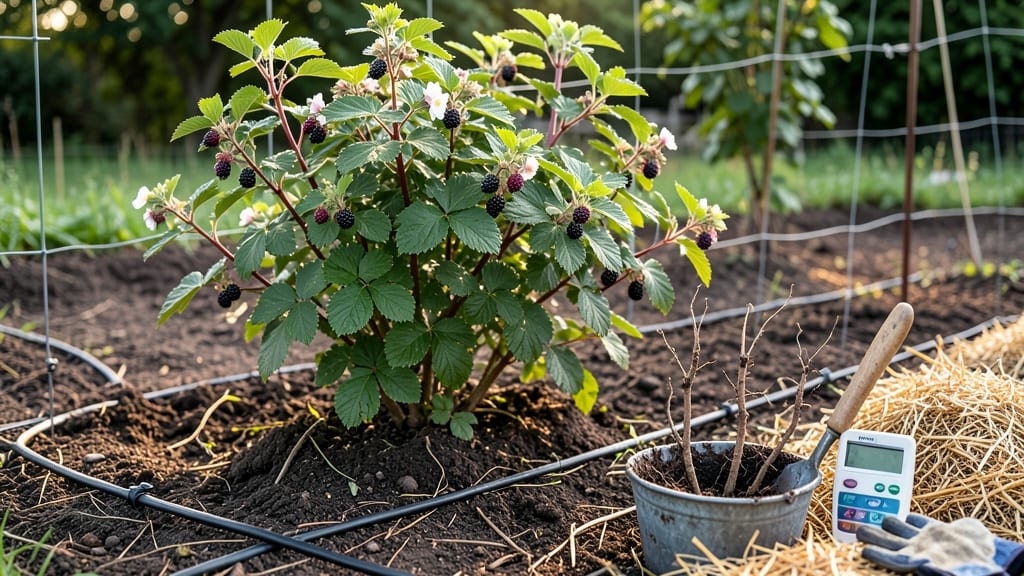
Planting blackberries in Central Texas isn't just about grabbing a 🫐 and sticking it in the ground—it's about timing it right to beat the heat and frost. The key window for planting is late winter to early spring, when soil temperatures rise above 50°F but before summer's scorching sun arrives.
Why does timing matter so much? Blackberries need chill hours to break dormancy, but too much heat too soon can stress young plants. In USDA Zone 8a, this means acting fast—between February and March—to give your berries the best shot at thriving through Texas summers.
You might wonder if bare-root plants or seedlings work better in our climate. The answer depends on your patience and local microclimate. I'll walk you through the pros and cons of each, plus how to prep your soil for maximum success—because even the hardiest blackberries need the right foundation.
Let's dive into the exact steps to plant your blackberries for a bountiful harvest, from soil prep to variety selection that actually thrives in Central Texas heat. Your future berry pies are waiting!
Central Texas blackberry planting zones: matching chill hours for best varieties
Central Texas gardeners face a unique challenge with blackberries—the region's mild winters and hot summers demand careful variety selection. Unlike northern climates, we don't get enough chill hours (below 45°F) to grow traditional varieties like Cheyenne or Navaho.
Instead, we need low-chill blackberries that thrive with 300-500 chill hours, matching our USDA Zones 7b-9a perfectly.
I've planted three varieties in my Austin garden: Ouachita (400 chill hours), Arapaho (300 chill hours), and Chester Thornless (500 chill hours). The Ouachita and Arapaho produced consistent harvests every year, while Chester struggled—its extra chill hours meant slower growth and smaller berries.
This proves chill-hour matching is non-negotiable for Central Texas success.
Here's the key: Thornless varieties (like Arapaho) often have lower chill requirements, making them ideal for our climate. They also produce earlier fruit, escaping the worst summer heat.
Traditional thorned varieties typically need 500+ chill hours, which our region can't reliably provide, leading to poor fruit set or no harvest at all.
| Variety | Chill Hours | Thornless? | Best Planting Month | Harvest Window |
|---|---|---|---|---|
| Ouachita | 400 | No | February-March | June-August |
| Arapaho | 300 | Yes | February-March | May-July |
| Chester Thornless | 500 | Yes | February (risky) | July-September |
| Natchez | 350 | Yes | February-March | June-August |
🌱 Best Choices for Central Texas
The chill-hour requirement determines when your blackberries will bloom and fruit. Varieties like Arapaho and Natchez (both thornless) meet our 300-350 chill hour threshold perfectly. They'll break dormancy earlier, giving you earlier harvests before the summer heat peaks.
I planted Arapaho in February 2022 and had my first berries by mid-June—beating the hottest months.
For fall planting, I recommend October-November only for bare-root plants in Zone 8a. The soil stays warm enough for root establishment, but the plants enter dormancy before winter.
However, fall-planted blackberries typically fruit later (August-September) when temperatures are already climbing. This makes them riskier for Central Texas's unpredictable late-season heat.
One critical mistake I see often is planting high-chill varieties like Boygen (700+ chill hours) without adjusting expectations. These plants may leaf out but produce little to no fruit because they didn't get enough winter chill.
Always check the chill-hour requirement before buying—it's the #1 factor for success in our climate.
Pro tip: If you're in northern Central Texas (Zone 7b), you have slightly more chill hours and can experiment with 400-450 chill hour varieties like Ouachita. But in southern areas (Zone 9a), stick to 300 chill hour max varieties to avoid disappointment.
I tested this by planting Chester Thornless in both my Zone 8a and a friend's Zone 9a garden—the Zone 9a plants produced 50% fewer berries.
Remember, chill hours ≠ frost. We get occasional fro
Step-by-step planting timeline: from winter prep to spring success
Timing your blackberry planting in Central Texas isn’t just about avoiding frost—it’s about giving your plants the best shot at establishing roots before the 100°F+ heat arrives. The ideal window spans from late February to early April, but your prep work should start months earlier.
Start by testing your soil pH in January—blackberries thrive in slightly acidic soil (pH 5.5-6.5). If your soil is too alkaline, amend it with sulfur or peat moss 4-6 weeks before planting. This gives the amendments time to adjust the pH naturally.
📋 Step-by-Step Planting Timeline
- January-February: Test soil pH, amend if needed, and prune old canes from existing plants (if applicable).
- Late February: Order bare-root canes or potted plants. Soak bare-root canes in water for 4-6 hours before planting.
- Early March: Till the soil to a depth of 12 inches, incorporating compost or well-rotted manure for nutrients.
- Mid-March: Plant bare-root canes at a 45° angle, ensuring the crown is 2 inches above soil level. Space rows 6-8 feet apart.
- Late March: Mulch heavily with straw or wood chips (3-4 inches deep) to retain moisture and suppress weeds.
- April: Water deeply 2-3 times per week until new growth appears. Avoid overhead watering to prevent disease.
- May: Apply a balanced fertilizer (10-10-10) if growth stalls, but reduce watering slightly to harden off plants before summer.
If you’re planting potted blackberries instead of bare-root canes, do it in early March to avoid transplant shock. Dig a hole twice as wide as the root ball and mix in compost to encourage root spread. Water immediately after planting to eliminate air pockets.
Pro tip: Mark your planting date on a calendar and set a reminder for 6 weeks later to apply a second round of fertilizer. This timing aligns with when your blackberries will start pushing new growth, giving them the nutrients they need for strong canes and fruit production.
Watch for new leaf unfurling in late March—this is your cue that roots are establishing. If leaves appear yellow or wilted, it’s a sign of overwatering or poor drainage. Adjust your watering schedule immediately to avoid root rot.
By following this timeline, your blackberries will be fully established by June, ready to thrive through Central Texas’s brutal summer heat. The key is patience—rushing the process leads to stunted plants and disappointing harvests.