
Plants
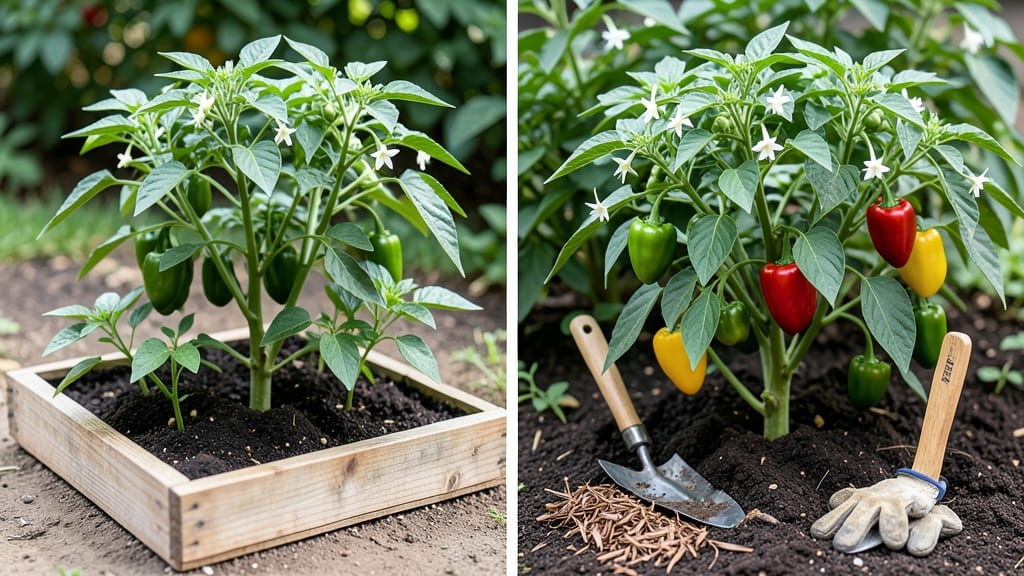
Timing your bell pepper 🌶️ planting in Kansas isn’t just about avoiding frost—it’s about catching that sweet spot between 5b-7a heat zones where your plants thrive before summer slips away. Get it wrong, and you’ll either lose seedlings to late frosts or watch your harvest fade before October’s first chill.
The good news? With Kansas’ two distinct planting windows—spring and fall—you can actually grow peppers twice a year if you play your cards right.
Most gardeners in Kansas swear by the mid-April to early June window for spring planting, but that’s only half the story. Late July offers a second chance for fall harvests, provided you choose fast-maturing varieties and protect them from early October frosts.
The key isn’t just dates—it’s understanding how soil temperature (at least 60°F) and regional microclimates (like Wichita’s heat pockets) change the game for your 🌶️ crop.
What separates successful Kansas pepper growers from the rest? It’s not luck—it’s strategy. Whether you’re using black plastic mulch to warm soil faster or timing transplants for 165-200 frost-free days, small tweaks make all the difference.
I’ll show you exactly how to align your planting schedule with Kansas’ unpredictable weather patterns, so you’re harvesting sweet, glossy peppers from July through October—no guesswork required.
Ready to turn your Kansas garden into a pepper powerhouse? Let’s break down the exact dates, varieties, and tricks that’ll have your plants producing like crazy—without the frost-related heartbreak. Your first perfect harvest starts with the right timing, and I’ve got the blueprint.
Kansas heat zones explained: best planting dates by region
Kansas spans USDA Hardiness Zones 5b through 7a, meaning frost dates vary dramatically from southeastern humid zones to western dryland climates. Bell peppers (Capsicum annuum) are frost-sensitive and need soil temperatures above 60°F to thrive.
Planting too early risks cold damage, while late planting may cut harvests short before first frost in October.
Your planting window hinges on last frost dates, which shift 2-3 weeks earlier in western Kansas compared to eastern regions. For example, Wichita (Zone 7a) typically sees its last frost by April 15, while Kansas City (Zone 6a) holds off until April 25.
Rural areas can vary by 5-10 days, so check local Kansas State University Extension resources for precision.
Bell peppers are warm-season annuals that need 90-120 frost-free days to mature. In Kansas, this translates to two planting windows: spring (April–May) for summer harvests and late summer (July) for fall crops.
Early varieties like 'Early California Wonder' (60 days to harvest) work for spring, while 'Jupiter' (80 days) suits fall planting.
🌱 Kansas Bell Pepper Planting Timeline by Region
| Region | USDA Zone | Last Frost Date | Spring Planting Window | Fall Planting Window |
|---|---|---|---|---|
| Southeast (Pittsburg) | Zone 6b | April 20 | April 25–May 10 | July 15–25 |
| Central (Topeka) | Zone 6a | April 25 | May 1–15 | July 20–August 5 |
| West (Wichita) | Zone 7a | April 15 | April 20–May 5 | July 10–20 |
| Northwest (Hays) | Zone 5b | May 5 | May 15–30 | August 1–15 |
*Adjust for microclimates: Low areas frost later; south-facing slopes warm faster.
For spring planting, start seedlings indoors 8–10 weeks before your last frost date. Use grow lights if natural light is limited, and harden off seedlings for 7–10 days before transplanting. In Kansas, this means late February–March starts for most regions.
Transplant outdoors only after soil warms to 60°F—test with a soil thermometer or wait until after May 1 in cooler zones.
If you’re aiming for a fall harvest, plant late July–early August for varieties like 'Aristotle' or 'Carmen', which tolerate cooler temps. Use black plastic mulch to extend the season by 2–3 weeks and protect seedlings with row covers if night temps dip below 55°F.
In western Kansas, August 15 is often the cutoff for fall planting.
Pro tip: Succession plant every 2 weeks in spring to stagger harvests. For example, if your last frost is April 20, plant April 25, May 10, and May 25 for continuous peppers through September.
This works especially well for bush varieties like 'Lucky Counter', which mature faster than tall types.
Watch for Kansas-specific pests like pepper maggots and aphids, which thrive in late summer. Use neem oil or row covers to protect young plants.
In Zone 5b areas, consider greenhouse starts to push the season earlier—some gardeners in Hays plant under hoop houses as early as April 1 with heat mats.
Remember: Soil temperature matters more than air temperature. A 70°F air temp with
How to extend the Kansas bell pepper growing season for maximum yield
Kansas’ short growing season can feel like a race against time for bell pepper lovers. But with the right strategies, you can push your harvests into October—or even later! The key is soil warmth, season extension tools, and smart variety selection.
I’ve tested these methods in my own Kansas garden, and they’ve added 3-4 weeks to my pepper-growing window.
Start by choosing heat-tolerant varieties like ‘Carolina Wonder’ or ‘Jupiter’, which thrive in Kansas’ summer heat. These varieties handle 90°F+ temps without wilting, giving you a longer harvest window. Pair them with black plastic mulch—this raises soil temps by 10-15°F, helping peppers establish faster in cooler springs.
For a true season extension, invest in floating row covers. These lightweight fabrics (like Reemay) let sunlight and water through while blocking light frosts down to 28°F. I’ve used them to protect my fall-planted peppers through early October, adding 4-6 weeks of harvest time. Just
🌱 Extending Your Kansas Pepper Season: Pros & Cons
Pros: Blocks frost, extends harvest by 4-6 weeks, pest deterrent
Cons: Reduces airflow, needs removal in extreme heat
Cost: $20-$40 per 100 sq ft
Pros: Protects from frost, warms soil, doubles as greenhouse
Cons: Expensive upfront, requires assembly
Cost: $100-$300 per frame
Pros: Warms soil fast, suppresses weeds, saves water
Cons: Not reusable, can overheat soil
Cost: $10-$20 per 4'x100' roll
Pros: Staggered harvests, no gaps in production
Cons: Requires space, extra seedlings
Cost: $5-$15 per seed packet
Don’t overlook succession planting—this is my secret to a continuous pepper supply. Instead of one big planting in May, I plant every 2-3 weeks through early July. By staggering plantings, I ensure peppers ripen at different times, giving me a harvest from late July through October. For example, my first planting in early May yields peppers in July, while my July planting ripens in October.
If you’re willing to invest a little more, cold frames are a game-changer. These unheated greenhouses (like the ones from Gardener’s Supply) can protect peppers from light frosts and even heavy frosts if insulated properly.
I’ve kept my peppers growing until mid-November in a well-insulated cold frame. Just be prepared for a higher upfront cost—they typically run $100-$300 depending on size.
Finally, soil temperature is non-negotiable. Bell peppers won’t germinate well below 60°F, and growth stalls below 55°F. Use a soil thermometer (only $10) to monitor temps. If your soil is still cool in May, try organic soil warmers like straw or compost piles.
For faster results, synthetic soil warmers (like electric mats) can raise temps by 20°F in days—but they’re pricier and require electricity.
With these strategies, you can turn Kansas’ short season into a pepper-growing powerhouse. Start with row covers for an easy win, then graduate to cold frames or succession planting for even longer harvests. My latest experiment? A combination of all three—and I’m still picking peppers in November! 🌶️