
Trees
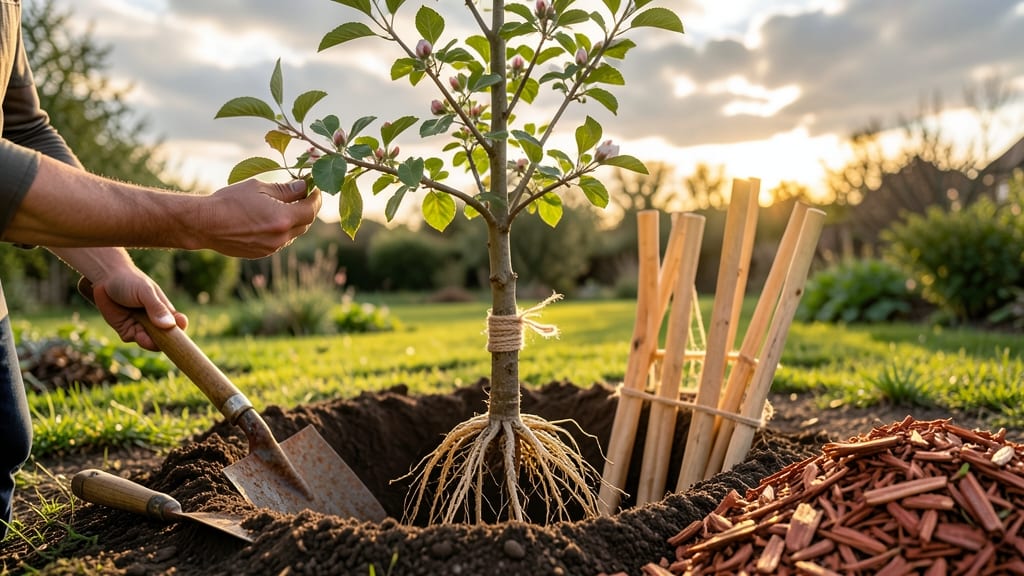
Timing your 🍎 apple tree planting in Iowa isn’t just about the calendar—it’s about matching your tree’s chill-hour needs with Iowa’s 5a-5b climate. Plant too early, and frost will shock delicate roots; too late, and your tree may struggle to establish before winter.
The right window could mean the difference between a thriving orchard and years of disappointment.
Most Iowa gardeners swear by early spring (March-April) or fall (September-October) planting, but without knowing your specific apple variety’s chill requirements, you might be setting yourself up for failure.
For example, Honeycrisp needs 800-900 chill hours, while Haralson thrives with just 300-500—and Iowa’s zones vary wildly from north to south.
In this guide, I’ll walk you through the exact steps to time your planting perfectly, from reading frost-date maps to adjusting soil pH for Iowa’s clay-heavy dirt.
You’ll also discover which apple varieties are foolproof for your zone and how to tell if your tree is ready to handle Iowa’s unpredictable springs.
Whether you’re planting bare-root saplings or container-grown trees, these insights will help you avoid common pitfalls and give your 🍎 apple tree the best shot at a long, fruitful life in your backyard.
Iowa’s best planting windows for apple trees by chill-hour zone
Apple trees thrive in Iowa’s climate when planted during the right chill-hour window. Iowa spans USDA Zones 4a-5b, where apple trees need 300-1,000 chill hours to bear fruit. Planting outside this range risks poor fruit production or winter dieback.
Most Iowa gardeners succeed by planting in early spring (March-April) or fall (September-October). Spring planting gives roots time to establish before summer heat, while fall planting lets trees acclimate before winter. Bare-root trees are best planted in early spring, while container-grown trees can go in year-round (except winter).
Northern Iowa (Zones 4a-4b) has shorter growing seasons and needs higher-chill varieties like Haralson or Liberty. Southern Iowa (Zones 5a-5b) can handle moderate-chill varieties like Honeycrisp or Fuji. Always check the chill-hour requirements of your chosen variety before planting.
For bare-root trees, plant as soon as soil thaws in early spring (March-April). Dig a hole twice as wide as the root ball but no deeper. Spread roots outward and backfill with native soil mixed with compost. Water deeply to settle soil and remove air pockets.
If planting in fall (September-October), choose container-grown trees or bare-root varieties. Plant at least 6 weeks before first frost to allow roots to establish. Mulch heavily with straw or wood chips to insulate roots during winter. Avoid fertilizing in fall—let the tree focus on root growth, not foliage.
Iowa’s microclimates matter! Urban areas like Des Moines may have warmer winters than rural zones, while north-central Iowa (e.g., Waterloo) faces colder snaps. Use the Iowa State University Extension’s frost-date map to adjust planting times. For example, northern Iowa should delay spring planting until mid-April to avoid late frosts.
Container-grown apple trees offer flexibility—plant them anytime soil isn’t frozen. However, avoid transplanting during summer heat (June-August), as stress increases. If you must plant in summer, provide extra shade and daily watering for the first 2 weeks.
After planting, stake young trees if needed, especially in windy Iowa conditions. Use tree ties loosely to avoid girdling. Prune only to remove broken branches—wait until late winter for major pruning to avoid disease spread.
Monitor your tree’s progress! A healthy apple tree in Iowa should show new growth by mid-May and flower buds by early June. If growth stalls, check for soil compaction or poor drainage, common issues in Iowa’s clay-heavy soils.
How to use Iowa’s frost-date map to avoid early spring planting risks
Planting apple trees in Iowa during early spring is risky because late frosts can damage tender roots and buds, especially in USDA zones 4a-5b. The key to success? Timing your planting after the average last frost date, which varies across Iowa’s regions.
For example, northern Iowa (like Dubuque) typically sees its last frost around April 25, while southern Iowa (like Des Moines) warms up by April 10. Always check the NOAA frost-date map for your specific county to avoid frost-related setbacks.
Iowa’s frost dates aren’t just about the calendar—they’re tied to chill-hour accumulation. Apple trees need a minimum of 300-1,000 chill hours (below 45°F) to break dormancy. Planting too early can trigger premature growth, leaving young trees vulnerable to late spring frosts (which Iowa experiences 10-15% of years).
Use the Iowa State University Extension’s frost calculator to input your zip code and get a localized frost-risk timeline for planting.
🌱
⚠️ Warning: Late Frost Risks in Iowa
Never plant bare-root apple trees before:
- Soil temperature reaches 45°F+ (use a soil thermometer)
- Local nurseries confirm no frost risk for 2-3 weeks
- Your county’s historical last frost date has passed
To further reduce risks, choose cold-hardy apple varieties like Honeycrisp (600-800 chill hours) or Haralson (400-600 chill hours), which are bred to thrive in Iowa’s climate. These varieties also handle late spring frosts better than delicate varieties like Gala or Fuji, which require 800+ chill hours.
Pair your planting with a windbreak hedge or row cover for the first two growing seasons to protect young trees from temperature swings.
If you’re planting in fall (September-October), aim for 4-6 weeks before the first frost to allow roots to establish before winter dormancy. Fall planting is ideal for bare-root trees because cooler soil temperatures reduce transplant shock.
Just avoid planting when soil temps drop below 40°F, as roots won’t grow in freezing conditions. Use mulch (straw or wood chips) to insulate the root zone and retain moisture during Iowa’s winter thaw cycles.
For real-time updates, bookmark the Midwestern Regional Climate Center’s frost monitor and sign up for local weather alerts from the National Weather Service.
These tools will notify you of unexpected frost events, giving you time to cover young trees with frost cloth or water the root zone (which releases heat as it freezes). With this proactive approach, you’ll bypass Iowa’s frost pitfalls and give your apple trees the best possible start.
🌡️