Trees
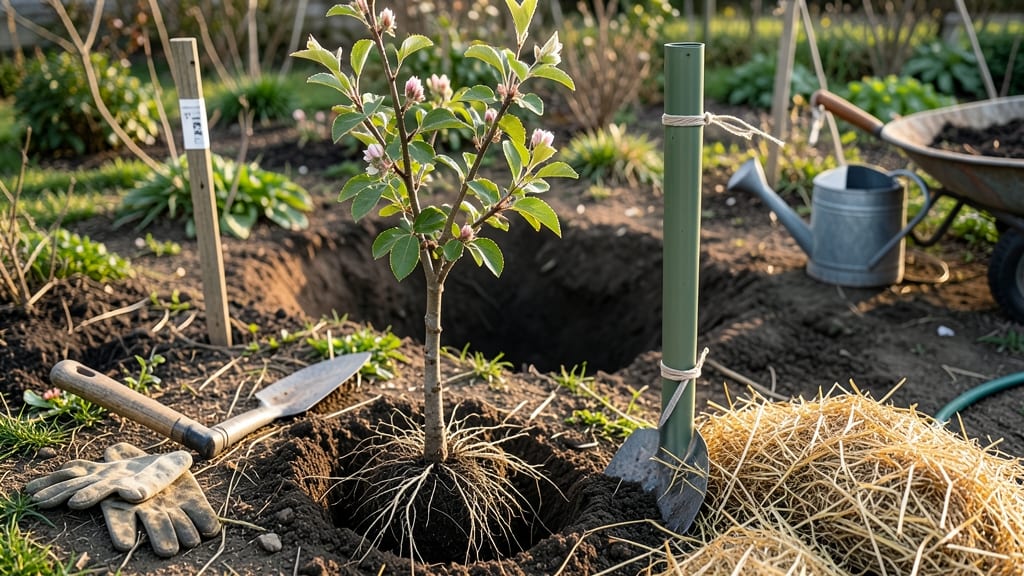
Timing your apple tree planting in Alabama isn’t just about the calendar—it’s about surviving the state’s unpredictable frosts and matching varieties to your local chill hours.
Plant too early, and your young 🍎 tree might face winter stress; too late, and it could struggle to establish roots before summer heat arrives.
Most Alabama gardeners swear by late winter to early spring (February–March) as the sweet spot, but your exact window depends on whether you’re in North Alabama’s cooler 7a zones or South Alabama’s milder 8b climate.
The key is planting 6–8 weeks before your last frost date, giving roots time to anchor before buds break.
You’ll also want to pick varieties that thrive in Alabama’s 300–900 chill hours, like ‘Dorsett Golden’ for low-chill areas or ‘Fuji’ for regions with longer winters. Skipping this step means your tree might bloom but fail to fruit—or worse, die back during a late frost.
In this guide, I’ll break down the exact months to plant by region, plus soil prep tricks and frost-proofing tips to set your apple tree up for success. Let’s get those roots in the ground the right way.
Best planting months in Alabama by region & chill-hour requirements
Alabama’s climate—warm winters and unpredictable frost patterns—makes timing critical for apple tree success. Unlike northern states, chill-hour requirements (the number of hours below 45°F needed to trigger flowering) dictate which varieties thrive.
In North Alabama (USDA Zones 7a–7b), you’ll need 600–900 chill hours, while South Alabama (Zones 7b–8a) often gets only 300–500 hours, limiting your choices. Planting outside these windows risks frost damage or failed fruit set.
For bare-root trees, the ideal window stretches from November through early February, but container-grown trees can go in until March. The key is to plant before buds swell—typically by mid-March—to avoid early spring frosts that can kill tender new growth.
In South Alabama, where frosts are rarer, you’ve got slightly more flexibility, but variety selection becomes even more critical.
Here’s how to match your apple tree variety to Alabama’s frost zones and chill-hour needs:
| Variety | Chill-Hours Needed | Best Planting Window (Alabama) | Frost Risk Period | Soil Prep Tips for Region |
|---|---|---|---|---|
| Gala | 600–800 | November–early December (North AL) / December–January (South AL) | Mid-February–March | Amend clay soil with compost; test pH (6.0–7.0) |
| Fuji | 700–900 | Late November–December (North AL) / December–January (South AL) | Late February–March | Avoid waterlogged sites; add sand to heavy soils |
| Pink Lady | 700–900 | November–December (North AL) / December (South AL) | Early March | Plant on a slight mound to improve drainage |
| Ein Shemer | 300–400 | December–January (anywhere in AL) | Minimal risk (South AL) | Use well-draining soil; ideal for containers |
| Dorsett Golden | 400–500 | December–February (South AL preferred) | Late February (South AL) | Mulch heavily to retain moisture in warm winters |
Notice how Ein Shemer and Dorsett Golden—both low-chill varieties—are perfect for South Alabama, where fewer than 500 chill hours are typical. Meanwhile, Gala and Fuji push the limits in North Alabama but may struggle in Zone 8a.
Always check your last frost date (usually mid-March in North AL, late February in South AL) to avoid planting too late.
If you’re in North Alabama, prioritize dwarf or semi-dwarf rootstocks (like M.9 or G.41) to bury the graft union deeper—this protects against late frosts that can kill the top of the tree.
In South Alabama, where frosts are rare, focus on soil drainage to prevent root rot during the warm, wet winters. Always water deeply after planting (15–20 gallons) to encourage root establishment before dormancy.
Pro tip: Test your soil’s pH before planting—apple trees prefer 6.0–7.0. In clay-heavy soils (common in North AL), mix in compost or peat moss to improve aeration. For sandy soils (common in South AL), add organic matter like leaf mold to retain moisture.
The right soil prep can mean the difference between a thriving tree and a struggling one.
One mistake I see often is planting standard-sized trees in small yards. Opt for dwarf or semi-dwarf varieties on appropriate rootstocks—they mature faster, bear fruit sooner, and fit better in home landscapes.
For example, a Gala on M.9 rootstock will stay under 12 feet tall, while a standard tree can reach 25 feet. Pair this with proper spacing (12–15 feet between trees for standard sizes, 8–10 feet for dwarfs) to ensure airflow and reduce disease risk.
Finally, mulch heavily (4–6 inches of straw or wood chips) after planting to insulate roots and retain moisture
How to choose apple tree varieties for Alabama’s climate
Selecting the right apple tree varieties for Alabama is critical—your tree must thrive in our 300–900 chill-hour range and resist common pests like apple scab. Start by focusing on low-chill varieties that produce fruit reliably without needing extreme winter cold.
Alabama’s USDA Zones 7b–8a mean traditional Northern varieties (like Honeycrisp) won’t survive. Instead, prioritize disease-resistant hybrids bred for warm winters, such as ‘Ein Shemer’ or ‘Dorsett Golden’. These varieties also bear fruit faster—some even in their second or third year.
🌱
‘Ein Shemer’ (300–400 chill hours), ‘Dorsett Golden’ (400–500), ‘Tropskaya’ (500–600) – all disease-resistant and early-bearing.
Plant two varieties (e.g., Gala + Fuji) for better fruit set; avoid self-pollinating types like ‘Granny Smith’ in Alabama.
Honeycrisp (800+ chill hours), McIntosh (900+), or any ‘Northern’ apples—these will fail in most of Alabama.
For home orchards, pair a main variety (like Fuji) with a pollinator (like Gala) to ensure consistent fruit production. Check the chill-hour requirements on your nursery’s label—this number dictates whether your tree will bloom and set fruit.
If you’re unsure, ask your local Alabama Cooperative Extension office for variety recommendations tailored to your county. They can also provide soil test results to confirm your pH levels (6.0–7.0), which directly impact tree health.
🍎