
Plants
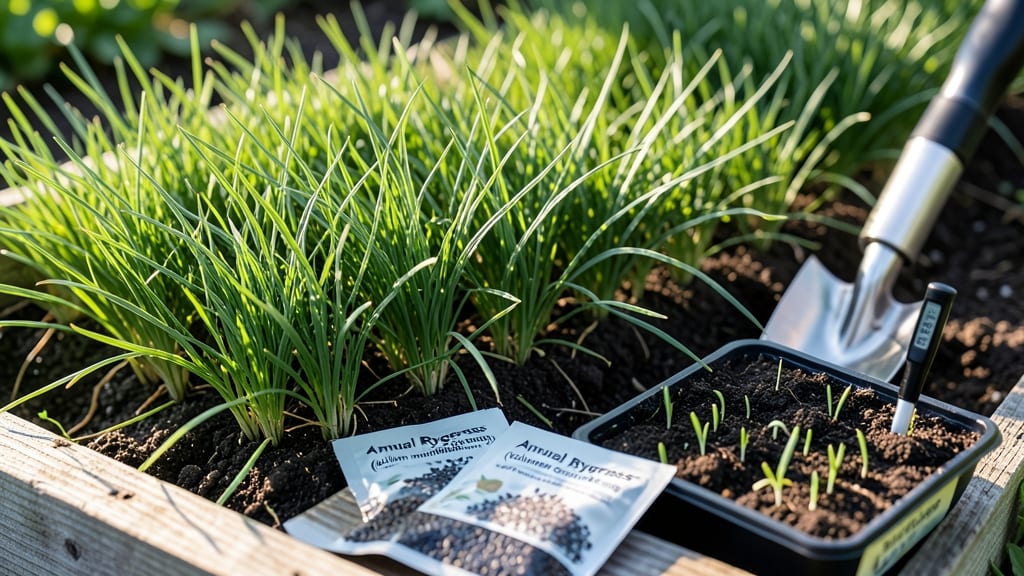
Planting annual ryegrass 🌾 in Texas isn't just about timing—it's about beating the heat and outsmarting the frost. If you get the window wrong, you’ll either fry your seeds in summer or watch them freeze before they take root.
The secret? A 4-6 week lead time before the first frost hits your region, which can vary wildly from North Texas' November 15 to South Texas' December 1.
For most Texas gardeners in zones 8a-10b, the sweet spot is August through October—when daytime highs start cooling but nights stay warm enough for germination. This fall window gives your cover crop time to establish roots before winter sets in, protecting your soil and improving next year’s garden.
But don’t overlook winter planting either; a January-February window works for late frosts in South Texas.
Why does this matter? Annual ryegrass isn’t just another green plant—it’s your soil’s superhero, preventing erosion and feeding the earth while it grows. Skip the guesswork and plant at the right time, and you’ll save yourself hours of frustration (and money on replacement seeds).
Let’s break down exactly when to plant based on your Texas heat zone.
Ready to master the timing? I’ll walk you through how to use frost-free days, soil temps, and even your local microclimate to pinpoint the perfect week. No more second-guessing—just a thriving cover crop that works as hard as you do.
Texas heat-Zone map: best planting windows by region
Annual ryegrass thrives in Texas' cool-season conditions, but the exact planting window depends on your USDA heat zone. North Texas' Zone 8a has earlier frosts than South Texas' Zone 10a, creating a 4-6 week shift in ideal planting dates.
My rule of thumb: aim for 4-6 weeks before your area's first frost date.
For example, Dallas (Zone 8a) should plant by mid-October, while Houston (Zone 9a) can extend until early November. These windows ensure seeds germinate before soil temps drop below 50°F, which slows growth. Use Texas A&M's frost-free date calculator to pinpoint your exact timeline.
Here’s how Texas’ 11 heat zones break down for annual ryegrass planting:
| Zone | Ideal Planting Window | First Frost Date | Notes |
|---|---|---|---|
| 8a (North TX) | August 15 – October 15 | November 15 | Plant by Oct 1 for full coverage. |
| 8b (Central TX) | August 30 – October 30 | November 1 | Avoid late Oct—soil cools quickly. |
| 9a (East/Central TX) | September 15 – November 15 | December 1 | Extend window with shade cloth in Nov. |
| 10a (South TX) | October 1 – December 15 | January 1 | Plant after 90°F+ heat breaks. |
Pro tip: Stagger your planting in 2-week intervals for continuous coverage. For example, in Zone 8a, sow half the seed in late August and the rest in mid-September. This ensures overlapping growth and minimizes bare spots.
If you’re in West Texas (Zone 7b-8a), account for drier conditions by watering daily for 2 weeks post-planting. The Panhandle’s shorter frost-free season means you’ll need to plant earlier (July 15) to avoid October heat stress.
For urban gardeners, microclimates matter. A shaded backyard in Austin (Zone 8b) may frost 2 weeks earlier than a sunny lawn. Use a minimum-maximum thermometer to track your soil’s nighttime temps—aim to plant when nights stay above 55°F.
Remember: Annual ryegrass won’t survive summer heat, so time your planting to overwinter and die back in spring. In Zone 10a, you can even try a winter planting (Jan-Feb) for a spring green-up before summer dormancy.
🌾 For precise local data, check the Texas A&M AgriLife Extension frost maps or your local cooperative extension office. Their 30-year averages account for climate shifts better than generic online tools.
How to calculate your local frost-free window for annual ryegrass
Determining the perfect planting window for annual ryegrass in Texas isn’t just about checking a calendar—it’s about understanding your local microclimate. Texas spans USDA zones 8a to 10b, meaning frost dates vary dramatically from the Panhandle to South Texas.
Start by checking your average first frost date for your county, which you can find on resources like the Texas A&M AgriLife Extension or the National Weather Service.
For annual ryegrass, aim to plant 4-6 weeks before the first frost to allow enough time for germination and establishment. For example, if your first frost is typically November 15 (common in North Texas), your ideal planting window would be early to mid-September.
In South Texas, where frosts may arrive as late as December 1, you could extend planting into late October.
🌱
⚠️ Critical Timing Warning
Planting too early risks heat stress—annual ryegrass germinates best at 60-75°F soil temps. Planting too late leaves it vulnerable to winter die-off before it establishes. Use a soil thermometer to confirm temps are in the ideal range before seeding.
Don’t rely solely on frost dates—factor in urban heat islands if you’re in a city like Dallas or Houston. These areas can stay 5-10°F warmer than rural zones, delaying frost by 1-2 weeks.
For elevated areas (like the Hill Country), frosts may arrive earlier due to cooler nights. Adjust your planting window by 1-2 weeks earlier if you’re above 2,000 feet in elevation.
Use a seed germination calculator to refine your timing. Most annual ryegrass varieties sprout in 7-14 days under ideal conditions. If your soil stays consistently above 80°F for weeks, germination may slow, requiring an earlier start.
For faster results, consider pre-germinated seed or a light mulch layer to keep soil cool and moist.
Pro tip: Bookmark your local Cooperative Extension Service frost charts and set calendar reminders for soil temperature checks in August. This gives you time to adjust your planting plan if early heat waves arrive.
For example, if your soil hits 85°F+ in late August, delay planting until temps drop below 80°F—even if it means missing the "perfect" window.
Finally, monitor weekly weather forecasts in the weeks leading up to planting. A cold snap in September or an unseasonable heatwave in October can derail your plans. Flexibility is key—if conditions shift, don’t hesitate to stagger your planting in 2-week intervals to hedge your bets.