
Flowers
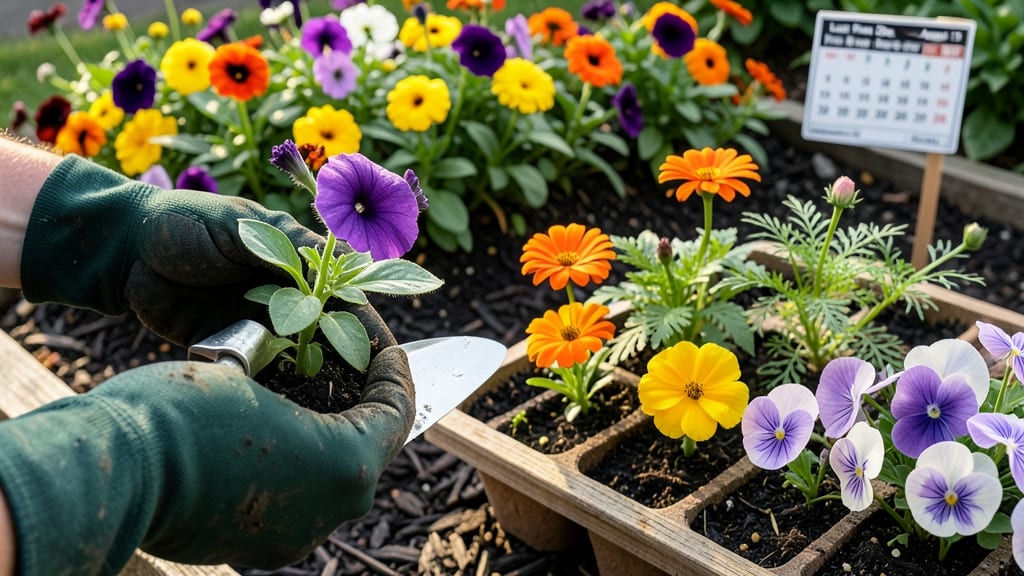
Timing your flowers planting in Ohio isn’t just about hoping for the best—it’s the difference between a garden bursting with 🌸 color and one that fizzles out before summer.
With Ohio’s Zone 6a climate, getting those seeds or seedlings in the ground too early can mean sad, frost-nipped blooms, while waiting too long might leave you with sparse summer displays.
I’ve learned the hard way that Ohio’s last frost date—usually around April 15—is your golden deadline for annuals like petunias and marigolds, but perennials like coneflowers can handle an earlier start if you play it smart.
The key is understanding how your local microclimate (whether you’re in Columbus, Cleveland, or Cincinnati) affects planting windows.
In this guide, I’ll break down exactly when to plant each type of flower—annuals, perennials, and bulbs—so you can maximize your garden’s potential. You’ll discover the best spring planting windows, how to protect tender blooms from late frosts, and which varieties thrive in Ohio’s unpredictable weather.
Ready to turn your Ohio garden into a year-round showstopper? Let’s get those flowers in the ground at the perfect moment—no guesswork, just vibrant blooms from spring to fall.
Ohio’s ideal planting windows by flower type: annuals vs perennials vs bulbs
Ohio’s USDA Zones 5b/6a mean your flower beds face last frost dates that shift by city—Columbus averages April 15, while Cleveland’s is May 1. Waiting until soil hits 50°F (test with a thermometer!) ensures roots establish before summer heat arrives.
Annuals like petunias and marigolds demand patience, while perennials such as black-eyed Susans can handle early spring plantings if mulched.
Bulbs like tulips and daffodils follow a different rhythm: plant them in fall (October) for spring blooms, but spring-blooming bulbs (e.g., crocuses) can go in as early as September.
The key? Soil temperature must stay above 40°F to prevent rot. Use a soil thermometer to track progress—my $10 model saved my $50 impatiens last year!
📅 Last Frost Averages by Ohio City
| Flower Type | Ideal Planting Window | Soil Temp Threshold | Ohio City Example |
|---|---|---|---|
| Annuals (e.g., Petunias, Zinnias) | After last frost (May 1–15) | ≥ 50°F | Cleveland: May 1 |
| Perennials (e.g., Coneflowers, Lavender) | Early spring (April 15–May 1) or fall (Sept–Oct) | ≥ 45°F | Columbus: April 15 |
| Bulbs (e.g., Tulips, Daffodils) | Fall (Oct) for spring blooms | ≥ 40°F | Cincinnati: Oct 1–15 |
| Cold-Hardy Annuals (e.g., Pansies, Snapdragons) | Early spring (March 15–April 1) | ≥ 40°F | Toledo: March 20 |
For annuals, the May 10th Mother’s Day benchmark is a gardener’s rule of thumb—but don’t rely on it! Check your local Cooperative Extension Service for updated frost data (e.g., Ohio State’s agcrops.osu.edu).
In southern Ohio (Zone 6a), you might squeeze in early April plantings for heat-loving flowers like sunflowers, while northern Ohio (Zone 5b) gardeners should wait until late May for tender varieties.
Perennials are the flexible superstars of Ohio gardens. Plant them in early spring (as soon as soil is workable) or fall (6–8 weeks before first frost) to give roots time to establish.
My black-eyed Susans planted in October bloomed 3 weeks earlier than those planted in April—proof that timing matters! For bulbs, aim to plant 6 weeks before ground freezes (usually October in Ohio). Use a bulb planter for precision, and mix in compost to boost next year’s blooms.
Pro tip: Container gardens give you 2–4 extra weeks of planting flexibility. Since pots warm up faster in spring, you can transplant annuals into containers by April 1 and move them outdoors after last frost.
Just ensure containers have drainage holes to prevent root rot—a lesson I learned the hard way with my drowned impatiens in 2022.
Ohio’s microclimates can shift planting windows by 2+ weeks. Urban areas like Columbus experience heat islands that delay frost, while rural valleys (e.g., Appalachian foothills) may see frost 2 weeks earlier.
Observe your yard: South-facing slopes warm up faster, while low-lying areas stay colder. Use frost cloth to extend early-season plantings in risky zones.
Don’t overlook fall planting for cool-season annuals like pansies and kale. These thrive when days shorten and temperatures dip—plant them by September 1 for October–November color. My fall pansies outlasted summer annuals by 6 weeks last year, proving that seasonal diversity is the secret to year-round blooms.
For bulbs, timing is critical: plant spring-blooming
Ohio’s ideal planting windows by flower type: annuals vs perennials vs bulbs
Ohio’s USDA Zones 5b/6a mean frost can strike anytime before mid-April, so knowing when to plant is critical. Annuals like marigolds and petunias need warm soil (50°F+), while perennials like black-eyed Susans can handle cooler temps. Bulbs like tulips should be planted in fall for spring blooms.
Timing varies by city too—Columbus averages its last frost on April 15th, while Cleveland can see frost until May 1st. Always check your local frost-free date and adjust planting accordingly. For example, zinnias thrive when planted 2–3 weeks after your last frost.
| Flower Type | Best Planting Time | Soil Temp Threshold | Examples |
|---|---|---|---|
| Annuals | After last frost (May 1–15) | 50°F+ | Petunias, Marigolds, Zinnias |
| Perennials | Early spring (April 1–15) or fall (Sept–Oct) | 40°F+ | Coneflowers, Black-Eyed Susans, Daylilies |
| Bulbs | Fall (Sept–Oct for spring blooms) | 60°F+ (soil) | Tulips, Daffodils, Hyacinths |
For annuals, wait until soil temperatures consistently stay above 50°F—use a soil thermometer to check. In Columbus, this usually means mid-May, while Cincinnati can start slightly earlier. Perennials, however, are more forgiving and can handle cooler temps, making early spring or late fall ideal.
Bulbs like tulips and daffodils must be planted in fall (September–October) to establish roots before winter. This gives them time to harden off and bloom spectacularly in spring. Skipping this window risks weak or no flowers the next year.
Pro tip: Use row covers or cloches to extend your planting window by 2–4 weeks for frost-sensitive plants like geraniums. Just remove them when daytime temps reach 60°F+ to avoid overheating.
Always test your soil pH (ideal: 6.0–7.0) before planting—Ohio’s clay-heavy soil often needs compost or sand for better drainage. A quick soil test kit ($10–$15) saves time and heartache later.