
Plants
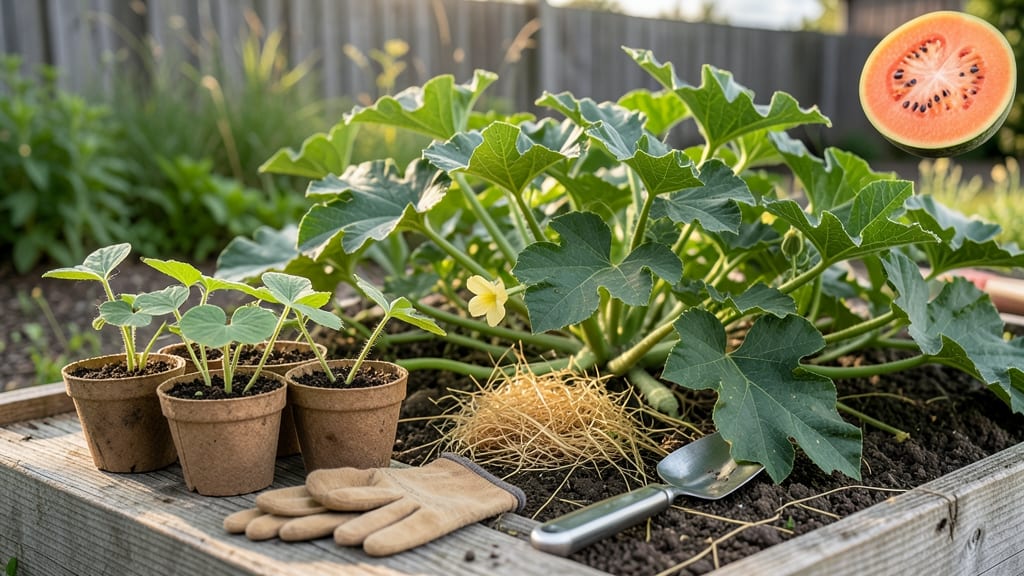
Planting watermelon in Ohio isn’t just about grabbing seeds and tossing them into the dirt—it’s about timing those mid-April to early May windows perfectly to outsmart frost and heat.
With Ohio’s 6a zone climate, a late frost can turn your 🍉 dreams into a soggy mess, while waiting too long risks stunted growth before summer’s peak. The key? Understanding your microclimate—whether you’re in frost-prone Cleveland or warmer Cincinnati—and knowing when soil hits that 70°F sweet spot for germination.
I’ve seen firsthand how a few weeks’ difference can mean the gap between juicy harvests in July and September or a season of wilting vines. Ohio’s unpredictable springs demand patience: rushing seeds into cold soil or transplanting too early guarantees disappointment.
But get it right, and you’ll be feasting on vine-ripened watermelons by summer’s end—no grocery store substitute needed.
What if you’re eager to jumpstart your garden? We’ll cover season-extending tricks like black plastic mulch and cold frames to shave weeks off your planting schedule.
And for those who’ve tried (and failed) before, I’ll walk through the most common Ohio-specific mistakes—like ignoring soil pH or crowding vines—and how to fix them before your next attempt.
Ready to turn your Ohio garden into a 🍉 paradise? Let’s dive into the exact dates, tools, and tips that’ll have your watermelons thriving—no guesswork required.
Ohio’s 3 microclimates: exact planting dates by Zone for watermelon success
Ohio’s diverse geography means Northern, Central, and Southern regions have wildly different frost dates—sometimes just 100 miles apart. In Cleveland (Zone 6a), late frosts linger until May 15, while Cincinnati (Zone 6b) often sees frost-free soil by April 20.
These differences dictate whether you’ll grow ‘Sugar Baby’ (70-day variety) or ‘Crimson Sweet’ (85-day variety) successfully.
For all three regions, the soil temperature is your true guide—watermelons refuse to germinate below 70°F (21°C). Use a soil thermometer (available for $10 at garden centers) to confirm readiness. Nighttime temps must also stay above 60°F (15°C) to prevent shock after transplanting.
🌱
| Region | Last Frost Date | Ideal Planting Window | Soil Temp Threshold | Best Varieties |
|---|---|---|---|---|
| Northern Ohio (Cleveland) | Mid-May (May 15) | Late May to early June | 75°F+ (24°C+) | ‘Sugar Baby’ (70 days), ‘Black Diamond’ (80 days) |
| Central Ohio (Columbus) | Early May (May 1) | Mid-April to May 15 | 70°F+ (21°C+) | ‘Crimson Sweet’ (85 days), ‘Jubilee’ (78 days) |
| Southern Ohio (Cincinnati) | Late April (April 20) | Early April to May 10 | 68°F+ (20°C+) | ‘Charleston Gray’ (80 days), ‘Moon and Stars’ (85 days) |
*Varieties with shorter days to maturity are bolded for Northern Ohio.
In Northern Ohio, where urban heat islands (like Cleveland) can delay frost by 3–5 days, start seeds indoors March 15 and transplant after May 20. Use black plastic mulch to warm soil faster—this can shave 10–14 days off your planting timeline.
For Central Ohio, direct-sow seeds after April 30 once soil hits 70°F.
Southern Ohio’s earlier frost-free dates let you double-crop: plant ‘Sugar Baby’ in early April for a June harvest, then follow with ‘Crimson Sweet’ in late May for a September feast.
Just watch for humidity spikes—Southern Ohio’s summers can trigger powdery mildew if vines aren’t spaced 3–4 feet apart.
Pro tip: Check Ohio State University Extension’s frost date maps (updated annually) for your exact ZIP code. Their “Garden Hotline” (1-800-282-6532) offers free local advice—call them if your area had an unusual late frost like in 2021 (May 10).
For transplants, harden off seedlings for 7–10 days before setting them out. In Northern Ohio, wait until June 1 to avoid late-spring frosts that can kill tender young plants.
Use row covers if you’re desperate for earlier harvests, but remove them by flowering stage to prevent overheating.
🌿
If you’re in Zone 6a (most of Ohio), aim for 75 days to maturity to ensure harvests before first frost (October 15). Varieties like ‘Corinthian’ (75 days) are heat-tolerant and perfect for Ohio’s 90°F+ summers. Avoid ‘Yellow Doll’ (60 days)—it’s too short-season for reliable Ohio yields.
💧
Ohio’s 3 microclimates: exact planting dates by Zone for watermelon success
Ohio’s three distinct microclimates create dramatic differences in last-frost dates and soil warming. Northern Ohio (like Cleveland) averages May 10 for frost-free conditions, while Southern Ohio (Cincinnati) typically hits April 20.
Central Ohio (Columbus) falls right in between at April 28. These dates shift 3–4 weeks based on elevation and urban heat islands.
For direct sowing, wait until soil temperatures reach 75°F+—use a soil thermometer to verify.
In Northern Ohio, this usually means late May; Southern Ohio can start as early as mid-April. Transplants (hardened-off seedlings) tolerate slightly cooler soil (65°F+) and can go in 2–3 weeks earlier than direct seeds.
📅 Key Dates by Zone: Northern Ohio: Transplants by May 15, direct seeds by June 1 Central Ohio: Transplants by May 1, direct seeds by May 15 Southern Ohio: Transplants by April 15, direct seeds by April 30
| Zone | Last Frost Avg. | Transplant Window | Direct Sow Window | Soil Temp Threshold |
|---|---|---|---|---|
| Northern (Cleveland) | May 10 | May 15–June 1 | June 1–15 | 75°F+ |
| Central (Columbus) | April 28 | April 30–May 15 | May 1–15 | 70°F+ |
| Southern (Cincinnati) | April 20 | April 15–May 1 | April 30–May 15 | 65°F+ |
Urban gardens in Cincinnati or Columbus often warm up 5–7 days earlier than rural areas due to heat-island effects.
Use local frost data from the Ohio State University Extension or Almanac for precise timing. Short-season varieties like ‘Sugar Baby’ (70 days) work best in Northern Ohio, while longer-maturing types (90+ days) thrive in Southern Ohio’s extended summer.
Always monitor nighttime temps—watermelons won’t thrive if nights dip below 60°F. In Northern Ohio, consider row covers for early transplants to shield from late frosts. For Southern Ohio, prioritize shade cloth in peak summer to prevent sunscald on fruits.
Pro tip: Test soil pH (aim for 6.0–6.8) and amend with compost 2 weeks before planting. Ohio’s clay-heavy soils benefit from raised beds or mound planting to improve drainage and warmth.