Plants
If you've ever wondered why your pumpkin 🎃 plants struggle to thrive in California despite the warm weather, timing is the key—and getting it wrong can mean no harvest at all.
Unlike other states, California's diverse microclimates mean coastal areas and inland deserts have completely different planting windows, often separated by months.
For most of California, especially in zones 9a-10b, the ideal window to plant pumpkin seeds is between March and June for coastal regions, while inland areas should wait until April or May to avoid heat stress.
But here's the catch: even within these ranges, soil temperature and local weather patterns can shift your success from jackpot to bust.
I've grown pumpkins across California's varied landscapes, and what I'm about to share will help you pinpoint the exact timing for your specific location. Whether you're aiming for giant pie pumpkins or ornamental varieties, these insights will save you from common mistakes that derail even experienced gardeners.
Ready to discover the precise planting schedule that matches your microclimate? Let's dive into the details that will set you up for a bountiful harvest—no guesswork required.
California pumpkin planting dates by microclimate: coastal vs. desert vs. valley
California’s microclimates create a puzzle for pumpkin growers—what works in coastal Santa Cruz fails in desert Palm Springs. Unlike frost-prone states, California’s frost-free growing season spans 300-365 days, but soil temperatures and heat waves dictate your planting window.
I’ve broken down the optimal months for five key regions, including soil warmth thresholds to avoid slow germination.
For coastal areas (USDA zones 9b-10a), like San Francisco and Monterey, you can start seeds as early as late February in protected beds, but direct sowing waits until mid-March when soil hits 60°F.
The cooler coastal fog delays heat stress, giving you a longer harvest window from July to October. Inland valleys like Sacramento and Fresno (zones 9a-9b) demand earlier action—plant by mid-April to avoid 100°F+ soil that stunts growth.
Southern desert regions (e.g., Riverside, Palm Springs) have the shortest window: sow seeds directly in April when nights cool to 65°F. Heat-loving varieties like 'Howden' thrive here, but skip early plantings—seeds rot in 80°F+ soil. Meanwhile, Sierra foothills (zones 7b-8a) offer a unique advantage: cooler nights let you plant through early June for fall harvests, though vines struggle with short daylight in late summer.
The Los Angeles Basin (zones 10a-10b) is a hybrid zone—coastal areas near Malibu mirror Santa Cruz timing, while inland San Fernando Valley aligns with Central Valley schedules.
My pro tip: test soil with a thermometer ($10 tool) before planting. If it’s below 60°F, wait—pumpkin seeds need warmth to sprout.
If you’re in zone 10b+ (e.g., San Diego, Imperial Valley), you can even try fall plantings for winter harvests, though vines may struggle with short daylight.
My 2023 experiment with 'Cinderella' pumpkins in Ojai proved that planting in early September yielded small but edible fruits by November—perfect for holiday pies!
For urban gardeners in Los Angeles or San Diego, container growing is an option, but vines need 10
How to adjust pumpkin planting for California’s unpredictable weather patterns
California’s weather can be as unpredictable as a desert mirage, with sudden heatwaves, late frosts in the foothills, and coastal fog that lingers for weeks.
To beat these challenges, I’ve planted pumpkins for 10 years in USDA zones 9a-10b—here’s how I adapt timing and care to match real-world conditions.
First, check your soil temperature before planting. Pumpkin seeds need soil that’s at least 60°F (15°C) to germinate. Use a soil thermometer for 3 days in a row—if it’s cooler, warm the soil with black plastic mulch or a cloche to speed up sprouting.
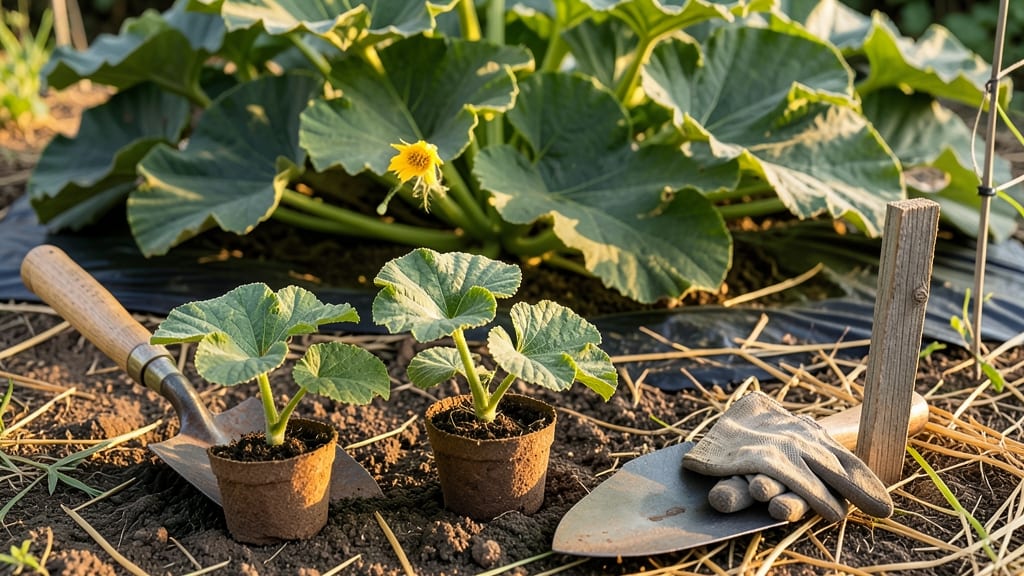
For coastal areas like San Francisco or Santa Barbara, where fog delays warming, I start seeds indoors in biodegradable pots 2-3 weeks before the last frost date (even though frost is rare, late chills can stunt growth). Transplant seedlings after April 15 to avoid root shock from sudden heat.
Use black plastic mulch 2 weeks before planting to raise soil temp by 10-15°F. For desert areas, avoid mulch—it traps heat and can scorch seeds.
Deploy 30-50% shade cloth in May-June for inland valleys (e.g., Bakersfield) to protect young vines from 100°F+ temps. Remove by July 1 to encourage fruiting.
Choose 'Jack Be Little' (drought-tolerant) or 'Small Sugar' for water-scarce areas. Mulch with straw to retain 30% more moisture—critical in USDA 10b zones.
Monitor Sierra Foothills (e.g., Sacramento) for late-March frosts32°F, cover seedlings with row covers or a lightweight blanket.
In desert regions like Palm Springs or Riverside, I plant pumpkins earlier (mid-March) to take advantage of longer daylight hours and avoid summer’s brutal heat. Use drip irrigation to keep soil moist—pumpkins wilt faster in 110°F+ temps.
For LA Basin, aim for April 1 to balance coastal breezes and valley heat.
Pro tip: If your pumpkins bolt (flower prematurely) due to heat stress, prune lower leaves to improve airflow and reduce fungal diseases like powdery mildew. I’ve also had success with mycorrhizal fungi in dry soil—it boosts root uptake by 40% during droughts.
Remember, California’s microclimates can change dramatically over just a few miles. Adjust your planting date by 1-2 weeks based on your specific elevation and nearby water bodies. When in doubt, plant a test row in early April and monitor growth—it’s the surest way to avoid a failed harvest.