
How To
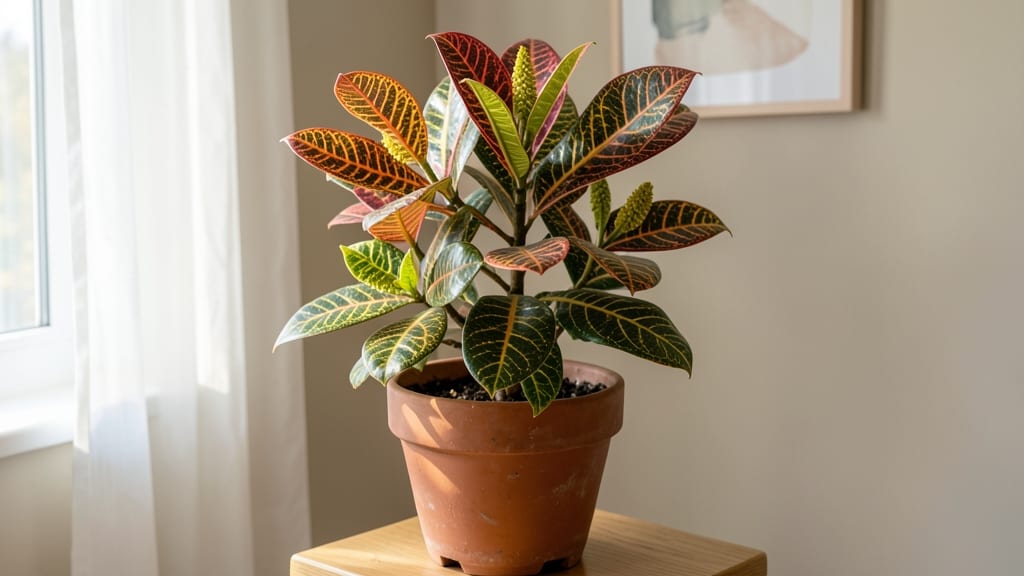
If your croton plant’s 🌿 leaves are losing their vibrant colors or turning crispy, you’re probably dealing with how much light does a croton plant need—specifically, the wrong amount.
This tropical beauty thrives in bright, indirect sunlight—but too much or too little can turn your stunning foliage into a sad, dull mess.
I’ve seen crotons go from showstopper to sad sapling just because of light mistakes, and the good news is, fixing it is easier than you think. Whether you’re dealing with leggy growth or faded hues, understanding the perfect balance of light will bring back that bold, multicolored glory.
Most people assume crotons need direct sun, but that’s actually one of the biggest misconceptions. Let me show you exactly how to position your plant—whether you’re working with a sunny window or artificial lighting—to keep those leaves popping with color year-round.
The key is finding that sweet spot between too little light (which slows growth) and too much direct sun (which burns those gorgeous leaves). With the right setup, your croton will reward you with vibrant, healthy foliage that’s the envy of every plant lover.

Croton plant light requirements: the ideal bright indirect sunlight breakdown
Crotons thrive under bright indirect sunlight, mimicking their tropical origins. Too little light causes dull foliage, while too much direct sun scorches their delicate leaves. Aim for 4-6 hours of filtered light daily, adjusting based on your plant’s current health and leaf color intensity.
In nature, crotons grow under dappled sunlight in rainforests, where harsh rays are softened by tree canopies. Recreate this with east or west-facing windows or sheer curtains to diffuse intensity. South-facing windows work only if placed 6+ feet away to avoid leaf burn.
The ideal light spectrum for crotons includes blue and red wavelengths (400-700nm), which enhance chlorophyll production. Standard indoor lighting often lacks these, so supplement with full-spectrum LED grow lights if natural light is insufficient.
Rotate your croton quarterly to ensure even light exposure. Uneven growth often stems from one side leaning toward the window. This simple habit prevents lopsided foliage and maintains symmetrical color patterns that make crotons so prized.
Seasonal adjustments are key: Increase light exposure in winter when daylight shortens, or supplement with grow lights. Conversely, reduce direct sun in summer to prevent leaf bleaching, especially during peak afternoon hours (2 PM - 5 PM).
Test your light conditions with a light meter app (free options available). Aim for 1,000-2,000 foot-candles of light—crotons thrive in this mid-range brightness. Most smart phones can estimate light levels through dedicated apps like "Light Meter" or "Lux Light Meter."
Outdoor crotons need gradual acclimation to sunlight. Start with 1 hour of morning sun, then increase by 30 minutes weekly. Sudden exposure causes sunburn spots that resemble coffee stains on leaves. Always introduce them to partial shade first.
Watch for color shifts as your croton’s light needs change. Red and orange varieties darken in brighter conditions, while yellow and green types may intensify. Use these visual cues to fine-tune placement—your plant’s foliage is its way of communicating!
For office or basement setups, place crotons within 3 feet of a window during winter months. South-facing windows provide the most light, but balance this with sheer curtains to prevent leaf damage. If natural light is insufficient, LED grow bulbs (6500K color temperature) work best.
Signs your croton isn’t getting enough light (and how to fix it)
If your croton plant starts losing its signature vibrant colors, it’s often a cry for more bright indirect light. The first sign? Dull, washed-out leaves that lose their fiery hues. This happens when your plant isn’t getting enough photosynthesis fuel to maintain its striking foliage.
Another red flag is stretched, leggy growth—those long, sparse stems reaching toward any available light. Your croton is essentially starving for sunlight and growing in desperate, elongated shapes to find it.
This is called etiolation, and it’s a clear signal to move your plant closer to a sunny window.
🌿
Never compensate for low light by increasing water. Crotons in dim conditions already photosynthesize slower, so soggy soil leads to root rot. Let the top 1-2 inches of soil dry out between waterings.
Yellowing leaves—especially on the older, lower foliage—can also mean your croton isn’t getting enough light energy. Unlike nutrient deficiencies, this yellowing starts at the leaf base and moves upward.
If you spot brown, crispy edges instead, your plant might be getting too much direct sun, but dull yellow is the low-light warning.
To fix these issues, start by rotating your croton every few days so all sides get even light exposure. If you’re near a south-facing window, use a sheer curtain to filter harsh afternoon rays.
For deep indoor spaces, consider a grow light—just keep it 6-12 inches away to avoid leaf burn.
Pro tip: Prune leggy stems back by 1/3 to encourage bushier, healthier growth. This helps your croton redirect energy to producing new, vibrant leaves instead of stretching toward light.
With the right light adjustments, your croton’s colors will bounce back in 4-6 weeks. The key is patience and consistency—just like any tropical plant, crotons thrive when you mimic their natural habitat of dappled sunlight.