
Plants
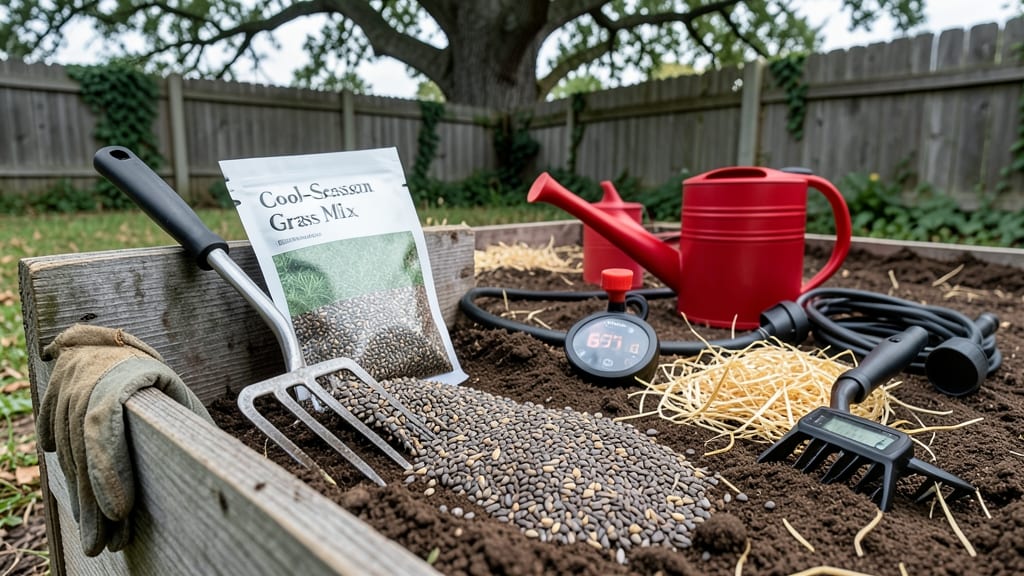
Timing your grass seed planting in the fall can mean the difference between a lush lawn next spring and a patchy, weak one. The key isn't just throwing seeds into the ground—it's understanding when your climate gives grass the best shot to establish strong roots before winter sets in.
In USDA Zone 6a, like many northern regions, you’ve got a 4-6 week window before the first frost hits—typically late September through early October. This period lets grass seeds germinate in cooler soil while avoiding summer heat stress or winter dormancy too soon.
But get it wrong, and you’ll either waste seed on late planting or struggle with weak growth when warmer weather returns.
What makes fall planting work so well? Cooler air temperatures reduce weed competition, while consistent rainfall (or your watering efforts) keeps soil moist just enough for seeds to sprout.
I’ll show you exactly how to prep your soil, choose the right grass types for your zone, and avoid common mistakes that derail even the best-laid plans.
Ready to turn your lawn into the envy of the neighborhood? Let’s break down the critical steps—from soil prep to seed selection—that’ll give you a head start on a thick, green carpet by next spring.
The 6-Week pre-frost rule: exact fall planting timeline by climate Zone
Fall grass seeding success hinges on one simple rule: plant 4-6 weeks before your first expected frost. This window—often late August to mid-October—lets grass seeds germinate, establish roots, and harden off before winter dormancy.
But timing varies dramatically by USDA hardiness zone, soil temperature, and local weather patterns. Let’s break it down by region to avoid costly mistakes.
In northern climates (Zones 3-5), aim for mid-August to early September. Frost typically arrives by late October, so planting in late September risks seed dormancy before roots strengthen. For midwestern and northeastern states, check your average first frost date—most fall between October 15-30.
If you’re in Zone 6 or higher, you can push planting to mid-October with confidence.
Southern regions (Zones 7-10) have more flexibility. Zone 7-8 gardeners can seed as late as early November, while Zone 9-10 may even extend to mid-November. However, warm-season grasses like Bermuda or Zoysia should never be planted in fall—they thrive in summer heat and won’t survive winter.
Stick to cool-season grasses like fescue or ryegrass for southern fall seeding.
🌱 Pro Tip: Use your local cooperative extension service’s frost date maps (like those from [USDA Plant Hardiness](https://planthardiness.ars.usda.gov/)) to pinpoint your exact window. For example, Denver (Zone 5) targets late August, while Atlanta (Zone 8) can wait until early October.
Adjust 1-2 weeks earlier if your fall has been unusually warm.
Soil temperature is your #1 guide, not just calendar dates. Grass seeds need soil temps between 50–65°F to germinate. Use a soil thermometer ($10 at garden centers) to check 2 inches deep—this is the critical zone for root development.
If temps dip below 50°F, germination slows dramatically, and seeds may rot. Conversely, if soil stays above 70°F, seeds dry out before sprouting.
🌡️ Critical Thresholds:
- Ideal soil temp: 50–65°F (germination sweet spot)
- Minimum for germination: 40°F (but growth stalls)
- Maximum for risk: 70°F+ (seeds dry out)
Here’s how to adjust for early or late winters. If your area has a history of early frosts (e.g., Zone 4), plant 2 weeks earlier than the average window.
Conversely, if you’re in a mild microclimate (like near a large body of water), you might extend planting 1-2 weeks later. Always err on the side of earlier planting—you can’t rush root growth, but you can outpace frost.
📅 Regional Cheat Sheet:
- Pacific Northwest (Zones 6-8): Late August–mid-October
- Midwest (Zones 4-6): Mid-August–early September
- Southeast (Zones 7-9): Late August–November
- Northeast (Zones 5-7): Early September–mid-October
Miss the window? Don’t panic. If you plant up to 2 weeks before frost, seeds may still germinate, but growth will stall. For late plantings, use a lightweight row cover to insulate soil and extend the season.
Alternatively, overseed in early spring—just be prepared for thinner coverage until roots mature.
🌿 **Final
The 6-Week pre-frost rule: exact fall planting timeline by climate Zone
Fall grass seeding success hinges on one golden rule: plant 4–6 weeks before your first frost date. This window ensures seeds germinate, roots establish, and your lawn hardens off before winter dormancy.
But timing varies wildly by region—planting too early in hot climates or too late in cold ones can spell disaster.
Northern climates (USDA Zones 3–6) typically aim for mid-September to early October, while Southern zones (7–10) can stretch into late October or even November. The key metric? Soil temperatures between 50–65°F—cooler than this, and germination stalls; warmer, and seeds dry out.
Here’s how to pinpoint your exact window: Check your local frost date (NOAA’s Frost Calculator is free) and subtract 6 weeks. For example, if frost hits November 15, seed by October 1. Pro tip: Use a soil thermometer—if temps dip below 50°F at night, delay planting.
🌱 Fall Grass Seed Planting Timeline by Climate Zone
| Zone | Ideal Planting Window | Soil Temp Range (°F) | Key Adjustments |
|---|---|---|---|
| 3–5 (Cold North) | Late August–early September | 50–60°F | Use winter ryegrass for cold tolerance |
| 6–8 (Temperate) | Mid-September–mid-October | 55–65°F | Best for tall fescue and Kentucky bluegrass |
| 9–10 (Warm South) | Late September–November | 60–70°F | Avoid warm-season grasses (e.g., Bermuda) |
⚠️ Miss the window? Planting 2–3 weeks late is risky, but a winter cover crop (like clover) can protect seeds until spring.
Early frost? Don’t panic. If your window closes sooner than expected, opt for fast-germinating varieties like annual ryegrass (sprouts in 5–7 days) or use a seed starter fertilizer to jumpstart growth. Just avoid planting after November 15 in most zones—seeds won’t survive winter’s chill.
Pro move: Test your soil’s pH (aim for 6.0–7.0) and amend with compost or lime 2 weeks before seeding. Cool-season grasses like fescue thrive in slightly acidic soil, while bluegrass prefers neutral pH. A simple $10 soil kit from your local garden center solves this in minutes.
Remember: The goal isn’t just green grass by spring—it’s deep roots that outcompete weeds next summer. With the right timing, your lawn will wake up 3x stronger than spring-planted seed. 🌱