
Plants
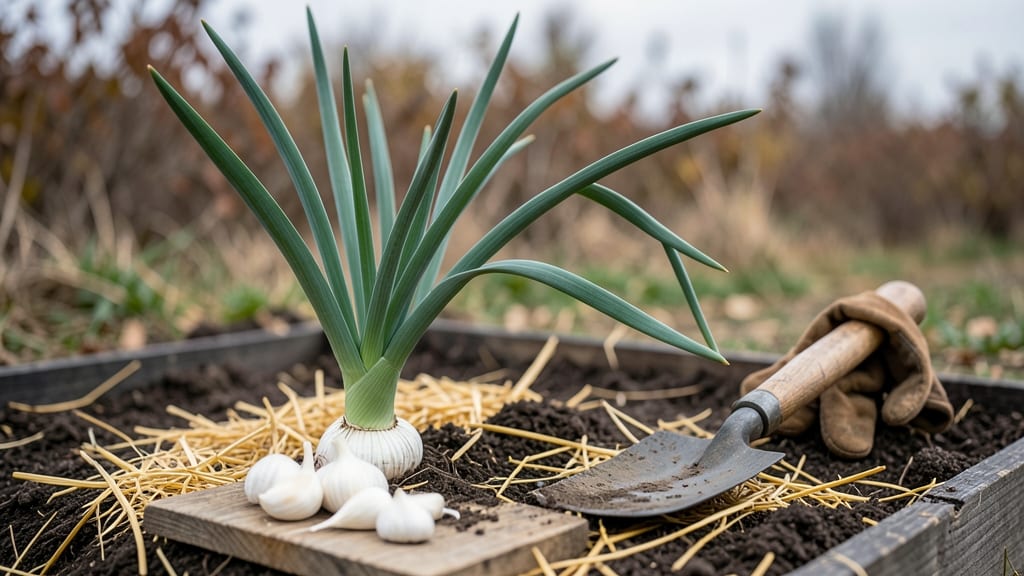
Timing your garlic planting in North Dakota isn’t just about throwing cloves in the ground—it’s the key to growing bold, flavorful bulbs that survive brutal winters and short summers.
With Zone 4a frost dates looming, planting too early or late can mean the difference between a thriving crop and a failed harvest.
Most gardeners in North Dakota know the fall window—mid-September to early October—is ideal, but why? The secret lies in letting garlic establish roots before winter sets in, so it can push through snow and emerge strong next spring.
I’ll break down exactly how to nail this timing, whether you’re a beginner or a seasoned grower.
You’ll also discover how hardneck vs. softneck varieties perform in ND’s climate, plus pro tips to protect your crop from unpredictable frost and maximize bulb size. Let’s get those 🧄 cloves in the ground the right way!
From soil prep to frost-proofing, this guide covers everything you need to turn North Dakota’s challenging conditions into your garlic-growing advantage. Ready to grow garlic that rivals commercial stores? Let’s dive in.
North Dakota garlic planting timeline by hardiness Zone (3 vs 4)
North Dakota’s USDA Zones 3 and 4 create unique challenges for garlic growers, but timing your fall planting correctly ensures robust bulbs despite the cold. The key difference between these zones lies in frost dates—Zone 3 experiences earlier freezes, leaving a tighter window for planting.
For both zones, garlic needs 4-6 weeks before the ground freezes to establish roots. In Zone 4 (common in southern ND), you have until mid-October, while Zone 3 growers must plant by early October at the latest.
Here’s how to align your planting with North Dakota’s climate:
Garlic bulbs need 120-150 days of cool weather to mature, so planting too late risks small, weak bulbs. In North Dakota, this means starting in September for a July harvest the following year.
Check your local last frost date (typically October 15 in Zone 4, earlier in Zone 3) and count backward 6 weeks to determine your ideal planting window. For example, if frost hits October 10, plant by September 15.
Pro tip: Use a soil thermometer to confirm temperatures are between 40-55°F (4-13°C)—garlic roots struggle to form in colder or warmer soil. If your soil is too warm, wait 1-2 weeks before planting.
Hardneck varieties like ‘German White’ or ‘Music’ thrive in North Dakota’s climate, while softnecks (like ‘Silverskin’) may struggle in Zone 3. Always choose certified organic seed garlic to avoid diseases.
After planting, apply 2-3 inches of straw mulch to insulate bulbs through winter. This protects against freeze-thaw cycles that can damage emerging shoots in spring.
Remember: The earlier you plant in the fall window, the larger your bulbs will be. Don’t wait until the last minute—garlic needs time to establish before winter sets in! 🧄
5 Critical factors that determine perfect garlic planting time in ND
Planting garlic in North Dakota isn’t just about picking a month—it’s about understanding 5 key factors that make or break your harvest. The hardiness zone, soil temperature, daylight hours, and even the moon phase can influence bulb size and flavor.
Let’s break down what truly matters for Zone 3 and 4 success.
First, soil temperature is non-negotiable. Garlic cloves need 40-50°F soil to sprout, but below 32°F can stunt growth. In North Dakota, this usually means planting by mid-September—but if your soil warms slower, you may need to adjust. Use a soil thermometer to check before planting.
🌱 Numbered Highlights
- 1. Soil Temperature: Plant when soil is 40-50°F—too warm or cold delays sprouting.
- 2. Frost Depth: Cloves must survive 12-18 inches of frost; deeper snow cover helps.
- 3. Daylight Hours: 10-12 hours of daylight triggers bulb formation—ideal in late fall.
- 4. Variety Choice: Hardneck varieties (like Music or German White) thrive in ND’s climate.
- 5. Moon Phase: Planting during a waxing moon (increasing light) boosts root growth.
Next, frost depth plays a surprising role. Garlic cloves need at least 12-18 inches of frost protection to develop properly. In Zone 3 (e.g., Minot or Devils Lake), this means planting 4-6 weeks before the ground freezes.
In Zone 4 (e.g., Fargo or Grand Forks), you’ve got a 1-2 week buffer—but don’t push it.
Don’t overlook daylight hours, either. Garlic bulbs form when daylight drops to 10-12 hours—a condition met in late September to early October in North Dakota.
Planting too early (e.g., August) can lead to bolting (premature flowering), while planting too late (e.g., November) risks frozen cloves.
Choosing the right variety is another game-changer. Hardneck garlic (e.g., Silverskin or Purple Stripe) is your best bet for Zone 3-4, as it handles cold better than softneck varieties. Save softneck for Zone 5+—it struggles with ND’s harsh winters and often produces small bulbs.
Finally, pay attention to the moon phase. While not scientifically proven, many North Dakota gardeners swear by planting during a waxing moon (when light is increasing). This aligns with garlic’s need for steady growth before dormancy. Check a lunar calendar for your planting window!