Plants
If you’ve ever planted daffodils in Colorado only to watch them freeze before spring, you’re not alone—but the solution is simpler than you think.
The perfect timing for planting these hardy blooms falls between September and November, when soil temperatures drop just enough to signal bulbs to root while still offering protection from early frost.
Colorado’s USDA zones 5-7 create a unique challenge, with elevation shifts and unpredictable frost dates. That’s why getting the window right—especially in September or early October—makes all the difference. Plant too early, and bulbs may sprout prematurely; too late, and they won’t establish roots before winter sets in.
I’ll walk you through the exact steps to time your planting for zero-frost survival, including soil prep, depth guidelines, and regional tweaks for Front Range vs. Western Slope gardens. Let’s turn your daffodil dreams into a reliable spring spectacle—no more guesswork, just vibrant blooms.
Whether you’re a first-time gardener or a seasoned pro, these insights will help you avoid common mistakes and ensure your bulbs thrive year after year. Ready to dig in?
Colorado’s ideal fall planting window for daffodils: month-by-month guide
Timing your daffodil planting in Colorado is all about beating the first frost while giving bulbs time to root. The ideal window spans from mid-September to early November, but exact dates depend on your region’s microclimate and elevation.
Plant too early, and bulbs may sprout before winter; too late, and they won’t establish roots before frost.
Colorado’s USDA zones 5-7 create distinct planting zones. The Front Range (Denver, Boulder) typically plants in late September to early October, while the Western Slope (Grand Junction, Aspen) can extend planting into mid-November due to warmer temperatures.
The Eastern Plains (Fort Collins, Colorado Springs) often plants in early October to avoid early freezes.
Soil temperature is your best guide. Aim to plant when soil temps drop to 50-60°F—this triggers root growth without encouraging premature sprouting. Use a soil thermometer to check, or follow local frost date averages from your Cooperative Extension office.
🌼 Colorado Daffodil Planting Timeline by Region
| Region | Ideal Planting Window | Soil Temp Threshold | Key Consideration |
|---|---|---|---|
| Front Range (Denver, Boulder) | Late September - Early October | 50-60°F | Early frost risk; plant before ground freezes |
| Western Slope (Grand Junction, Aspen) | Mid-October - Mid-November | 55-65°F | Warmer microclimates allow later planting |
| Eastern Plains (Fort Collins, Colorado Springs) | Early October - Mid-October | 45-55°F | Dry climate; water deeply after planting |
| High Altitude (Above 8,000 ft) | Late August - Early September | 40-50°F | Shorter growing season; plant earlier |
⚠️ Pro Tip: Adjust for urban heat islands—cities like Denver may stay warmer longer, extending your planting window by 1-2 weeks.
For high-altitude gardens (above 8,000 feet), like those in Aspen or Leadville, start planting as early as late August. These areas have shorter frost-free seasons, so bulbs need more time to establish roots before winter sets in.
Use hardy daffodil varieties, like ‘Ice Follies’ or ‘Tête-à-Tête’, which tolerate colder soils better.
If you miss the ideal window, don’t panic! You can plant daffodils in December as long as the ground isn’t frozen. However, bulbs may not bloom as vigorously the first year.
For spring planting, avoid it—daffodils need cold stratification to flower, so fall planting is non-negotiable for best results.
Choose well-draining soil and a sunny location (6+ hours of sun daily). Amend heavy clay soils with compost or sand to prevent bulb rot.
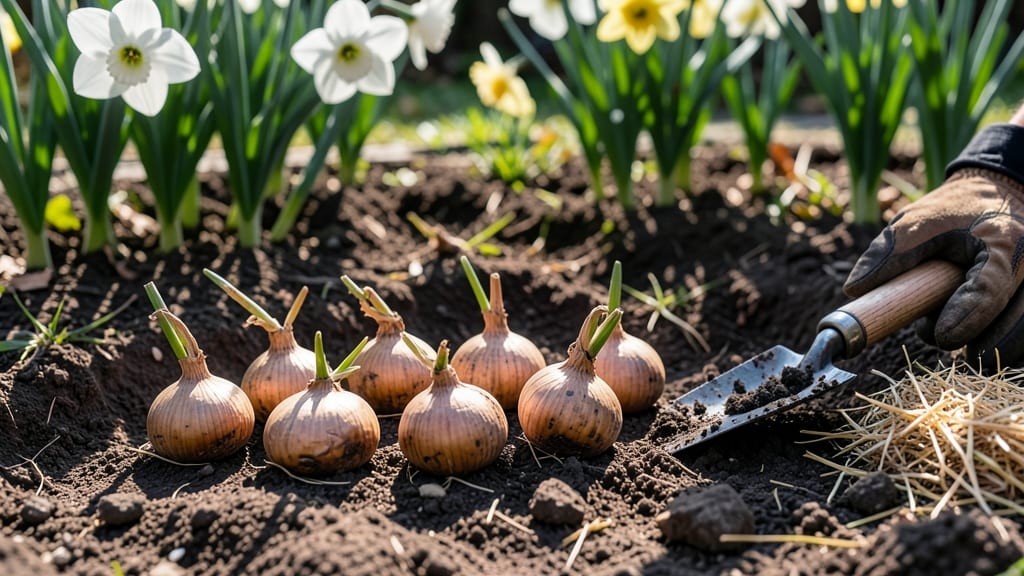
Plant bulbs 6-8 inches deep, with the pointy end up, and space them 4-6 inches apart for clusters or 12 inches apart for single stems.
After planting, water deeply to settle the soil and encourage root growth. Avoid overwatering, as soggy soil can cause bulb rot. A 2-inch layer of mulch (straw or shredded leaves) helps insulate bulbs and retain moisture.
In urban gardens, containers work well—just ensure they drain and overwinter in a protected spot.
Monitor your garden for late frosts, which can damage emerging foliage. If a hard freeze (below 20°F) is forecast, cover bulbs with straw or burlap until spring. With the right timing and care, your daffodils will reward you with vibrant blooms from April through May.
🌱 Remember: The key to Colorado daffodil success is planting 4-6 weeks before the first frost—check your local Almanac frost dates for precision. Happy planting!
Critical factors that determine your planting success in Colorado
Colorado’s diverse elevation zones and microclimates create unique challenges for daffodil planting. At higher elevations like Denver (5,280 ft), the growing season shrinks, demanding earlier fall planting—aim for late August to early October.
Meanwhile, lower desert areas like Grand Junction (4,400 ft) offer a longer window until mid-November before winter sets in.
Your soil type also plays a crucial role. Daffodils thrive in well-draining soil with a pH between 6.0 and 7.0. Rocky or clay-heavy soils common in Colorado’s Front Range need amendments like compost or sand to prevent bulb rot.
Test your soil before planting to avoid costly mistakes—bulbs left in soggy soil won’t survive our unpredictable freezes.
Don’t overlook frost dates, which vary wildly across the state. The USDA Hardiness Zones 5-7 cover Colorado, but local frost records matter more.
Check your last average frost date (typically mid-May) and plant bulbs 6-8 weeks before the ground freezes—usually late September to early November for most regions.
| Factor | Colorado-Specific Consideration | Action Step |
| Elevation | Denver: 5,280 ft | Grand Junction: 4,400 ft | Plant 2 weeks earlier at higher elevations |
| Soil Drainage | Clay-heavy in eastern plains | Add compost/sand to improve drainage |
| Frost Dates | First frost: Mid-October (varies) | Plant 6-8 weeks before frost |
| Microclimate | Urban heat islands vs. mountain valleys | Choose warmer microclimates for later planting |
Urban gardeners in Denver or Colorado Springs face unique challenges due to heat islands that delay frost. Use this to your advantage—plant daffodils 1-2 weeks later than rural areas. Conversely, mountain valleys like the San Luis Valley experience earlier freezes, so plant by late September to avoid bulb damage.
Finally, bulb quality matters. Choose certified disease-free bulbs from reputable suppliers to prevent issues like basal rot, a common problem in Colorado’s damp springs. Store bulbs in a cool, dry place (50-60°F) until planting day—never refrigerate them, as this can trigger early sprouting.
By accounting for these critical factors, you’ll give your daffodils the best shot at thriving through Colorado’s unpredictable winters and blooming beautifully next spring. The key? Plan ahead, test your soil, and plant early—before the first frost locks the ground in ice.