
Plants
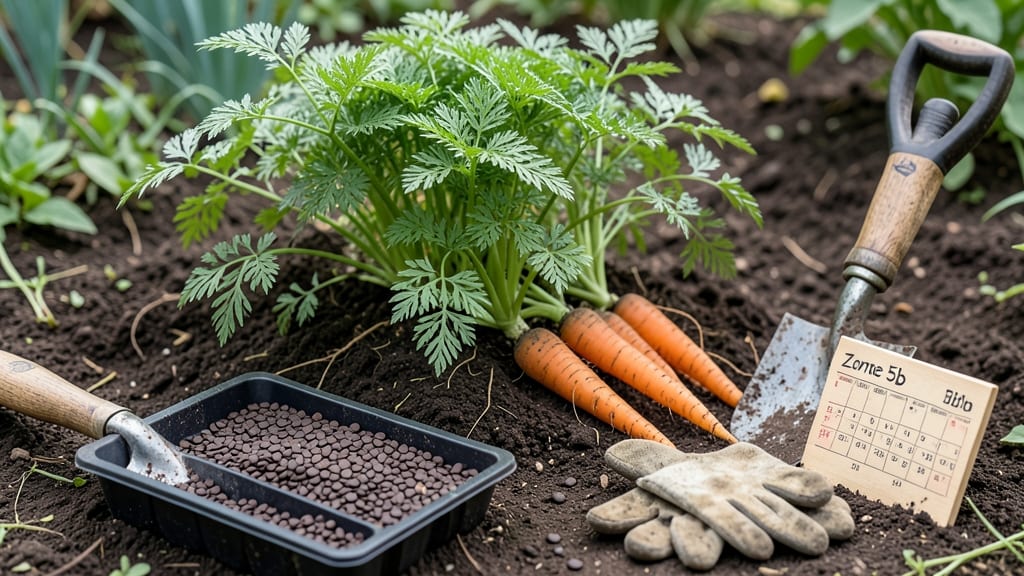
Timing your carrot planting in Zone 5b can make or break your harvest—get it right, and you’ll enjoy sweet, crisp 🥕 roots all season long.
In this region, where frosts linger until mid-April and return by mid-October, planting too early or too late means struggling with slow germination or stunted growth.
Most gardeners in Zone 5b (think Northern Midwest or Northeast US) focus on two key windows: early spring and late summer. But here’s the catch—soil temperature matters just as much as calendar dates.
Carrot seeds need consistently warm soil (around 40-85°F) to sprout reliably, which often means waiting until after your last frost date.
In this guide, I’ll break down the exact weeks before last frost to plant for maximum success, plus pro tips for extending your harvest.
Whether you’re a beginner or a seasoned gardener, these strategies will help you avoid common pitfalls and grow carrots that are tender, flavorful, and free from woody textures.
Ready to transform your garden into a carrot haven? Let’s dive into the best planting schedules, soil prep secrets, and how to keep your crop thriving—even when Zone 5b’s unpredictable weather tries to throw you off track.

Best planting windows for carrots in Zone 5b: weeks before/after last frost
Zone 5b gardeners face a tight window for planting carrots—too early and frost will kill seedlings, too late and roots turn woody. The key is understanding your last frost date (typically April 15 in most Zone 5b areas) and soil temperature thresholds.
Carrot seeds need 40-85°F soil to germinate, but they’ll rot if planted in cold, wet ground. Aim for 4-6 weeks before last frost for spring plantings, giving roots time to mature before summer heat sets in.
For fall harvests, plant 8-10 weeks before first frost (around July 15-August 1 in Zone 5b). This ensures carrots reach harvest size before ground freezes. Fall-planted carrots often taste sweeter after exposure to light frosts, but avoid planting too close to winter—roots won’t mature before cold sets in.
Here’s how these windows break down for your Zone 5b garden:
In Zone 5b, March 15-April 1 is your prime spring window. Start seeds indoors in late February if you’re eager, but direct-sow outside once soil warms to at least 50°F. For fall, July 15-August 1 gives roots enough time to bulk up before winter.
If you miss these windows, consider short-season varieties like ‘Paris Market’ or ‘Early Nantes’—they mature in just 50-60 days.
Pro tip: Test your soil temperature with a soil thermometer before planting. Carrot seeds won’t germinate below 40°F, even if the air feels warm. In Zone 5b, this often means waiting until mid-April for reliable germination.
Zone 5b’s short growing season (about 145 frost-free days) demands efficiency. Pair your planting schedule with succession sowing—plant new seeds every 2-3 weeks until early July—to keep a steady supply of fresh carrots.
This works especially well for baby carrots, which mature in as few as 40 days.
Don’t overlook fall planting, either. Carrots grown in cooler weather develop sweeter, more concentrated flavors. Just be sure to choose varieties labeled for short-day conditions, like ‘Danvers’ or ‘Chantenay’, which handle Zone 5b’s early frosts better than long-season types.
One common mistake in Zone 5b is planting too late in spring, hoping for a summer harvest. But carrots bolt (go to seed) in heat, leaving you with bitter, stringy roots. Stick to the 4-6 week pre-frost rule for spring, and you’ll avoid this pitfall entirely.
🌱
Best planting windows for carrots in Zone 5b: weeks before/after last frost
In Zone 5b, where last frosts typically arrive around April 15 and first frosts hit October 15, timing your carrot planting is everything. Carrots thrive when soil temperatures hover between 40°F and 85°F, making early spring and late summer the sweet spots for germination and growth.
Plant too early, and you risk frost damage; too late, and your roots may bolt or develop woody textures.
For spring planting, aim to sow seeds 4-6 weeks before your last frost date. In Zone 5b, this means starting in early March (around March 1-15) for a mid-April harvest.
Carrots need consistent warmth to germinate, so avoid planting when soil temps dip below 40°F—they’ll just rot in the ground.
Don’t overlook fall planting! Carrots can tolerate light frosts, so sow seeds 8-10 weeks before your first frost (around July 15-August 1 in Zone 5b). This gives them time to mature before winter sets in. Just be sure to use cold-hardy varieties like ‘Danvers’ or ‘Nantes’ for best results.
| Planting Window | Weeks Before Frost | Soil Temp | Harvest Window |
|---|---|---|---|
| Early Spring | 4-6 weeks before last frost | 40-60°F | June-July |
| Late Summer | 8-10 weeks before first frost | 50-70°F | September-October |
Pro tip: Use a soil thermometer to confirm temperatures before planting. Carrot seeds need consistent warmth to sprout—if your soil is still chilly, wait a week or two. In Zone 5b, this often means delaying until late March or early April for spring plantings.
For succession planting, sow new seeds every 2-3 weeks after your initial planting. This ensures a steady supply of fresh carrots throughout the growing season. Just remember: carrots hate competition, so thin seedlings to 2-3 inches apart once they’re 2 inches tall.
If you’re new to carrots in Zone 5b, start with short-season varieties like ‘Paris Market’ or ‘Little Finger’—they mature in just 50-60 days, giving you flexibility if your season cuts short. Happy planting! 🥕