
Plants
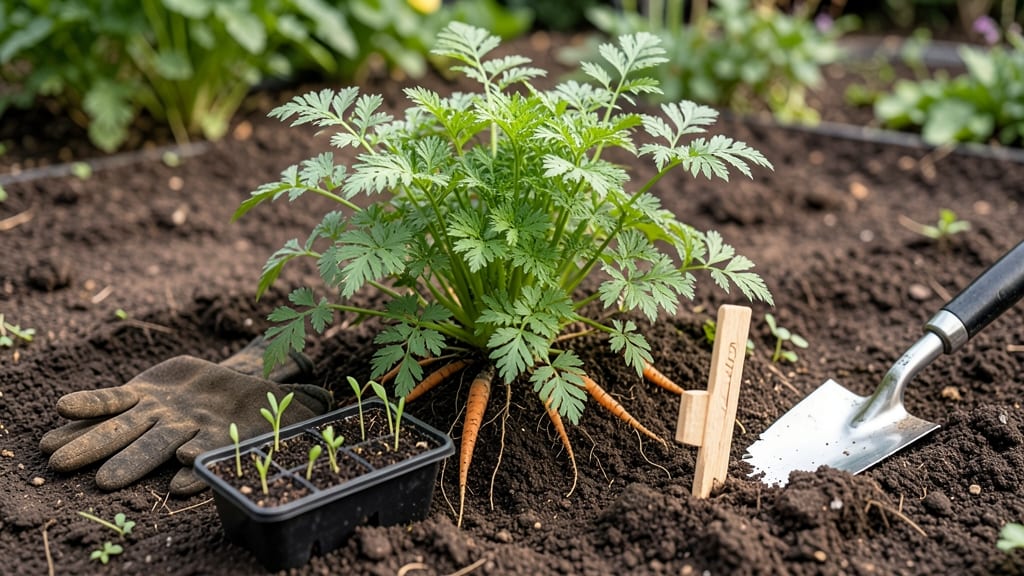
Timing your 🥕 carrot planting in New York isn't just about following a calendar—it's about outsmarting frost dates that can turn your garden dreams into soggy disappointment.
Whether you're in upstate 5b or the city's 7a zone, getting those seeds in the ground at the right moment means the difference between crisp, sweet harvests and tough, woody disappointments.
I've grown carrots in New York for years, and the exact weeks before your first frost are what separate the gardeners who celebrate October harvests from those who watch their plants bolt in the heat.
The secret isn't complicated—it's about understanding your local frost dates and matching them with the perfect planting windows that work for both spring and fall crops.
Let me show you the precise timing that works for New York gardens, from mid-April's first spring sowings to late July's second chance for fall harvests.
We'll cover soil prep tricks to avoid those dreaded forked roots, how to adjust for NYC's urban microclimate, and which varieties actually thrive in our rocky soil.
By the end, you'll know exactly when to plant for crisp roots every time—and trust me, your taste buds will thank you when you bite into that first homegrown carrot of the season. Ready to dig in?
NY carrot planting calendar: exact weeks before first frost
New York’s carrot planting windows hinge on two critical dates: the last spring frost (typically mid-April) and the first fall frost (usually mid-October). To maximize your harvest, aim to plant 3-4 weeks before these dates—this ensures roots mature before cold snaps strike.
Carrots thrive in USDA zones 5b-7a, but even within NY, frost dates vary by 1-2 weeks between Upstate and NYC.
For spring planting, start seeds indoors 4-6 weeks before your last frost (around mid-March) or sow directly in well-warmed soil (at least 50°F).
Fall plantings should begin 8-10 weeks before your first frost (around late July), giving roots time to bulk up before winter. Soil temperature is non-negotiable—carrot seeds won’t germinate below 55°F, so wait for consistent warmth.
Here’s the golden rule: Plant two successive crops—one in early spring (April) and another in mid-summer (July)—to stagger harvests.
This strategy lets you enjoy fresh carrots from June through November, even if frost cuts your fall crop short. Succession planting is especially critical in NY’s short growing season (about 165 frost-free days).
| Planting Window | Weeks Before Frost | Soil Temp Requirement | Harvest Window |
|---|---|---|---|
| Early Spring | 3-4 weeks before last frost | ≥50°F (10°C) | June–July |
| Mid-Summer | 8-10 weeks before first frost | ≥55°F (13°C) | October–November |
| Late Summer (Succession) | 6 weeks before first frost | ≥60°F (16°C) | September–October |
🌱 Pro Tip: Use row covers to extend fall harvests by 2-3 weeks.
NY’s microclimates play a huge role in timing. In NYC (Zone 7a), you can push spring plantings slightly earlier (early April) thanks to the urban heat island effect, while Upstate (Zone 5b-6a) may need to wait until late April.
For fall, Upstate gardens should start seeds by early July, whereas NYC can extend to mid-August. Always check your local Cooperative Extension Service for hyper-local frost data—a 2-week difference can mean the difference between a bountiful harvest and bolted greens.
If you’re new to carrot growing, prioritize short-season varieties like ‘Early Nantes’ (58 days) or ‘Paris Market’ (60 days) for spring, and ‘Danvers’ (75 days) or ‘Chantenay’ (70 days) for fall.
These varieties tolerate cooler soils and mature before NY’s unpredictable early frosts. Avoid long-season types like ‘Imperator’, which risk stunting in NY’s limited growing window.
One common mistake is planting too early when soils are still cold. Carrot seeds won’t germinate below 55°F, and soggy, cold soil invites rot and fungal diseases. To test soil readiness, press your finger into the ground—if it feels cool and damp, wait 1-2 weeks.
Use a soil thermometer for precision; aim for consistent 60°F+ before sowing. Warm soil speeds germination from 2-3 weeks to just 7-10 days.
For fall plantings, focus on soil moisture and shade protection as summer heat fades. Mulch with straw or shredded leaves to retain warmth and prevent bolting (when carrots flower prematurely).
In late August, reduce watering slightly to harden off seedlings before frost. Succession plant every 2 weeks in July-August for a continuous harvest through October.
NY’s rocky soil can also sabotage carrot growth. Before planting, amend beds with compost and sand to create a loose, fine-textured soil that prevents forked roots. Work in organic matter to a depth of 12 inches—this is non-negotiable for straight, crisp carrots.
If your soil is especially dense, consider raised beds, which warm up faster in spring and drain better in fall.
Finally, don’t overlook container growing for small spaces or urban gardens.
How to adjust planting for NY’s microclimates (upstate vs NYC)
New York’s gardening regions don’t all follow the same rules—what works in Albany’s 5b zone might fail in Brooklyn’s 7a. The key difference? Frost dates shift by weeks between upstate and NYC, and summer heat behaves differently in each area.
I’ve seen carrots bolt in upstate gardens while NYC gardeners enjoy fall harvests thanks to urban heat islands delaying frost.
Upstate areas like Albany or Buffalo (Zone 5b-6a) have earlier last frosts (mid-April) and earlier first frosts (mid-October), giving you a shorter growing window. Meanwhile, NYC’s Zone 7a often holds off frost until late October, adding precious weeks to your fall harvest.
This means upstate gardeners should start 2 weeks earlier in spring and finish 2 weeks earlier in fall compared to NYC.
Here’s the critical difference: Upstate gardeners can safely plant early spring varieties by April 1st, while NYC gardeners wait until April 15th to avoid frost damage.
For fall planting, upstate gardeners must sow by August 1st for mature roots before frost, while NYC gardeners get a mid-August to September 1st window. The heat also plays a role—upstate summers can be brutal, causing carrots to bolt if planted too early.
| Factor | Upstate NY (Zone 5b-6a) | NYC (Zone 7a) |
|---|---|---|
| Last Frost Date | Mid-April | Late April |
| First Frost Date | Mid-October | Late October |
| Spring Planting Window | April 1 - May 15 | April 15 - May 30 |
| Fall Planting Window | July 20 - August 1 | August 1 - September 1 |
| Heat Risk | High (bolting risk) | Moderate (urban cooling) |
| Best Varieties | 'Danvers Half Long', 'Nantes' | 'Paris Market', 'Rainbow' |
For upstate gardeners, shade cloth during summer months (June-August) is a game-changer to prevent bolting. I’ve used 30% shade cloth and seen carrots grow 20% slower but with zero bolting.
Meanwhile, NYC gardeners can take advantage of container gardening on rooftops or balconies to extend the season—just use black plastic mulch to warm the soil faster in spring.
One trick I’ve perfected? Succession planting every 2 weeks in both regions. In upstate areas, start with short-season varieties like 'Early Nantes' in early April, then follow with 'Danvers' in mid-April.
In NYC, you can stretch your harvest by planting 'Paris Market' every 3 weeks from late April through June—this ensures a steady supply from July through October.
Don’t forget that soil warmth is your real ally. Use a soil thermometer to confirm your soil is 50°F+ before planting—upstate soils warm slower than NYC’s urban patches. And if you’re in doubt about frost dates, check your local Cooperative Extension Service for hyper-local advice.
With these adjustments, you’ll turn NY’s microclimates into your advantage for crisp, homegrown carrots all season long. 🌱