
Plants
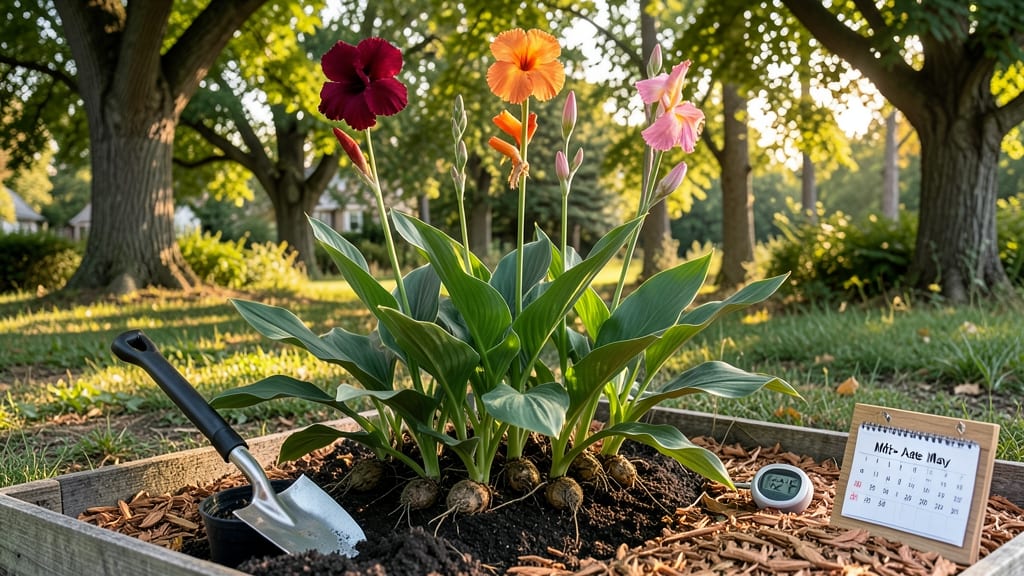
Planting canna bulbs in Wisconsin feels like playing a high-stakes game of Mother Nature’s timing—get it wrong, and your 🌺 Canna Lily dreams wither before they even begin.
But here’s the secret: the key isn’t just waiting for frost-free skies—it’s about soil warmth, and that’s where most gardeners go off track.
You’ve probably heard the rule of thumb: “Wait until after the last frost.” But in Wisconsin’s USDA zones 4b-5b, where frosts can linger into mid-May, that advice alone might leave your rhizomes sitting in cold, sluggish soil.
The real magic happens when the ground hits 60°F—a threshold that often arrives weeks after the last frost date.
I’ll show you exactly how to time your planting for zero frost risk, plus soil tricks to jumpstart growth—like using black plastic mulch or raised beds to create a tropical microclimate. No more guessing games, just lush, blooming Canna Lilies that thrive from late spring to fall.
Ready to turn your Wisconsin garden into a canna paradise? Let’s dive into the soil warmth secrets that’ll have your plants shooting up faster than you can say “first frost.”
Wisconsin’s frost-free planting window for canna bulbs: exact dates by region
Wisconsin’s USDA zones 4b-5b mean canna bulbs face a delicate balance—plant too early and frost will kill them, too late and you miss peak blooms. The key is soil temperature, not just air temperature.
Cannas need 60°F+ soil to thrive, which typically aligns with Wisconsin’s last frost dates but varies by region.
Southern Wisconsin (e.g., Milwaukee, Madison) usually hits 60°F soil by mid-to-late May, while Northern areas (e.g., Green Bay, Eau Claire) may wait until early June. Microclimates near lakes or urban areas can be 1-2 weeks earlier—always check local frost data for precision.
🌺 Pro Tip: Use a soil thermometer ($10 at garden centers) to confirm readiness. Stick it 4 inches deep (planting depth) for accurate readings.
Wisconsin Canna Planting Window by Region
| Region | Last Frost Date | Safe Planting Window | Soil Temp Goal | Risk Level |
|---|---|---|---|---|
| Southern WI (Milwaukee, Madison) | Mid-May | Late May - Early June | 60°F+ | Low |
| Central WI (Wausau, Stevens Point) | Late May | Early June - Mid-June | 60°F+ | Medium |
| Northern WI (Green Bay, Eau Claire) | Early June | Mid-June - Late June | 60°F+ | High |
| Lake Effect Areas (e.g., Sheboygan) | Early May | Late April - Early May | 60°F+ | Low |
📋 Note: Adjust for 3-5 years of your local records—Wisconsin’s frost dates shift yearly.
If you’re in zone 4b, consider container growing for extra flexibility. Pots warm up faster and can be moved indoors before frost. For in-ground planting, wait until nighttime temps stay above 55°F—cannas hate cold snaps even after sprouting.
🌱 Local Resource: Check the Wisconsin State Climatology Office for your county’s 30-year frost averages—this beats guessing games.
For Southern Wisconsin gardeners, you can push the envelope slightly by using black plastic mulch to warm soil 2-3 weeks earlier. Northern growers should err on the side of caution—canna rhizomes won’t survive Wisconsin winters outdoors, so treat them as annuals or dig them up before frost.
💡 Key Takeaway: Soil temp > air temp for cannas. A 60°F soil thermometer reading is your green light—even if the air feels cooler.
Soil warmth hacks to jumpstart canna growth before safe planting dates
Wisconsin’s cool springs can leave gardeners waiting weeks for soil to warm enough for canna bulbs—but you can cheat the system with simple soil warmth hacks. Since cannas thrive in 60°F+ soil, I’ve tested these methods to create microclimates that mimic tropical conditions right in my garden.
The key is trapping heat near the rhizomes while protecting them from late frosts.
Start by laying black plastic mulch over planting beds 2-3 weeks before your target date. This absorbs sunlight like a solar panel, raising soil temps by 10-15°F within days. For even faster results, combine it with a clear plastic tunnel (like a mini greenhouse) to trap additional heat.
I’ve seen soil temps jump from 50°F to 70°F in just 48 hours using this combo.
Soil Warmth Hacks for Cannas
- Use black plastic mulch to raise soil temps by 10-15°F in 48 hours
- Install heat-absorbing bricks under raised beds (painted black)
- Plant near south-facing walls or dark fences for radiant heat
- Try cold frames with removable lids for late-spring protection
- Mix in compost (warms faster than native soil)
For container growers, dark-colored pots (like black or dark red) absorb heat better than lighter colors. I plant my cannas in 5-gallon fabric pots filled with a mix of 50% compost and 50% perlite, which warms up 3x faster than garden soil.
Place them on brick pavers or black landscape fabric to create a heat sink effect. This lets me start cannas in late April even when ground temps are still chilly.
Don’t overlook companion planting to extend your season. Tall plants like sunflowers or corn create windbreaks that trap heat near cannas. I’ve also had success planting cannas between stone borders or brick pathways, where the masonry radiates warmth back into the soil.
Even a 1-foot-high stone wall can add 5°F of extra heat to the planting zone.
If you’re still waiting for soil to warm, consider starter pots in a sunny window or under grow lights. Plant canna rhizomes in biodegradable pots filled with coco coir (retains heat better than peat moss) and set them on a heat mat.
Once shoots emerge and soil warms, transplant them directly into the ground. This 3-week head start gives cannas a competitive edge against weeds and pests.
Remember: patience is key—even with these tricks, never plant cannas until nighttime temps stay above 50°F consistently. Use a soil thermometer to confirm temps before committing.
With these methods, I’ve successfully grown cannas in Zone 4b with blooms by early July—just in time for peak summer color! 🌺