Plants
Timing your tree planting in Colorado can mean the difference between a thriving 🌳 and one that struggles to survive. With Colorado’s dramatic elevation shifts and unpredictable weather, getting it wrong might leave your tree vulnerable to frost, drought, or even death.
Most gardeners know spring and fall are ideal, but did you know the best months actually depend on where you live? Denver’s USDA Zone 5b has different frost dates than Colorado Springs’ Zone 6a, and high-altitude areas like Grand Junction (Zone 7b) play by their own rules.
In this guide, I’ll break down the perfect planting windows for your specific elevation—whether you’re on the Front Range, Western Slope, or mountain regions. You’ll also learn how to prep your soil, choose the right species, and avoid costly mistakes that could stunt your tree’s growth for years.
Ready to plant with confidence? Let’s get started—your future shade tree will thank you.
Best tree planting months in Colorado by elevation zones
Colorado’s diverse elevations create wildly different planting windows. Front Range (5,000–7,500 ft) has milder winters, while High Alpine zones (9,000+ ft) demand earlier planting to avoid frost damage. Understanding these zones ensures your tree establishes strong roots before winter sets in.
For Front Range areas like Denver or Boulder, aim for late April through early June or September to mid-October. These windows allow roots to grow before summer heat or winter freeze. Meanwhile, Mountain regions (7,500–9,000 ft) shift planting to May or early September to avoid late frosts.
At High Alpine elevations, plant bare-root trees in May or container-grown trees by early August. The shorter growing season demands faster root establishment. Always check your local USDA Hardiness Zone (e.g., Denver: 5b, Aspen: 4a) for precise timing.
Soil preparation is critical. Loosen soil 18–24 inches deep and mix in compost or organic matter 4–6 weeks before planting. This gives roots a nutrient-rich start. For clay-heavy soils common in Western Slope areas, amend with sand or perlite to improve drainage.
Watering schedules vary by elevation. Front Range trees need deep watering every 7–10 days in summer, while High Alpine trees may only require watering every 14–21 days due to lower evaporation. Always water in the early morning to prevent fungal growth.
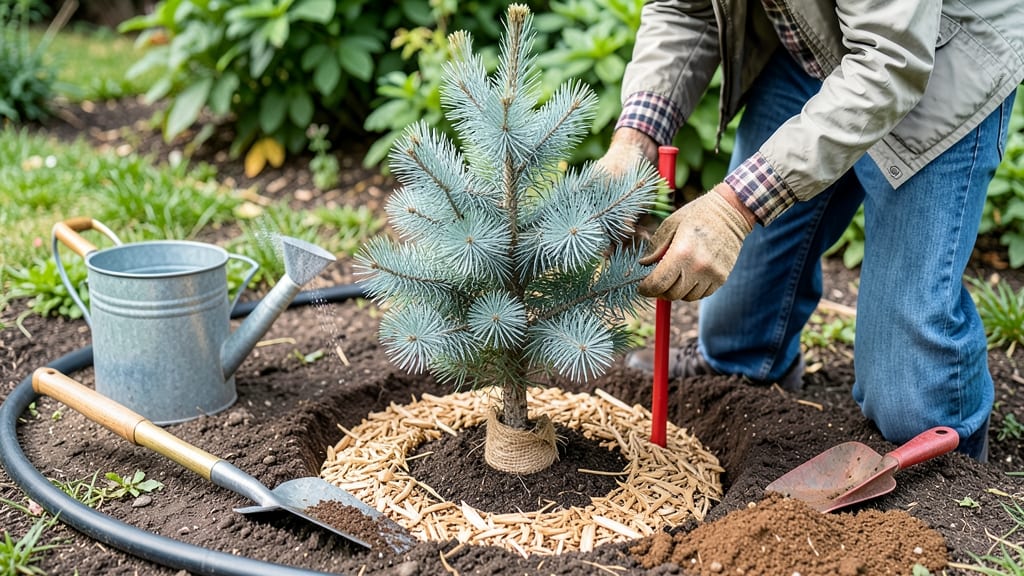
Mulching is non-negotiable. Apply 3–4 inches of mulch around the base (keep it 6 inches away from the trunk) to retain moisture and regulate soil temperature. In windy mountain zones, use gravel mulch to prevent erosion.
| Elevation Zone | Ideal Planting Window | Soil Prep Tip | Watering Schedule |
|---|---|---|---|
| Front Range (5,000–7,500 ft) | Late April–June or Sept–Oct | Loosen 24" deep + compost | Every 7–10 days (summer) |
| Mountain (7,500–9,000 ft) | May or early Sept | Add sand to clay soils | Every 10–14 days (summer) |
| High Alpine (9,000+ ft) | May (bare-root) or Aug (container) | Use gravel mulch | Every 14–21 days (summer) |
Colorado’s microclimates can shift planting by weeks. For example, Grand Junction’s Western Slope (Zone 7b) allows late fall planting until November 1, while Leadville’s High Alpine zone (Zone 4a) requires planting by July 15 to avoid winter kill.
Container-grown trees offer flexibility. They can be planted year-round except in winter, but avoid extreme heat (above 90°F) or cold (below 20°F). For container trees, remove the pot and loosen roots before planting to encourage root spread into native soil.
Monitor your tree’s progress. In Front Range areas, new growth should appear by June 1. If not, check for root rot or poor soil drainage. In High Alpine zones, expect slower growth—patience is key for survival.
Protect young trees from deer and elk, common in Colorado. Use tree guards or repellent sprays during spring and fall when browsing is most active. In urban areas, windbreaks can shield trees from chaparral winds that dry out soil.
Best tree planting months in Colorado by elevation zones
Colorado’s dramatic elevation changes mean your tree’s survival depends on planting timing and microclimate awareness. Front Range cities like Denver (5,000–7,500 ft) have 120–160 frost-free days, while High Alpine zones (9,000+ ft) may only see 60–90 days. Planting outside these windows risks root shock or winterkill.
For Front Range gardens, aim to plant between mid-April and mid-May (spring) or September through mid-October (fall). These windows let roots establish before first frost (typically mid-October). In Mountain regions (7,500–9,000 ft), shift planting to late April–early June or August–early September to avoid early snow.
| Elevation Zone | Best Planting Windows | First Frost Date | Soil Prep Tip |
|---|---|---|---|
| Front Range (5,000–7,500 ft) | Mid-April–Mid-May September–Mid-October |
Mid-October | Amend clay soil with compost; test pH (ideal: 6.0–7.5) |
| Mountain (7,500–9,000 ft) | Late April–Early June August–Early September |
Early October | Use organic mulch; protect from wind with windbreaks |
| High Alpine (9,000+ ft) | Late May–June July–Early August |
Late September | Choose cold-hardy species; plant in sheltered spots |
High Alpine zones (9,000+ ft) demand even stricter timing. Plant bare-root trees in late May–June or container-grown trees in July–early August. These areas experience shorter growing seasons and higher UV exposure, so prioritize drought-resistant species like Engelmann Spruce or Rocky Mountain Juniper.
Container-grown trees offer flexibility—you can plant them year-round except winter—but spring or fall still yields the best results. For bare-root trees, plant them as soon as soil thaws (typically March–April in low elevations) to avoid dormancy stress.
Water deeply immediately after planting to settle soil around roots.
Avoid planting during Colorado’s extreme heat waves (June–July in low elevations) or late fall (November onward). Late fall plantings leave roots vulnerable to freeze-thaw cycles, while summer heat stresses newly planted trees. Mulch heavily (3–4 inches) after planting to retain moisture and regulate soil temperature.
Pro tip: Use a soil thermometer to monitor root zone temps—ideal planting soil should be 50–65°F. In Denver or Boulder, this aligns with late April–May or September plantings. Adjust for your specific USDA Zone (5b–7b) using local CoCoRaHS weather stations for precise data.