
Plants
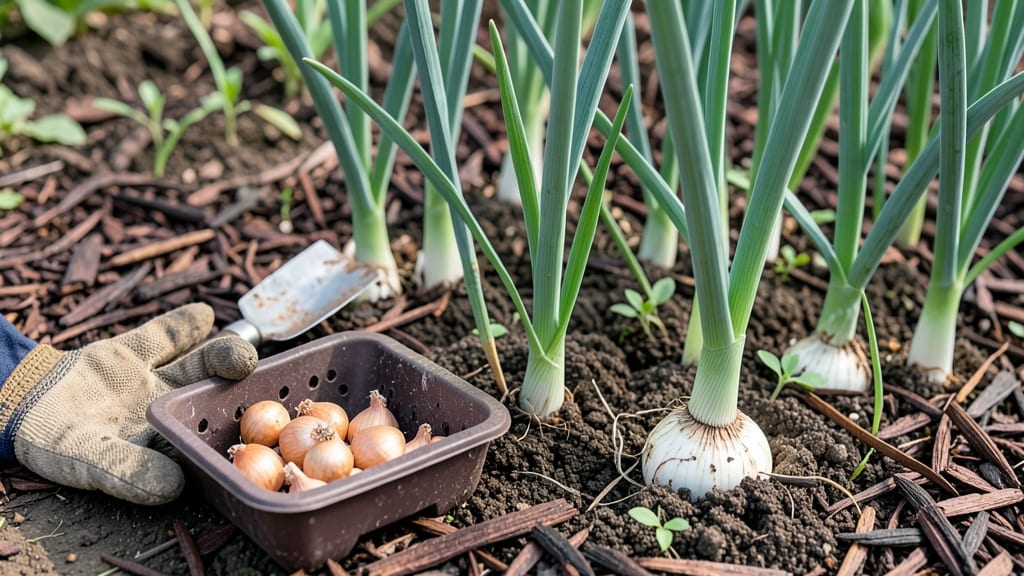
Timing when do you plant onions in Michigan isn’t just about following a calendar—it’s about outsmarting the Great Lakes’ unpredictable swings from frost to heat.
Whether you’re growing cold-hardy varieties for early harvests or warm-season onions for peak flavor, getting the window right means the difference between a thriving garden and a sad, stunted crop.
Most gardeners in zones 5b-6b know the struggle: plant too early, and your onions bolt before bulbing. Wait too long, and you miss the sweet spot before summer’s heat sets in.
The secret? Two planting strategies—late March to mid-April for spring onions and August to early September for fall varieties—that align with Michigan’s frost dates and soil temperatures.
In this guide, I’ll break down the exact 4-6 week windows before your last frost, which onion types thrive in your region, and how to prep your soil for success. No more guesswork—just a foolproof plan to grow onions that rival the ones from the grocery store (or better).
Ready to turn your garden into a 🧅 powerhouse? Let’s dive into the timing, varieties, and pro tips that’ll have you harvesting bulbs all season long.
Michigan onion planting calendar: best times for cold-hardy vs. warm-season varieties
Michigan gardeners face a unique challenge with onions—our short growing season and variable frost dates demand precise timing. The key is understanding whether you're growing cold-hardy varieties (like Potawatomi or Sweet Sandwich) or warm-season types (such as Yellow Sweet Spanish).
Each requires different strategies to avoid bolting or stunted growth.
For spring planting, most Michigan regions (USDA zones 5b-6b) target late March to mid-April for sets or transplants, giving plants a 4-6 week head start before the last frost (typically mid-April). Fall planting, meanwhile, offers a second chance with August to early September windows for overwintering varieties.
Here’s the critical difference: Cold-hardy onions tolerate light frosts and can even be planted in early spring or late fall, while warm-season onions need soil temperatures above 40°F and 12+ hours of daylight to form bulbs properly.
Get this wrong, and you’ll end up with skinny necks or bitter flavors.
Lower Michigan (e.g., Detroit, Kalamazoo) generally has 2-3 weeks earlier planting windows than Upper Michigan (e.g., Traverse City, Marquette) due to microclimates. Always check your local frost date averages—the Michigan State University Extension provides updated charts to avoid costly mistakes.
Michigan Onion Planting Comparison
| Planting Method | Best Time (Lower MI) | Best Time (Upper MI) | Soil Temp Requirement | Notes |
|---|---|---|---|---|
| Sets (Pre-Grown) | Late March–Mid-April | Early April–Early May | 40°F+ | Fastest harvest; ideal for short seasons. |
| Transplants | Mid-April–Early May | Late April–Mid-May | 45°F+ | Better for long-day varieties; requires starter plants. |
| Seeds | Indoor: Feb–March | Indoor: March–April | 50°F+ (outdoor) | Slowest but most variety options; needs transplanting. |
| Fall Planting (Overwintering) | August–Early Sept | Late July–Early Aug | 50°F+ | Cold-hardy varieties only; harvest next summer. |
Pro Tip: Use row covers to extend spring planting by 2-3 weeks if frost threatens.
If you’re planting sets (the easiest method for beginners), aim for 4-6 weeks before your last frost date. For transplants, wait until soil warms to 45°F—cold soil slows root growth and invites rot.
And for seeds, start indoors in February-March (Lower MI) or March-April (Upper MI) to give seedlings a jumpstart.
Fall planting is a game-changer for Michigan gardeners. By sowing cold-hardy varieties like Copra or Red Baron in August-September, you’ll harvest larger bulbs the following summer. The secret? Plant 6-8 weeks before the first hard frost (usually mid-October) to let roots establish before winter.
Don’t overlook microclimates. Urban areas like Ann Arbor or Grand Rapids
Michigan onion planting calendar: best times for cold-hardy vs. warm-season varieties
Michigan’s USDA zones 5b-6b demand precise timing for onion success. The last frost date (typically mid-April) splits your planting strategy into two paths: cold-hardy varieties and warm-season types. Miss these windows, and you risk stunted bulbs or bolting (premature flowering). Let’s break it down by region and method.
For Southern Michigan (Lower Peninsula), aim to plant onion sets or transplants between late March and mid-April. In Northern Michigan (Upper Peninsula), wait until mid-April to early May due to colder soils. Fall planting (for overwintering) should happen 8-10 weeks before first frost—typically August to early September.
🌱
| Method | Southern Michigan | Northern Michigan | Fall Planting |
|---|---|---|---|
| Onion Sets | Late March - Mid-April | Mid-April - Early May | August - Early Sept |
| Transplants | Mid-April - Early May | Early May - Late May | Late July - Aug |
| Seeds | Indoor Start: Feb | Indoor Start: Mar | N/A (too late) |
| Key Note | 4-6 weeks before last frost | Soil temp ≥40°F | 8-10 weeks before first frost |
Warm-season onions (Yellow Sweet Spanish, Crystal Wax) need 4-6 weeks of warm soil before transplanting. Plant too early, and they’ll bolt. Cold-hardy types (Red Baron, Stuttgarter) tolerate frost but still need 60-80 days to mature.
For fall planting, focus on short-day varieties like 1015Y Yellow—they’ll overwinter and produce bulbs the following summer.
Pro tip: Use row covers to extend your spring window by 2-3 weeks if frost threatens. Remove covers when plants reach 6 inches tall to prevent overheating. For seeds, start indoors 8-10 weeks before last frost—Michigan’s short season demands early starts!
🌡️
Always check your local frost dates (Michigan State University’s Michigan Weather and Climate site is a goldmine). Adjust planting 1-2 weeks earlier if you’re in a colder microclimate, like near the Upper Peninsula.
And remember: soil temperature matters more than air temperature—aim for 40°F+ for sets and 50°F+ for transplants.