
How To
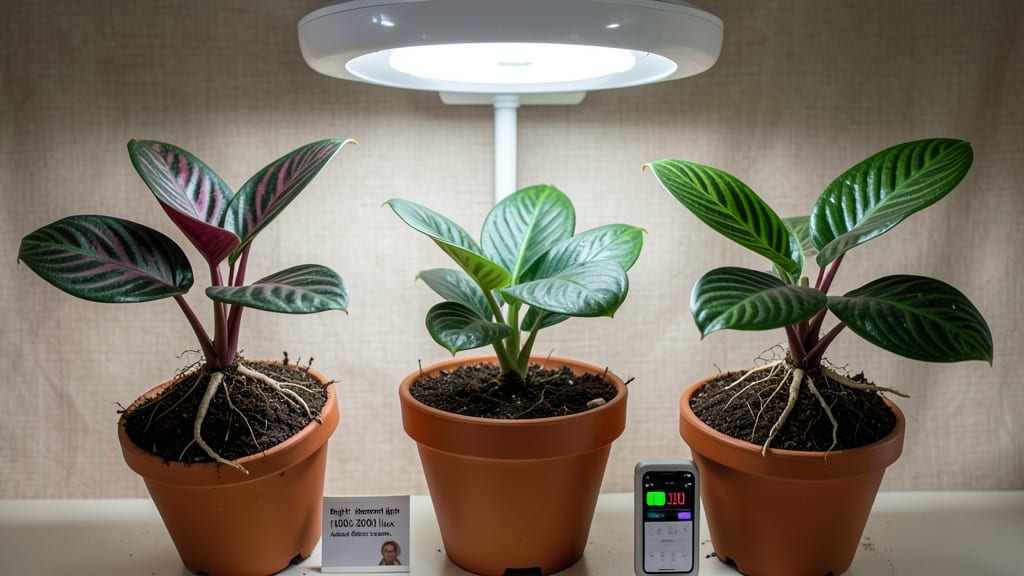
If you’re wondering how much light does a Prayer Plant 🌿 need, the answer is critical—because getting it right isn’t just about keeping your plant alive; it’s the key to unlocking those show-stopping variegated leaves that make this plant a favorite among collectors.
Most people assume Prayer Plants are low-maintenance, but they’re actually quite picky about their lighting. Too little light, and you’ll end up with dull, stretched-out leaves. Too much direct sun, and those delicate white and pink stripes can fade or even burn.
The secret lies in mimicking their natural understory habitat—bright but indirect light that keeps them happy without stressing them out.
Whether you’re dealing with a lackluster Prayer Plant 🌿 in your living room or trying to troubleshoot why your greenhouse variety isn’t thriving, I’ll break down exactly how much light this plant needs to stay vibrant.
You’ll learn how to spot the signs of over- or under-lighting and how to adjust your setup for the best results.
Let’s dive into the ideal light conditions, seasonal tweaks, and even artificial light solutions so you can keep your Prayer Plant’s leaves looking like a masterpiece year-round. Trust me, once you get this right, your plant will thank you with foliage that’s the talk of the room.

Ideal light requirements for prayer plant growth and variegation
Prayer plants (Maranta leuconeura) thrive in bright indirect light, but their stunning variegated patterns depend on getting it just right. Too little light dulls those white or pink stripes, while too much causes leaf scorch or bleaching.
The key is mimicking their natural dappled forest floor habitat—think morning sun with afternoon shade.
For optimal growth, place your prayer plant 2-3 feet from an east-facing window where it gets 3-6 hours of gentle sunlight daily. North-facing windows work too, but south or west exposure can deliver harsh afternoon rays that burn delicate foliage.
If your home lacks natural light, artificial grow lights become essential.
Watch for visual cues that reveal light imbalances. Pale, stretched leaves signal low light, while brown edges or crispy patches mean excessive sun. Even the variegation patterns fade under insufficient light—those pink or white stripes may turn green as the plant struggles to photosynthesize.
Seasonal adjustments matter too. In summer, filter light with sheer curtains to prevent overheating, while winter’s weaker sun may require moving your plant closer to the window. Rotate the pot quarter-turns weekly to ensure even growth and prevent leggy stems from leaning toward light sources.
Variegated varieties like ‘Kerchoveana’ or ‘Tricolor’ are especially sensitive to light changes. Their white or pink stripes contain less chlorophyll, making them more dependent on balanced light than solid-green types. If you notice those patterns fading to green, it’s a clear sign your plant needs brighter conditions—but not direct sun.
For indoor growers, a simple trick is placing your prayer plant on a removable plant stand near the window. This lets you adjust height seasonally: lower in winter for extra light, raised in summer to filter harsh rays.
Pair this with regular misting (they love humidity!) to compensate for indoor dryness.
Outdoor growers can extend the season by gradually acclimating potted prayer plants to partial shade in late spring. Start with 2 hours of morning sun, then increase by 1 hour weekly until they tolerate 3-4 hours daily.
Avoid midday heat, which causes wilting or leaf drop—these plants prefer temperatures between 65°F and 80°F.
Pro tip: Rotate your prayer plant weekly to prevent uneven growth toward the light source. This keeps foliage symmetrical and ensures all leaves get equal access to bright indirect light. Pair this with weekly leaf wipe-downs to remove dust, which blocks light absorption and dulls variegation.
Remember, prayer plants are adaptable—they’ll survive in lower light, but their true beauty unfolds in bright indirect conditions. With the right placement, your plant will reward you with bold patterns, glossy leaves, and vigorous growth that turns heads in any room. 🌿
How to adjust light for different prayer plant varieties
Not all prayer plants thrive equally under the same light conditions. The Maranta leuconeura ‘Kerchoveana’, with its bold white stripes, handles bright indirect light best, while the ‘Fascinator’ variety tolerates slightly lower light due to its darker foliage.
Even small differences in light exposure can cause leaf color loss or scorched edges, so let’s break down the ideal setups for each.
For ‘Kerchoveana’, place it near an east-facing window where it gets 3-4 hours of morning sun. If your home lacks natural light, rotate the pot quarter-turns weekly to prevent uneven growth.
The ‘Tricolor’ variety, with its pink and green hues, needs even gentler light—think north-facing windows or 10 feet from a south-facing window with sheer curtains.
Visual Tip: If your prayer plant’s leaves are fading or turning green, it’s craving more light. But if they’re yellowing or crispy, it’s getting too much direct sun. Adjust placement gradually to avoid shocking the plant.
In homes with limited natural light, position your prayer plant on a plant stand near a window or use a reflective surface like a white shelf to bounce light onto the leaves.
Avoid placing it directly on a south-facing windowsill during peak sun hours—afternoon rays can scorch delicate foliage in minutes.
Pro Tip: If you notice leaf scorch (brown, crispy edges), move the plant further from the window or add a sheer curtain to diffuse the light. For pale or leggy growth, it’s time to find a brighter spot or supplement with a grow light for 6-8 hours daily.
Remember, prayer plants are tropical understory dwellers, so they prefer dappled sunlight similar to what they’d get under a forest canopy. Mimic this by placing them near a lacy curtain or under a light-colored umbrella during summer months. Your plant’s variegation patterns will thank you!